The housing debate in Congress puts Prohens' model against the ropes
The state PP's strategy of not accepting the declaration of a stressed zone prevents highly affected communities like the Balearic Islands from applying measures

-
CAT -
CAST -
GER
PalmaThe debate over the two royal housing decrees of the Spanish government has ended with a parliamentary defeat for the Spanish government and the possibility of a snap election on the table. But, as a knock-on effect, the clash in Madrid also puts the housing model of Marga Prohens' Government against the ropes. In line with the position set by Genoa, the president has refused to apply the declaration of a stressed zone in the Islands, which would allow her to limit rental prices. This week, she rejected it again while defending "small property owners," as social protests grow and the left prepares for a possible campaign focused on mobilizing voters for housing.
With 25,000 tenants waiting to renew their contracts –according to the Ministry of Social Rights– and 851 evictions in 2025 –this is the figure from the General Council of the Judiciary (CGPJ)–, the PP is aware that housing is one of the structural problems that most concerns the voters of the Islands. From Madrid, the PSOE has already set its sights on the issue as its main electoral card, turning the page on a summer marked by the crisis in Ceuta. The Minister of Housing, Isabel Rodríguez, already claimed this last Thursday on the microphones of La Ser. While defending the anti-eviction decree and the decree that indefinitely extended rental contracts –which fell through in Congress on Friday due to the decisive opposing vote of Junts–, she pointed against the communities governed by the PP. "There are nine million Spaniards protected by law against price increases, and then we have a wild free market that some boast about," the minister expressed in a jab at the popular barons. She also launched a message in electoral terms: "We have a golden opportunity to definitively change housing policies by changing the majority of regional governments."
In the last week, two models that clash in relation to housing have been confronted. While the left places the protection of the tenant at the center, the right defends the rights of property owners and considers that price caps or an expansion of tenant protection can reduce the supply of housing available in the market.
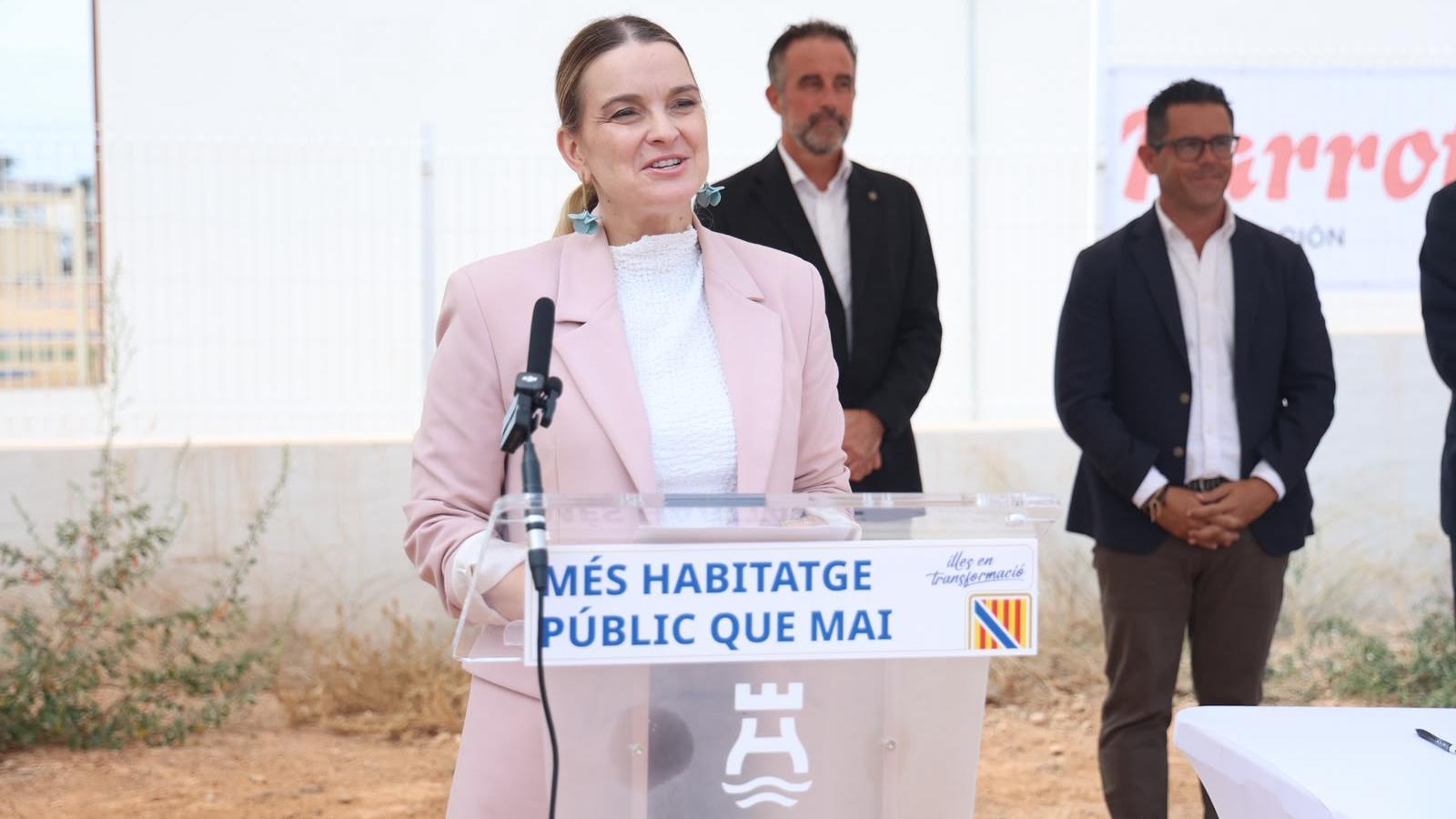
Last Thursday, President Prohens already appeared in the media to position herself against Sánchez's housing royal decrees. She did so in terms similar to those also used by other Popular Party presidents, such as those of Madrid, Castile and León, Andalusia, and Galicia. Prohens considered that the Spanish government's proposal left "small property owners" unprotected and defined the decrees as the "culmination of the housing crisis caused by left-wing parties." At the ceremony for the laying of the first stone of a social housing development in Ibiza, she highlighted that the Popular Party's commitment involves expanding supply through more construction and public-private collaboration. The joint action of the PP barons, who also warned that if they were approved, they would take the decrees to the Constitutional Court, points to a new stage of confrontation with the Spanish government.
How does it affect the Islands?
Although he said he “wished” for Sánchez to call general elections, the first vice president and spokesperson for the Government, Antoni Costa, ruled out that this is linked to the calendar of the Balearic Islands. “The president will take the decisions that are convenient, and in no case do I believe they are thinking about a short-term electoral call,” he assured. One way or another, the debate on housing will permeate his final months at the head of the Executive and may also mark the campaign for the regional elections. Government sources explain that they trust that their discourse favorable to property owners and construction will allow them to mobilize right-wing voters, while noting that a part of the socialist electorate that owns properties may have felt “worried” by the latest proposals from the Spanish executive, which included, among other issues, a suspension of evictions for vulnerable families until December 2030.
However, street protests continue and new protests against housing prices in the Islands have already been called. Furthermore, the PSIB has moved to pressure the PP and will return to present a proposal to Parliament so that the municipalities of the Islands can declare themselves as a stressed area, and force the PP and Vox to position themselves again regarding this issue.
How would the Balearic parties arrive at general elections if Sánchez finally calls them in the coming days? The President of the Congress, Francina Armengol, already expressed in June her desire to be the head of the PSIB list for the general elections. For his part, José Vicente Marí Bosó was number one for the PP in 2023. Vicenç Vidal headed the AraMés candidacy, although the eco-sovereigntists, who four years ago ran through a coalition with Sumar, would have to debate again how they will present themselves. The uncertainty regarding Jorge Campos would remain on the table, who in 2023 was number one for Vox, but throughout the legislature has maintained tensions with the party's executive. Whether Sánchez chooses to advance the elections or waits for the scheduled date in August 2027, the debate on housing has shaken the board.
