The Palma encampment responds to Cort: "If sexist attitudes were grounds for eviction from a space, they would have to evict the City Council"
The collective that has denounced the alleged assaults and the people camped out ensure that the City Council had already requested to remove the encampment before knowing about the cases of sexism and defend that they have already removed the people who were generating insecurity
-
CAT -
CAST -
DE
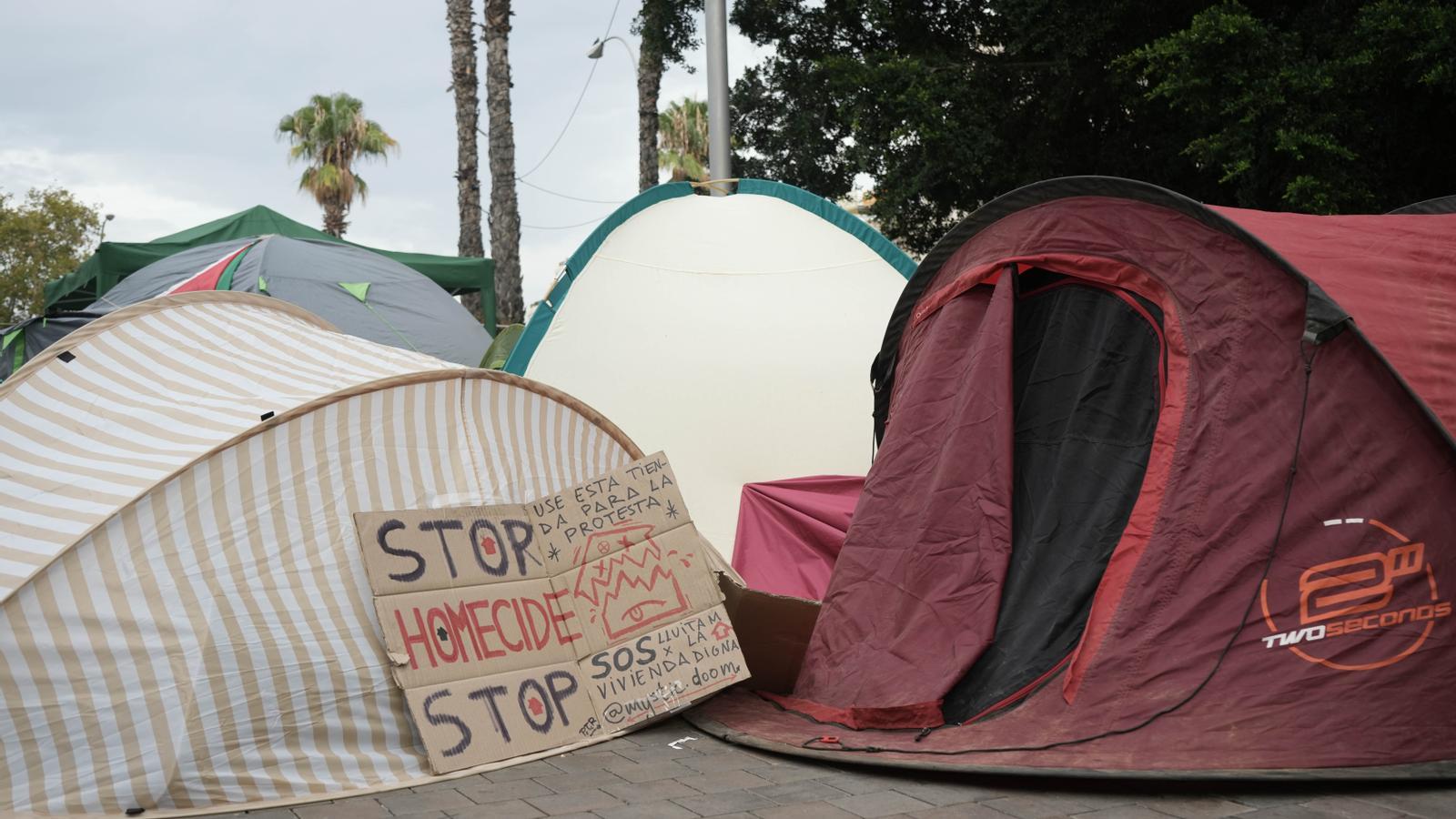
PalmaThe Flama collective and the people from the encampment for the right to housing in Palma have frontally rejected the Palma City Council's use of the cases of sexism reported within the space to politically justify the eviction of the Plaça d'Espanya. In a statement released this Tuesday, they accuse the mayor, Jaime Martínez, of "instrumentalizing feminism to attack and delegitimize a social movement" that demands the right to decent housing.
The response comes after Cort referred to the situations of sexism reported within the encampment to defend the need to act on the space. Flama and the camped people maintain, however, that the City Council had already demanded the eviction before having knowledge of these facts and consider that it is now using them to reinforce "a political decision that it had already taken".
"We will not allow feminism to be instrumentalized to attack and delegitimize a social movement for the right to decent housing," they point out. The collective wants to differentiate between the denunciation of sexist behaviors and the continuity of the encampment. "Denouncing sexist behaviors is not denouncing the existence of the encampment," they remark. In this sense, they argue that pointing out specific problems within a collective space "is not calling for its dissolution".

"We will not hide the problems"
The camped people claim that they have addressed the reported situations and have taken measures to ensure safety within the space.
"We will not hide the problems: we face them," they assert. As they explain, they have listened to the affected people, have taken measures, and have removed from the space "people who were generating insecurity." They also claim to have implemented mechanisms for "prevention, attention, and reparation." In the statement, they even question Cort's argument and suggest, in an ironic tone, that if the existence of sexist behaviors were sufficient to evict an entire space, "perhaps the mayor and his partners should consider evicting the City Council."
Criticisms of Cort's response
Flama and the Housing Camp also reproach the City Council for the response that, they claim, it has given to their demands. "Instead of approaching to listen to the demands of the population that is calling for solutions and measures in the face of the housing emergency, their response has been to turn their backs on us and repeatedly demand the eviction of the camp," they denounce. For this reason, they demand that Martínez "stop instrumentalizing feminism to justify his political agenda" and that he begin to listen to the demands of the people camping. "Housing is a right. The camp continues," they conclude.
Cort had already requested the eviction
The controversy adds to the conflict that the Palma City Council and the people camped in Plaça d'Espanya have been maintaining for days. Cort had requested that the Government Delegation take action to put an end to the encampment, while sources from the Delegation had pointed out that they had not received any formal eviction request.
The Delegation had defended that the encampment was protected by the right of assembly, that it had a transitory nature and that, at that time, it did not alter public order or basic services. The government delegate, Alfonso Rodríguez, had also stated that the National Police would not evict the encampment and had described it as a "shame" that the City Council was more concerned about the people camping in Plaça d'Espanya than about the hundreds of evictions taking place in the Balearic Islands.
