Sebastià Alzamora, judge Castro and Margalida Ramis, among the personalities who support ARAMÉS–Broad Front
The candidacy gathers signatures from the world of culture, the university, and social movements from the four islands in a manifesto that demands a response to the housing crisis and tourist overcrowding.
-
CAT -
CAST -
DE
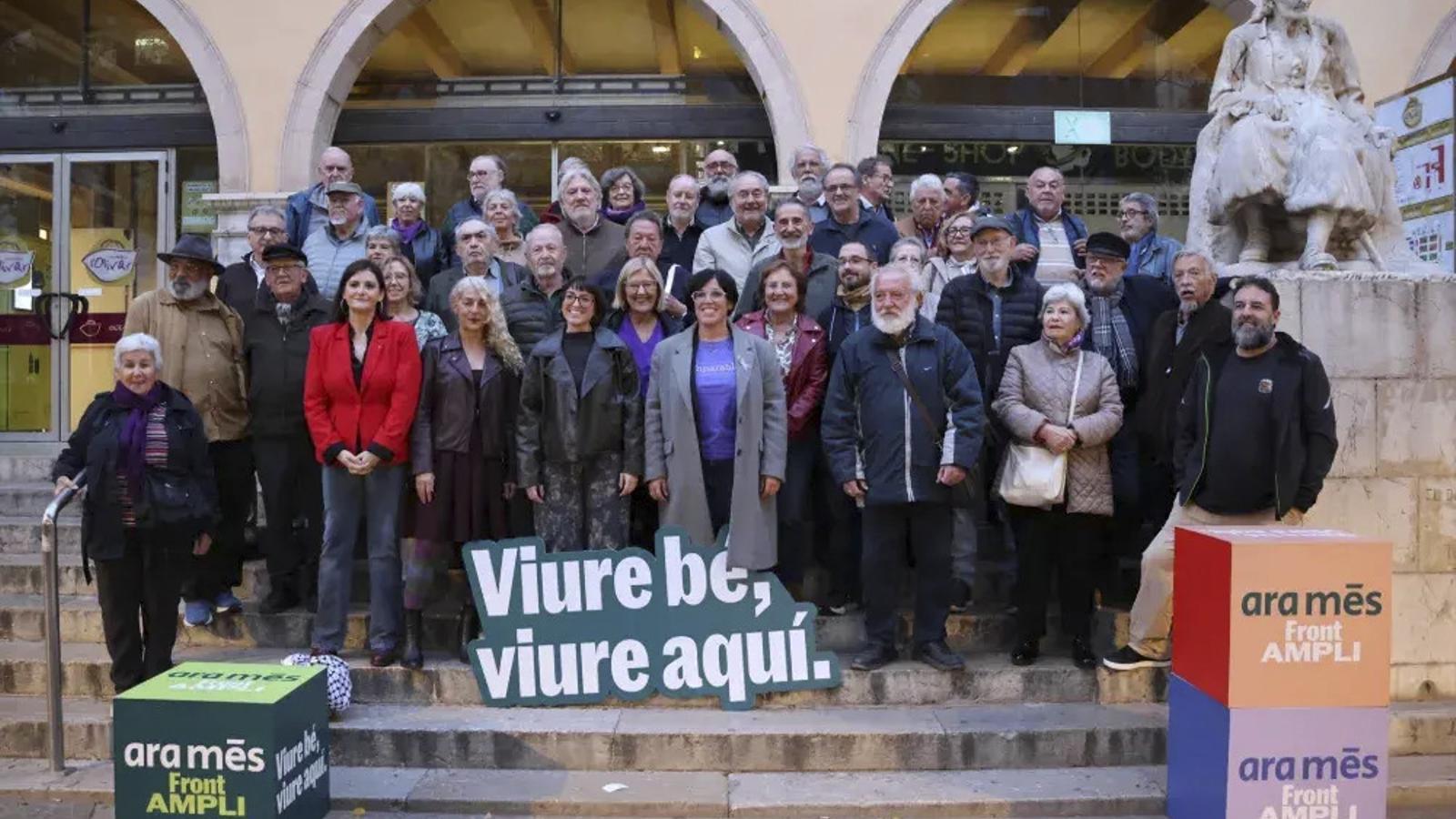
PalmaWriter Sebastià Alzamora, retired judge José Castro, environmental activist Margalida Ramis, and geographer from the University of the Balearic Islands Ivan Murray are some of the figures who have made public their support for ARAMÉS–Broad Front ahead of this Sunday's general election, November 29. The candidacy has presented a manifesto signed by more than 160 people from the fields of culture, academia, trade unionism, and social movements in Mallorca, Menorca, Ibiza, and Formentera. The initiative aims to visualize the support of different sectors of civil society for a candidacy that places access to housing, tourism overcrowding, and the defense of public services among its priorities.
Among the prominent names are Sebastià Alzamora, one of the Mallorcan writers with the greatest reach, and the retired magistrate José Castro, known for having instructed the Nóos case, one of the most high-profile judicial investigations of recent years. Also appearing is Margalida Ramis, linked to environmental mobilizations and the defense of the territory, as well as Ivan Murray, a professor of geography at the UIB and a researcher specialized in territorial transformations and the consequences of the tourism model.
The list of supporters extends beyond Mallorca. Among the signatories the coalition wanted to highlight are the Menorcan actor Rodo Gener and the Ibizan Fanny Tur, who is linked to the cultural world and has also held institutional responsibilities. With these endorsements, ARAMÉS–Broad Front seeks to show that the electoral project has support in diverse areas of the four islands and that the demands it puts forward go beyond strictly partisan activity.
The document starts from a diagnosis shared by the signatories: living in the Balearic Islands is increasingly difficult due to the rising cost of housing and the cost of living, a situation that the manifesto also links to the pressure of tourism on the territory and coexistence. Faced with this scenario, it demands its own representation in Congress to promote measures to limit real estate speculation, defend the right to housing, improve wages and pensions, and strengthen public services.
The manifesto also incorporates a political dimension linked to the defense of rights and freedoms. The signatories advocate for feminism, environmentalism, and social justice as cornerstones of public policies and express their determination to confront the rise of the far-right. In this regard, the initiative is framed within the final stretch of the electoral campaign and calls for participation in Sunday's elections.
The presentation of this collective support arrives at a time when the candidacy led by Carme Gomila is attempting to place the daily consequences of the Islands' economic model at the center of the electoral debate. Housing, the loss of purchasing power, and the need to diversify productive activity are some of the arguments with which the coalition defends its political proposal.
Two investment funds to diversify the economy
In parallel to the presentation of the manifesto, ARAMÉS–Front Ampli has defended a series of economic measures with the aim of reducing dependence on tourism and boosting other productive sectors. One of the main proposals is the creation of a public investment fund that would allow the mobilization of Administration resources and private capital to help create, consolidate, and expand local businesses.
The candidate for Congress, Carme Gomila, proposes orienting these resources towards activities such as industry, farming, the agri-food sector, new technologies, renewable energies, and culture. The objective, according to the coalition, is to favor the creation of stable and well-paid jobs, as well as to recover the weight of sectors that have declined in the Balearic economy.
The proposal includes a second instrument: a remunerated public fund that would allow families to voluntarily invest a portion of their savings in business projects on the Islands and earn a return on them. The party argues that this formula could channel resources towards the productive economy and offer an alternative to real estate investment.
Furthermore, ARAMÉS–Front Ampli proposes reviewing the Special Regime of the Balearic Islands (REIB) to eliminate incentives that, according to the coalition, continue to favor the concentration of economic activity in tourism. Gomila believes that this instrument should serve not only to compensate for the disadvantages of island status but also to boost a more diversified economy.
The candidate argues that the growth of tourist activity has not translated into an equivalent improvement in the living conditions of residents. Therefore, she insists that public policies must prioritize the generation of wealth that translates into quality employment, more opportunities for young people, and less dependence on a single economic sector.
