Inca returns to be the capital of Mallorca for a day with a multitudinous Dijous Bo
The fair recovers the sheep, the goats and the cows after two years of restrictions due to bluetongue, while the black pig returns to be one of the protagonists of a day with 25% more exhibitors and a numerous political representation at the doors of the general elections
-
CAT -
CAST
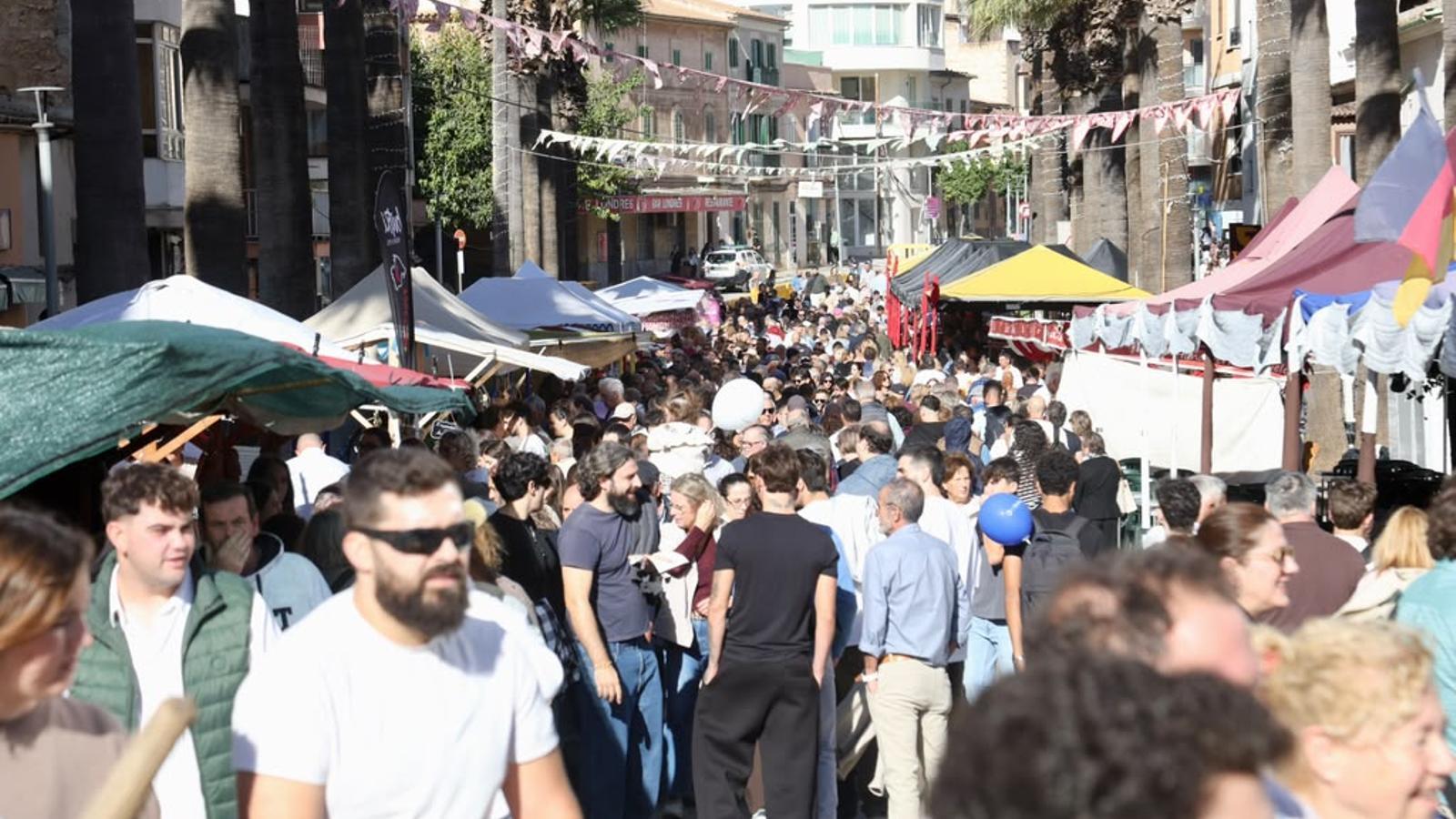
IncaInca has once again become the capital of Mallorca for a day this Thursday. Crowds filled the city's streets and squares from early in the morning for a new edition of Dijous Bo, which this year has recovered one of its most traditional elements: the presence of sheep, goats, and cows at the livestock exhibition, after two years of absence due to restrictions derived from bluetongue disease. The return of these animals, along with the prominence of the Mallorcan black pig, has been one of the great attractions of a fair that continues to claim its rural and livestock roots.
The Plaça del Bestiar concentrated much of the attention during the morning. Families, children, and visitors approached the pens to see the animals, among which there were also Friesian cows, a presence that had not occurred at Dijous Bo for years. The Mallorcan sheep and the Mallorcan red sheep shared the spotlight with the black pig, of which specimens provided by a dozen breeders were exhibited. The traditional morphological contest of this native breed, which this year reached its 33rd edition, was one of the highlights of the day, with the awards ceremony at noon.
The recovery of the ruminant exhibition was made possible thanks to the involvement of the farmers and the Cooperativa Pagesa d'Inca. The presence of poultry of native breeds, birds of prey, and other animals completed an exhibition that has allowed the rural world to be brought closer to the new generations. At the same time, the Plaça de la Font Vella hosted horse dressage exhibitions, another of the activities that aroused the public's interest.
More exhibitors and eight kilometers of fair
Dijous Bo has once again demonstrated its power to attract crowds with a commercial offering that has grown significantly this year. According to data provided by the mayor of Inca, Virgilio Moreno, the fair has brought together 450 exhibitors, 25% more than in previous editions, distributed along an eight-kilometer route.
The traditional farmers' market, stalls selling agri-food products, handicrafts, clothing, plants, and all kinds of items have turned the city center into a large open-air commercial space. Exhibitions of ancient tools, carts, and carriages have recalled the agricultural origins of the celebration, while heavy machinery, industrial vehicles, and commercial displays have completed an offer that combines tradition and economic activity.

The streets of Sant Miquel, Comerç, Bisbe Llompart and the main squares of the city have recorded intense activity throughout the day. The music of the 'xeremiers', the dancers and the different cultural activities have contributed to creating the festive atmosphere of a celebration that every November turns Inca into a meeting point for visitors from all over the island.
A large political delegation at the gates of the electionsThe fair has also had a marked political dimension this year. The proximity of the general elections on November 29, just ten days away, has been noted by the large presence of institutional representatives and the main political parties, who have taken advantage of the day to walk the streets of Inca and maintain contact with the citizens.
The President of the Government, Marga Prohens, and the President of the Congress of Deputies, Francina Armengol, were two of the main institutional representatives of the day. Both participated in the official acts of an event that has once again brought together a large part of the political representation of the Islands. The Mayor of Inca, Virgilio Moreno, acted as host to the delegation, which also included the President of the Balearic Parliament, Gabriel Le Senne, the delegate of the Spanish government in the Balearics, Pere Joan Pons, and representatives of different political groups such as the General Coordinator of MÉS per Mallorca and parliamentary spokesperson Lluís Apesteguía. The institutional reception at the City Hall gave way to the traditional tour of the stalls and exhibitions.
Prohens has claimed 'Dijous Bo' as an opportunity to rediscover roots and highlight local products, while Moreno has highlighted the growth of the fair and the recovery of the livestock exhibition as one of the distinctive features of this year's edition.
ARA Balears, faithful to the appointment with its readers
ARA Balears has not missed its annual appointment with Dijous Bo either. The newspaper has once again set up a stall in the Plaza de Mallorca, in the space that the Inca City Council reserves every year for the media, and it has received numerous visits from readers, subscribers, and institutional representatives throughout the day.
Among those who approached were the mayor Virgilio Moreno, accompanied by members of his government team; the delegate of the Spanish government, Pere Joan Pons; the president of the Parliament, Gabriel Le Senne, and the coordinator of MÉS per Mallorca, with members of his team, as well as representatives of other political formations.
The stand has also been a meeting space for the newspaper's subscribers, many of whom have taken advantage of their visit to the fair to learn about the news from ARA Balears, share opinions, and convey their concerns about current events. An opportunity to strengthen direct contact with readers and listen to their impressions beyond the pages of the newspaper.
A festival that keeps its roots
Beyond commercial activity and institutional presence, Dijous Bo has once again demonstrated that it is a celebration deeply rooted in Majorcan society. Meetings between acquaintances, strolls through the stalls, and family activities have been part of a day that combines rural tradition with the commercial dynamism of the capital of the Raiguer.
This year's edition has also recovered an important part of its livestock essence. The return of sheep, goats, and cows, added to the presence of the black pig, has allowed for strengthening the link with the origins of a fair that was born around agricultural trade and that, over the years, has become one of the great popular celebrations of Mallorca. The day closed with a fire parade and batucada through the streets of Inca, which put the finishing touch to a day of intense commercial, cultural, and festive activity. The city has once again demonstrated that, at least for one Thursday in November, it is capable of becoming the social, commercial, and festive capital of the entire island.
