The Electoral Board gives 24 hours to City Hall to explain why it let the PP occupy all the banners on the Avingudes
The body demands the contracts and authorizations for the electoral propaganda spaces, which the populars occupied exclusively, following the complaints from MÉS and the PSIB for a possible violation of equality between candidacies
-
CAT -
CAST -
DE
PalmaThe Provincial Electoral Board of the Balearic Islands has given the Palma City Council 24 hours to explain why it did not reserve free streetlights for electoral propaganda and to provide the documentation regarding the contracting of the banners on the Avingudes, which the PP has exclusively occupied during the campaign for the general elections on November 29. The requirement, agreed this Tuesday, comes after Ara Més-Front Ampli and the PSIB-PSOE denounced the change in the distribution system for electoral spaces, which traditionally included public streetlights divided among the candidates. The Board wants to know the conditions under which these supports were contracted and the reasons why Cort stopped offering them as free spaces.
The decision comes just five days before the elections and after the Popular Party monopolized the 180 banners installed on the 90 streetlights of the Avingudes, one of the most visible spaces in Palma. Meanwhile, the City Council, governed by Jaime Martínez (PP), has only made 30 advertising billboards available to the candidates, distributed by means of a lottery. The difference between the commercial spaces on the Avingudes and those offered for free is one of the central elements of the complaints.
The Provincial Electoral Board acted following an appeal by Ara Més-Front Ampli against a previous agreement of the Palma Zone Electoral Board. In this Tuesday's requirement, it demands that Cort justify its decision and deliver the documentation regarding the reservations, contracts, and authorizations for the banners. It also wants to know the dates of contracting and the identification of the political groups that reserved these spaces.
Furthermore, it has requested the list of free spaces that the City Council communicated to the Electoral Board in the 2023 and 2024 electoral processes, information that will allow for comparing the current system with that of previous elections. The Board has not yet resolved the substance of the appeal nor determined that the City Council or the PP have committed any irregularity. The requirement constitutes a procedure to obtain information before making any decision.
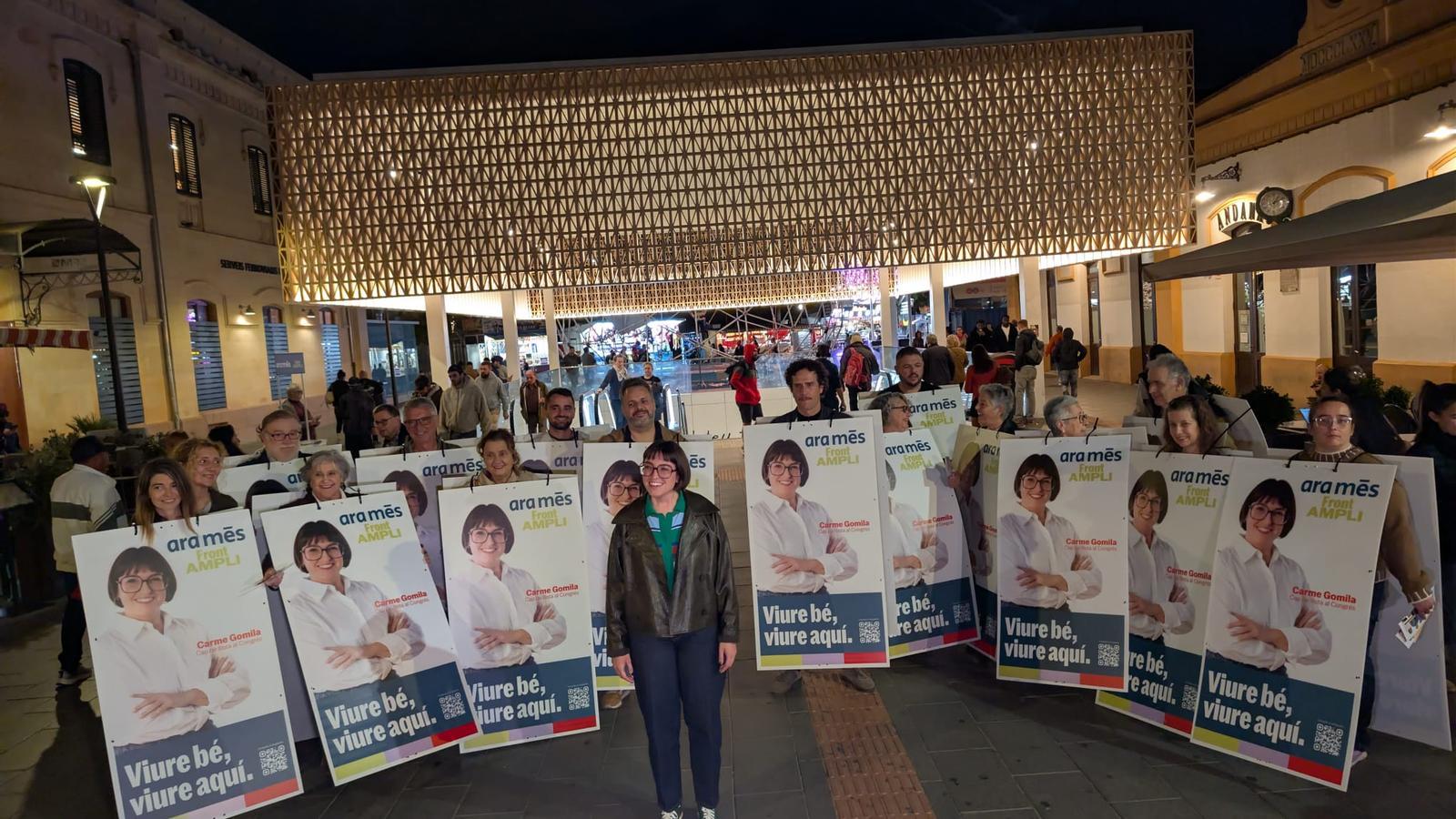
Precisely, Ara Més-Front Ampli staged a protest action this Tuesday in Palma to denounce the disappearance of free electoral propaganda spaces. Dozens of people became human billboards with the coalition's image, in a symbolic and visual action to demand political plurality, institutional neutrality, and equal conditions among the candidacies. The initiative comes after Jaime Martínez's municipal government eliminated the nearly 1,500 streetlights that were traditionally distributed among the different political groups through a draw. In parallel, the Popular Party has occupied the 90 commercial banner spaces on the Avingudes, the result of a concession from the same City Council.
The Ara Més-Front Ampli candidate for the Congress of Deputies, Carme Gomila, has claimed the need to preserve the neutrality of institutions during the electoral campaign: “Political plurality is one of the fundamental pillars of democracy. Public institutions have the obligation to guarantee that all candidacies can make their proposals known on equal terms.”
The PP had contracted all the spaces before the distribution was known
The conflict dates back to the change introduced by the City Council regarding the spaces reserved for the electoral campaign. In previous calls, Cort made numerous lampposts distributed throughout the city available to the candidates, which were awarded through the procedure established by the electoral administration.
For the elections of November 29, however, the City Council chose to offer 30 billboards and no lampposts as part of the free distribution. At the same time, the 90 lampposts on the Avingudes were left at the disposal of the company Malla SA, which was in charge of marketing advertising there.
According to the municipal documentation known so far, a resolution from November 2, signed by the Councilor for Finance, Contracting and Heritage, Mercedes Celeste, authorized the commercial exploitation of the lampposts in exchange for the company making 30 privately owned billboards available to the City Council to be distributed among the parties.
The result has been that the PP has contracted 100% of the 180 banners available on the Avingudes, while the other candidates have had to resort to the spaces reserved in the free distribution or other commercial advertising media. The controversy is not focused solely on the number of available spaces, but also on the time when they were contracted. The PSIB-PSOE maintains that, when it contacted Malla SA on November 2 to inquire about the banners, the company informed it that the PP had already reserved all of them days before.
The socialists consider that this circumstance points to a possible use of privileged information, because, as they denounce, the Popular Party had allegedly contracted the media before the rest of the political groups officially knew that the City Council would not reserve free lampposts. It is an accusation that has not yet been accredited by any resolution of the Electoral Board. The documentation now requested from Cort, especially the dates of the reservations and the contracts, may help to clarify the chronology of the events.
MÉS and the PSIB denounce unequal treatment
The two political parties reported the case on November 18, although with different approaches. MÉS emphasized the disappearance of the free distribution of lamppost banners and demanded that the City Council recover the system used in other elections. “We ask Cort to recover the lampposts and assign them randomly by means of a draw, as has always been done,” stated David Pujol, MÉS candidate for the mayoralty of Palma.
Pujol questioned the concentration of the Popular Party's propaganda in the city's main streets and warned that, due to the presence of banners, a citizen could come to think that only one political party was running. The PSIB, for its part, reported the PP to the Electoral Board for alleged fraud of law and the use of inside information. The socialists maintain that the advance contracting of the banners would have harmed political plurality and equal opportunities among the candidates.
The party demands that the municipal resolution of November 2 be rendered void, that the spaces on the Avingudes be distributed among the candidates, and that possible sanctions against the City Council and the PP be studied. It has also requested that it be examined whether the facts could have criminal consequences. These requests are part of the socialist complaint, but do not imply that the electoral administration has assessed any crime or infringement.
What does the electoral legislation establish?
The Organic Law of the General Electoral Regime establishes, in article 55, that city councils must reserve free spaces for electoral propaganda, including, when applicable, supports for hanging banners on poles or streetlights. Article 56 provides that the consistories must communicate the available locations to the Zonal Electoral Board, which organizes their distribution among the candidates according to the criteria established by law.
The regulations also allow for the hiring of electoral advertising in authorized commercial spaces. Therefore, the fact that a political group hires advertising media is not, de facto, any irregularity. The legal debate focuses on whether Cort adequately fulfilled the obligation to reserve free spaces, whether the transfer of the streetlights of the Avingudes to a private company was carried out while respecting electoral guarantees, and whether all candidates had the same opportunities to access the commercial media.
