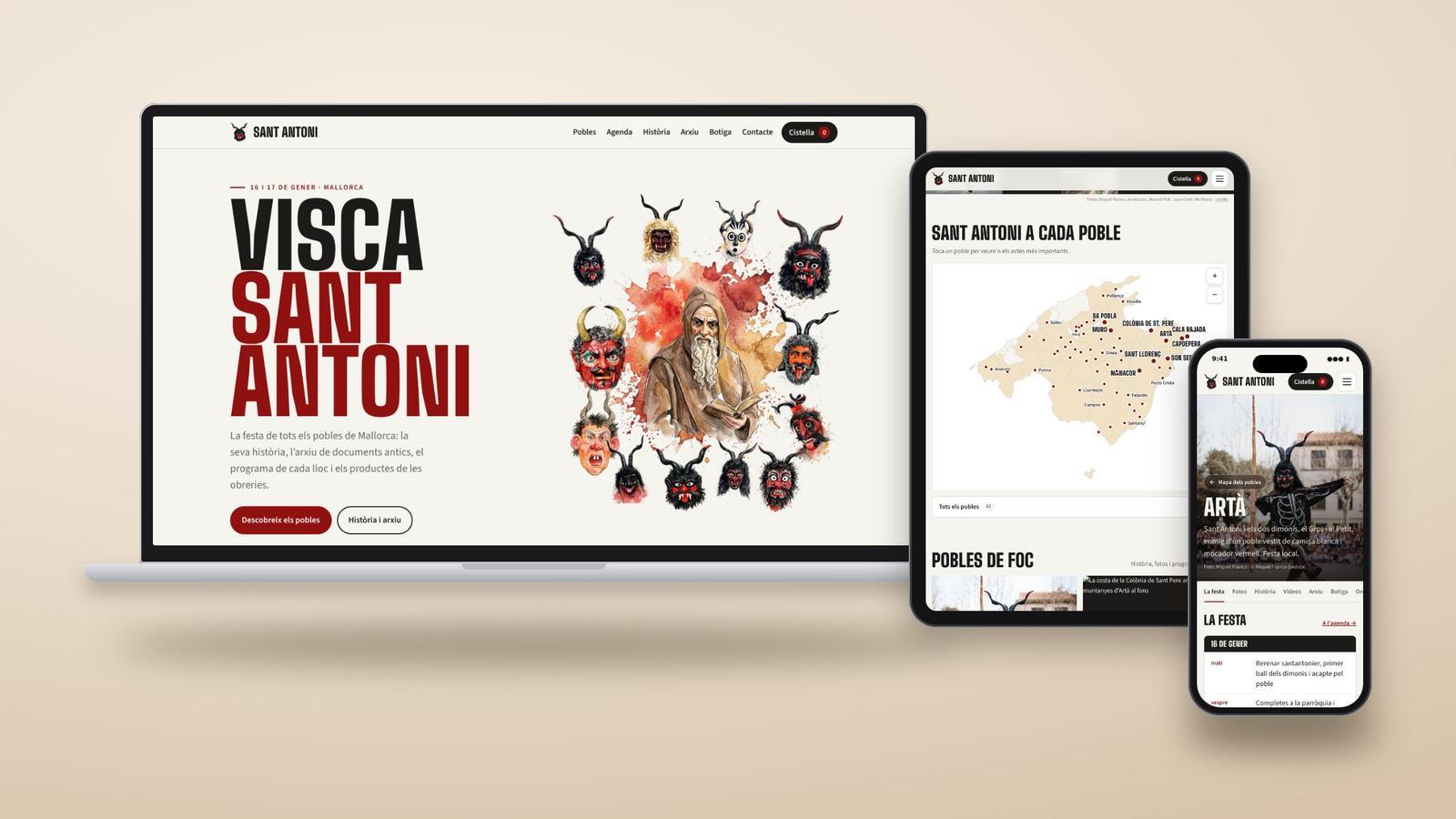
The first digital archive of Sant Antoni is born, with the history and traditions of all the towns of Mallorca
The project, promoted by Toni Ferragut with the collaboration of the Sobreposat of Sant Antoni of Sant Llorenç, collects documents, photographs, programs and music of the celebration and offers online stores to the brotherhoods
-
CAT -
CAST -
DE
PalmaThe most celebrated festival in Mallorca, Sant Antoni, now has its own space on the internet that aims to become the shared archive of the celebration on the island. The website santantonimallorca.com was born with the intention of gathering in one single portal the history, programs, images, music, and the peculiarities of the festival in all the towns of the island. The project, promoted by Toni Ferragut with the collaboration of the Sobreposat de Sant Antoni of Sant Llorenç des Cardassar, also incorporates an Instagram account, @santantonimallorca.
The initiative was presented this past Friday, November 13, to the Sant Antoni de Mallorca workers' guilds (obreries), who received the proposal favorably and showed themselves willing to collaborate by contributing photographs, old programs, documents, and information about the celebrations of each municipality.

The website has, first and foremost, a historical vocation. It explains the origins of the devotion to Saint Anthony the Abbot, how it arrived in Mallorca, and how the festival has evolved throughout the centuries, with the documented sources cited. An interactive map allows access to each town's page and to learn about its most characteristic elements, from the bonfires and blessings to the demons, the 'completes' (evening prayers), the parades, and other local traditions.
The portal also features an agenda that groups together the events of all the towns and will be updated annually with each year's programs. In addition, the project aims to continue expanding its archive with verses, songs, arguments, and performances of the saint's temptations, posters, press clippings, ancient documents, and photographs from different eras. The material is published with the name of the person who donated it and the original source.
Among the documents that can already be consulted are a drawing of a demon that appears in the baptismal record of Artà from 1677 and the accounts of the 'Obreria' from 1719, where the Comedy of Saint Anthony is documented for the first time. It also includes a musical section with scores of the Saint Anthony tunes adapted to different band instruments and ancient documents, such as the score of the dance of the demons of Artà, dated approximately from 1920.
Online shops for the 'obreries'
Another of the portal's features is the possibility for the 'obreries', 'sobreposats' and committees of each town to have their own online store. Each entity can manage its products and prices, receive payments directly into its account, and control orders from a panel that is also accessible from mobile devices.
The first store that is already operational is that of the Sobreposat de Sant Antoni of Sant Llorenç des Cardassar. It offers sweatshirts, fleece jackets, vests, scarves, mugs, and party games, which can be ordered until December 8th through the Sant Llorenç page. Orders can be picked up on January 3rd at Espai 36.
“For a small entity like ours, having the store on the internet has made our work much easier. But what we like most is that each town's festival has its own place, with its own history,” explains Toni ‘Botó’, a member of the Sobreposat de Sant Antoni of Sant Llorenç. Another member of the entity, Toni ‘Pelut’, highlights that “Sant Antoni belongs to all the towns” and that, if each 'obreria' contributes what it has, together they will be able to build “the archive of the festival that we didn't have until now”.
The project also invites town halls, 'dimoni' groups, 'obreries', and individuals to participate. People who have old photographs, programs, 'gloses', or memories of the celebration can send them via Instagram or email. In the case of paper documents, the organization takes care of digitizing them and returning them to their owners.
Until January 17th, the Instagram account @santantonimallorca will also share curiosities, images, and content about the history of the festival. The initiative is thus born with the desire to grow with the contributions of the towns and preserve the documentary and popular heritage of one of the most deeply rooted celebrations in Mallorca.
