The GOB denounces that an authorization to remove posidonia was taken advantage of to extract contaminated sediments in Can Picafort
Environmentalists question the 390 cubic metres of material removed with an excavator and report that no independent analyses or inspections have been carried out to determine its composition
-
CAT -
CAST -
DE
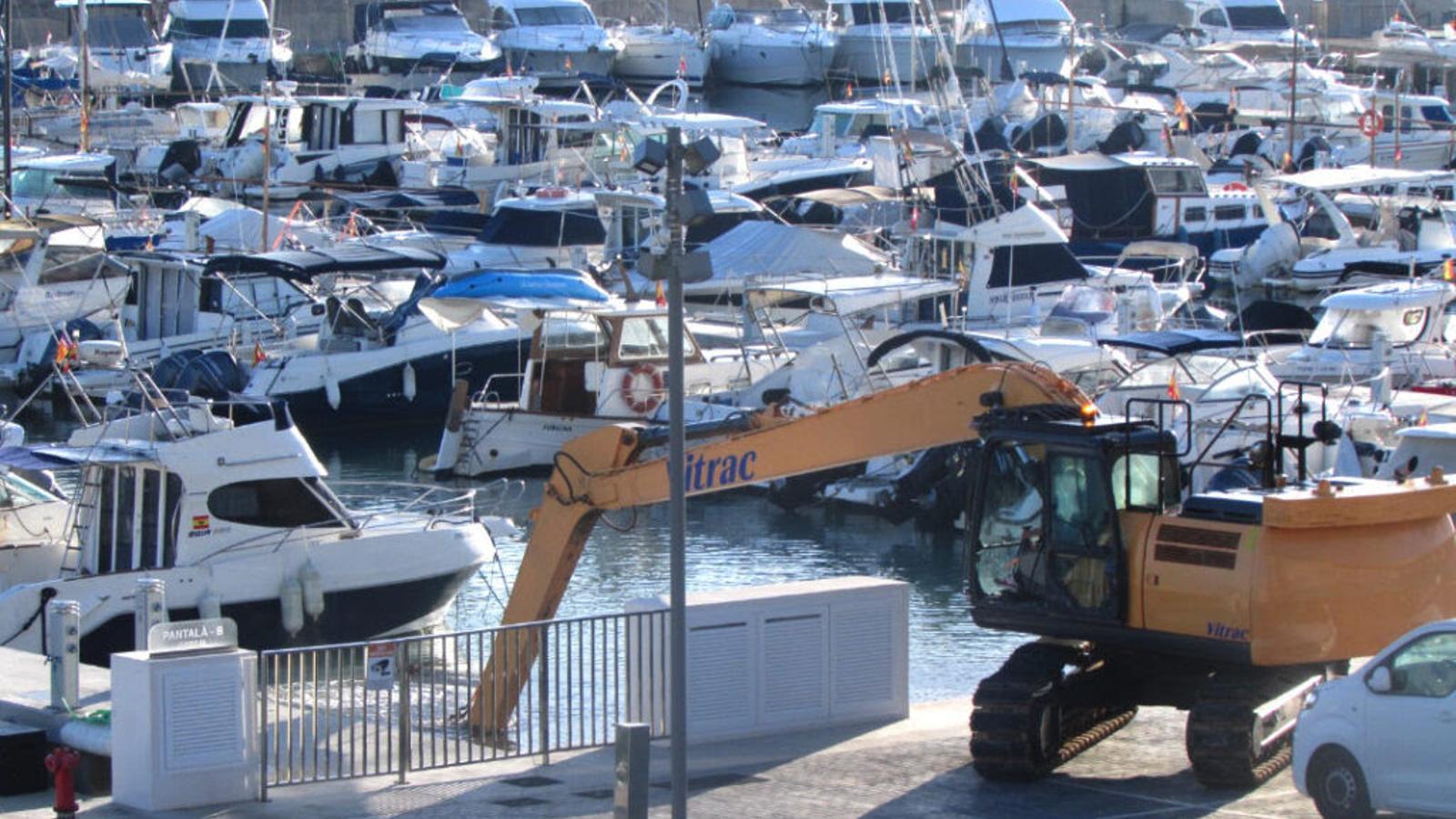
PalmaThe GOB has asked the administration to investigate whether the work to remove posidonia remains at the Can Picafort Nautical Club has also served to extract potentially contaminated port sediments. The environmental organization questions that 390 cubic meters of material were removed with an excavator without independent inspections, sampling, or analysis having been carried out to determine its composition.
In a statement, the environmentalists demand clarification on what was actually extracted from the port, why the removed material was not verified with external controls, and who must assume responsibility in case contaminated sediments were found.
According to the GOB, the authorization granted to mechanically remove the posidonia remains from docks A and B established that the work had to be limited to the first two meters of the water column and maintain a separation of one meter from the seabed. The permit, moreover, expressly prohibited any dredging operation and required the work to be stopped in the event that sediments were extracted.
Despite these limitations, the report prepared by the Nautical Club itself records the extraction of 390 cubic meters of material using an excavator. For the GOB, it is essential to determine whether this entire volume corresponded exclusively to posidonia remains or if it also included sediments from the port bottom.
The organization criticizes the administration for having taken the fulfillment of the authorization's conditions as proven solely based on the documentation presented by the Nautical Club, without any independent verification. The environmentalists also point out possible discrepancies in the entity's project, which refers to work at a depth of three meters, even though the regulations allowed a maximum of two.
The precedent of the contaminated sediments of 2022
The GOB's concern also relates to a precedent documented in 2022, when a concentration of contaminated sediments was detected at the port of Can Picafort, which cannot be dumped into the sea and which require specific treatment and management.
The environmentalists recall that in Mallorca there is a lack of infrastructure and adequate spaces to manage this type of material. Therefore, they demand that the administration clarify what facilities or alternatives are currently available and whether any of the materials removed during this year needed this type of treatment.
The GOB also puts on the table a sanctioning precedent: in 2019, PortsIB imposed a fine of 9,000 euros on the Can Picafort Yacht Club for having carried out draft replenishment work without complying with the conditions established in the authorization.
In the opinion of the environmental organization, this antecedent reinforces the need to verify with guarantees what has happened with this year's actions, presented as a posidonia removal. Specifically, they want it clarified whether this work also involved the extraction of seabed sediments or a modification of the authorized drafts.
The GOB insists that it is not enough to accept the concessionary entity's justification as good: it is necessary to determine the nature of the extracted material and guarantee that, if it contains contaminants, it has been managed in accordance with environmental requirements.
