"They sedated me and I woke up in Madrid: that is how I entered the Patronato at 16 years old"
Consuelo García del Cid, survivor of the Francoist reformatories, participates this weekend in Alaró in some conferences organized by Dones en Dansa about this institution of the dictatorship

-
CAT -
CAST -
DE
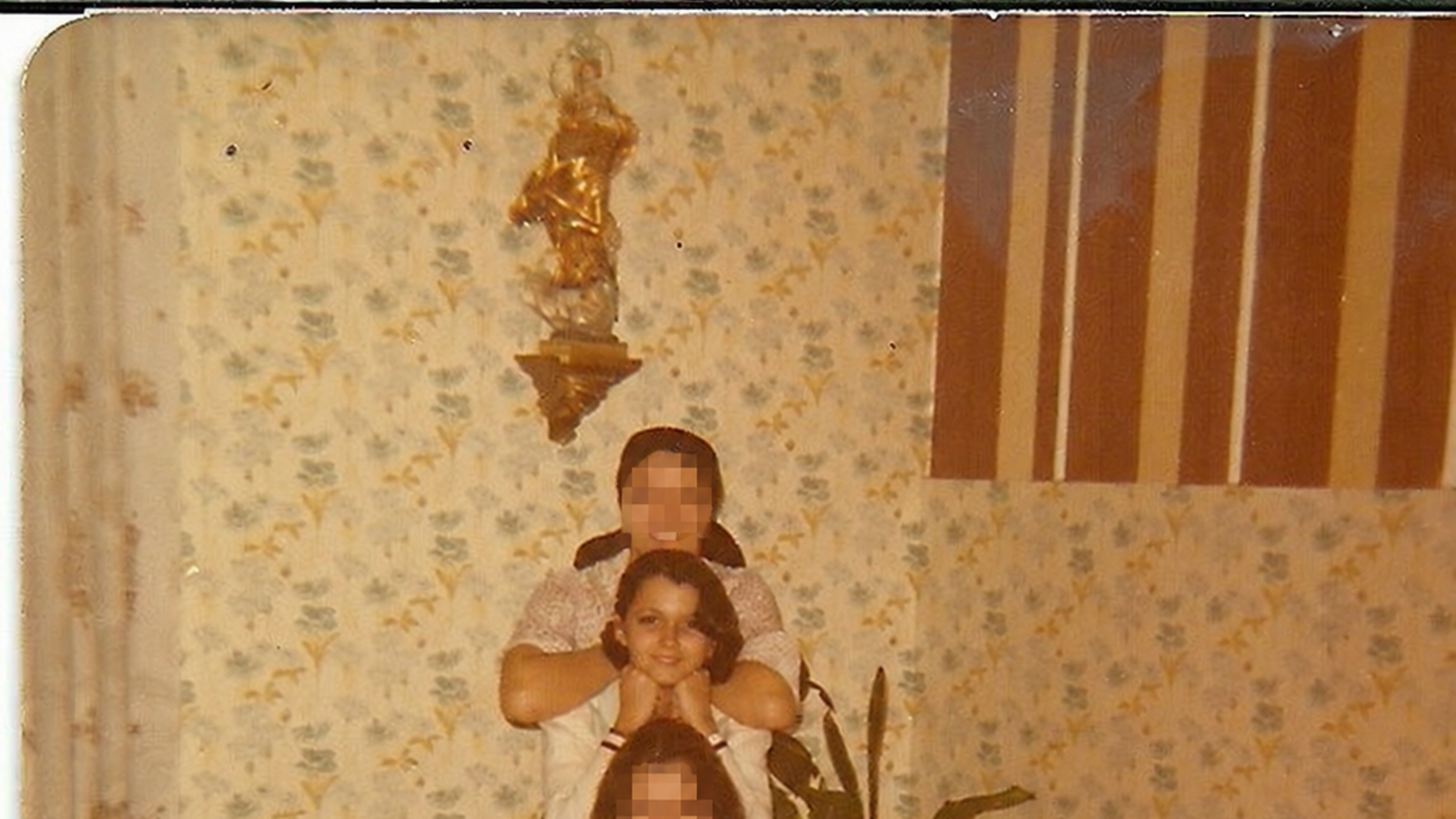
PalmaAt 16 years old, Consuelo García del Cid disappeared from her life for 24 hours. Her mother woke her up early in the morning because she had to go to the academy. At home, there was the family's trusted doctor, linked to Opus Dei. García del Cid explains that they injected her with a sedative intravenously and that she lost consciousness. She woke up the next day in a room she did not know, with the door locked and a window with bars.
She looked out into the street. The car license plates started with an M.
She had been transferred from Barcelona to Madrid and interned in a center for the Adoratrices. "At that moment I entered another universe. I entered hell," she recalls now. She did not know what she had done to end up there. "The first thing I thought was to take my own life. I didn't want to keep living, because, if that was my destiny, I didn't want it."
García del Cid is a writer, researcher, and activist, and for decades she has been trying to reconstruct and explain what happened inside the reformatories linked to the Patronato de Protección a la Mujer, a Francoist institution that, under the discourse of protection and re-education, interned young women considered morally deviant. This Friday and Saturday, September 25 and 26, she will participate in the democratic memory conferences with a gender perspective being organized at the Son Tugores house in Alaró, dedicated precisely to recovering this history.
For García del Cid, the name of the institution already contains one of the system's great contradictions: “The Patronato did not protect, it imprisoned”. As she explains, any adolescent who strayed from the behavior that the regime considered acceptable could end up interned. “Crime and sin went hand in hand, just as Church and State did”, she summarizes. She defines it as “a hidden penitentiary system for minors who had not committed any crime”.
The environment of a conservative family
García del Cid had grown up in a conservative, right-wing family. Her time in private schools, she explains, had prevented her from becoming aware of the country she lived in. It was at the Fivaller Academy where she came into contact with people and a social reality that until then she was unaware of.
She began to frequent alternative bars in Barcelona, to demonstrate against Franco, and to change her way of dressing. At home, she brought in leaflets against the dictator and political pamphlets. Her first demonstration, she says, was at only 14 years old, following the death sentence of Puig Antich. "I do not acknowledge having committed any error," she asserts. "What I was doing at 16 was what any teenager of the time was doing. The problem is that I did it in a conservative family."
That rebellion had consequences. According to her testimony, the family could directly request the admission of a minor without her being under the guardianship of the Patronato, as happened in her case. She also speaks of the so-called "guardians of morality," which she describes as a kind of female police force in charge of monitoring women's behavior. They could intervene, she explains, upon reports from priests or neighbors, or the actions of these women in the so-called "conflict zones."

Work, pray and obey
When she entered the Adoratrices in Madrid, García del Cid asserts that she immediately understood that she was not in an ordinary educational center. The inmates had their correspondence restricted, visits were supervised, and, according to her account, speaking freely with other inmates could lead to punishments. She also describes periods of isolation, transfers as a form of punishment, work in workshops without remuneration, and strong religious indoctrination.
“Scrubbing, working, and praying,” she summarizes. The inmates also received academic training, but García del Cid asserts that classes took up only about three hours a day and that many of the teachers were nuns without specific qualifications. “Academic training was not a priority,” she states.
Especially harsh, according to her testimony, were the conditions for the inmates who arrived through their families, the so-called “paying ones.” Her mother, she explains, paid 25,000 pesetas monthly for her stay, while the Patronato paid, according to her account, 2,000 pesetas for each tutored inmate. “We ate the same shit, we worked like everyone else, but they destroyed us more than the rest because we thought,” she states.
She also remembers that within the Adoratrices there were nuns who showed a different attitude. She especially mentions one nun, Sister Trinidad, who would hide omelet sandwiches under her pillow, give her cigarettes, and watch the door so she could have moments of respite. “I will never forget her,” she says. “She was part of all that, yes, but she saw me in such a bad state that she had compassion for me.”

“My head became an archive”
One of the things that marked her the most was the prohibition of having privacy. The interns, she explains, could not have notebooks or write a diary, because their belongings could be searched. This caused her to transform memory into a survival tool. “From the moment I entered, my head became an archive, a recording machine,” she explains. She remembered names, spaces, smells, and conversations because she was convinced that one day she would have to tell what had happened.
When they explained to her what the Patronato was and told her about the virginity tests and the “guardians of morality,” she understood, according to her account, the dimension of the system. “I thought: this is a Spanish Gestapo against women.” And she made a decision: “From the day I entered, my only goal was to survive and tell about it. I have achieved both things.”
Baby theft
In her subsequent research process, García del Cid also collected testimonies about pregnant minors who went through institutions linked to the system. She especially remembers two inmates who arrived crying and who, according to her, had become mothers during their stay at another center.
That experience, she says, marked her and led her to investigate what, according to the testimonies she has collected, happened to some underage mothers and their children. García del Cid maintains that in several centers women could receive the explanation that their children had been born dead, while she considers that there were cases in which the infants were separated from their mothers.
She points out centers such as Peña Grande, the Almudena maternity ward, Villateresita and the Hogar Santa Marta and argues that this reality must be part of the investigation and memory regarding the system. For her, the most difficult thing is having to reconstruct, decades later, stories that were marked by silence.
“They inoculated us with the stigma of shame”
García del Cid believes that the system not only punished the inmates during the time they spent in reformatories. It also left a social mark that could accompany them throughout their entire lives. “They inoculated us with the stigma of shame,” she states. “Saying that you have been through one of these reformatories makes people immediately question you: ‘You must have done something to be there’.” She herself began collecting testimonies from survivors in 2011. She did it, she explains, often at night and via Skype, when the husbands and children of the women speaking with her were asleep and did not know about their past.
“Showing your face is not easy, because you know that they will judge you eternally,” she says. Her career has not been without consequences. In 2017, after an intervention in the Senate in which she presented her research on the child protection system, she was sued by a judge following her statements and the content of the book The Mess of Social Services. The process ended with her acquittal on appeal.

From Francoism to social services
It is precisely in this subsequent investigation that García del Cid began to establish what she considers a connection between the Patronato and certain elements of current child protection systems. The Patronato announced its disappearance in 1978, but she explains that it did not definitively disappear until years later. According to her research, some of the women who worked as "guardians of morality," officials dependent on the Ministry of Justice, later went on to work as social workers.
She also explains that in 2017, after a conference, several young women approached her to explain that they considered themselves to have been victims of social services and asked her for help. Based on those testimonies, she says, she began to investigate the connections between the old religious congregations and some current juvenile centers. "The forms have changed, but not the substance," she maintains.
It is one of the most controversial issues in her discourse, which she herself has turned into a central line of her research activity. García del Cid argues that the current system has changed its forms and legal framework, but considers that mechanisms of control over certain families and minors persist.
A memory that still needs reparation
For García del Cid, remembering the Patronato is not just about recovering an unknown part of the dictatorship. It also involves talking about the consequences that that experience left on the women who went through it. “The lives of the majority have been dictated by the fact of having gone through these horrible reformatories,” she remarks. She explains that many survivors left the centers without trust in others and with the need to distance themselves from their family environment. She left with the goal of escaping and building her own life.
Now she argues that reparation is necessary and that it cannot be limited to financial compensation. “Reparation is necessary, in addition to being a right. And not just economic, but also emotional.” This is also the meaning she wants to give to the Alaró conferences: to recover a memory that, according to the organizers, cannot be considered complete if it leaves out the women who suffered specific forms of repression and control during the Franco regime.
For García del Cid, her personal history summarizes the meaning of this battle for memory: “They did not manage to break me.” And she adds: “My only goal was to survive to tell the tale.”
