The nautical clubs warn: "The middle class will not be able to go sailing"
The sector demands measures to curb the advance of private marinas and guarantee local population access to the sea

-
CAT -
CAST -
DE
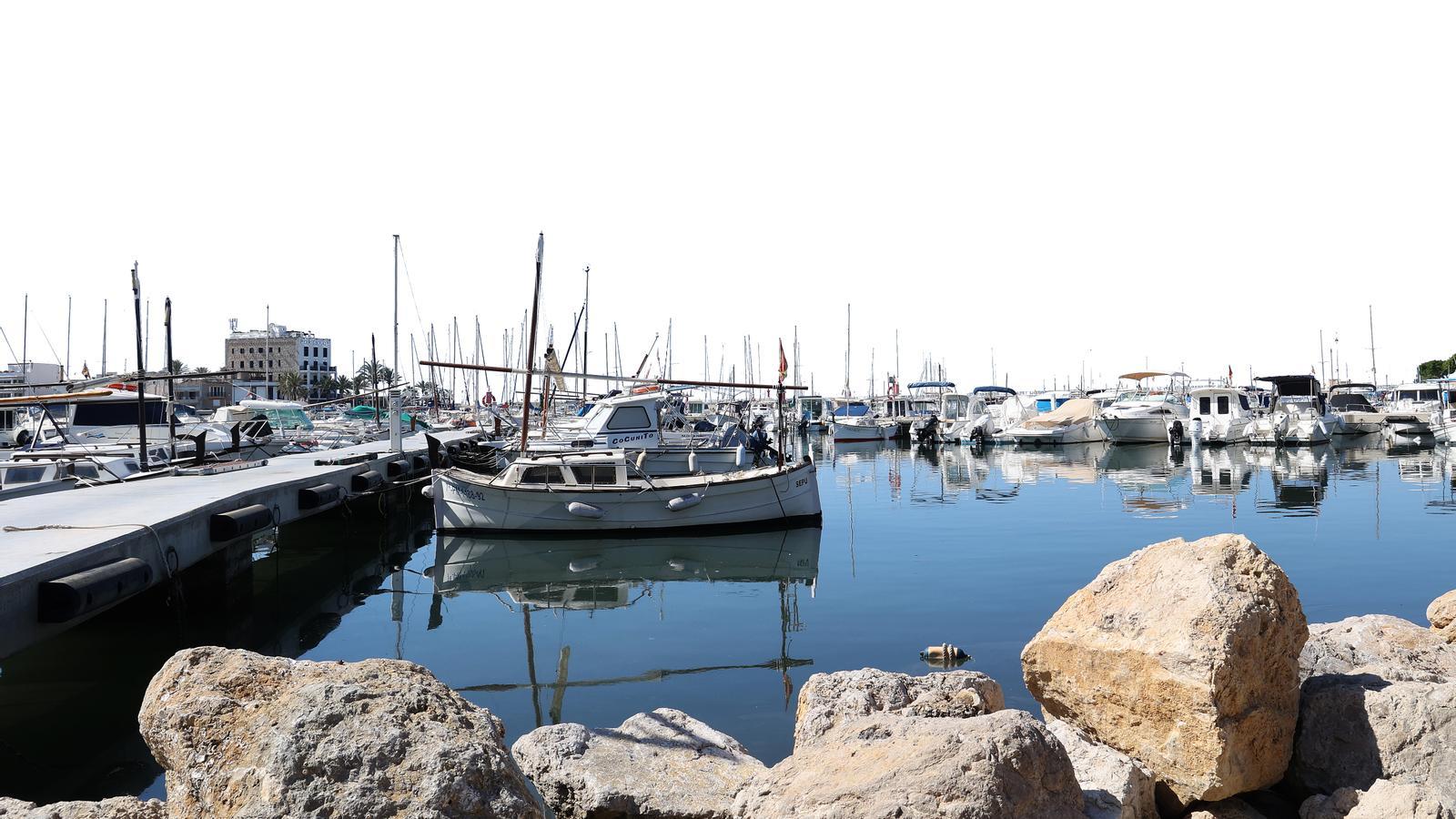
PalmaThe Portitxol members' assembly has ratified the reform project, which will involve a significant renovation of the facilities, valued at 10 million euros, and which has caused tension and confrontation within the entity. According to some, it is a project that “reduces the model of social boating, because more moorings for large lengths are being made,” laments a historic member like Jaume Garau. But, according to the board and another part of the members, “it preserves the essence of the club and the facility does not grow outwards.” “80% of the moorings will continue to be less than eight meters,” explains the president of the Palma club, Pep Santander.
The project foresees a comprehensive renovation of Portitxol, with the reorganization of the inner and outer harbor, new pontoons, a breakwater, a boatyard, and improvements in services, buoys, and environmental safety. The reform includes more than 12,000 m² of additional water surface, 4,300 m² of public space, 5,500 m² of green areas, and an underground car park. The Port Authority argues that these changes will consolidate the social and sporting character of the club, although some neighbors and old members fear that the action will accentuate the orientation towards luxury nautical tourism and modify the appearance of the neighborhood.
The Nautical Club had reached the limit of the concession and, to obtain 15 extra years, “it had to make investments”. “The law requires it and the Port Authority has tried to set affordable conditions to carry out these works and develop a project that has no impact and allows current members to continue enjoying the sea”, explains the director of the Port Authority of the Balearic Islands, Toni Ginard. El Portitxol will have some more moorings and will be renovated, but the board insists that it will not lose its character nor will it expel members in favor of larger boats. “It is the fear we have, because we see it happening everywhere”, warns Jaume Garau.
It is certainly happening, and at an accelerated pace. El Portitxol will continue for at least 15 years managed by a Nautical Club, a non-profit entity with prices around 140 euros per month for the smallest boats. “It is very reasonable”, states its president. On the other hand, at Port d’Andratx, the Sailing Club is already history, as also happened with the Ibiza Nautical Club. Two historic clubs that, upon the expiry of their concession –non-renewable–, could not renew it: two private companies have taken over the management.
“The gentrification model that we have experienced on land in the Balearic Islands is coming in strongly. If we don't stop it, if the Administration doesn't use the mechanisms it has to curb it, the middle class can say goodbye to going sailing”, laments Lorenzo Pons, president of the Mediterranean Sailors' Association, the main voice of what can be considered the social and popular nautical sector.
The sports ports of the Balearic Islands have been experiencing a transformation for years that many nautical clubs and sea users consider an elitization of the coast. The expansion of private marinas, the increase in space allocated to large vessels —there is a great demand that moves hundreds of millions in the Islands alone— and the growing difficulty in maintaining activities linked to popular sailing have fueled a debate about what model of ports the Archipelago needs. A tug-of-war between, on the one hand, the lucrative business of boating and, on the other, the bulk of sea enthusiasts, gathered around traditional nautical clubs, non-profit entities that historically “have promoted grassroots sports, sailing schools and access for the local population to the sea”. “We will continue to do so”, states the president of the Association of Nautical Clubs, Antoni Estades.
The most serious cases
The Eivissa Nautical Club and the Port d'Andratx Sailing Club have become the main benchmarks of the elitization process that worries the traditional sector so much. In Eivissa, the end of the historical concession of the Nautical Club generated a long judicial and administrative conflict. The entity's managers and hundreds of members denounced that economic criteria had weighed more than the club's social and sporting function. In Andratx, the reordering of concessions has reduced the space intended for training and popular sailing activities, and puts at risk a model that for decades has combined boating with an important social function.
A long-time member of the Sailing Club, who asks to remain anonymous, assures ARA Balears that "large yachts will increasingly prevail". "This will affect the members, we are clear about that. We have had elite kayaking athletes, we enjoy a conversation at the bar and seeing children sail. All of this will disappear," she says.
According to nautical clubs, these cases show a general trend: when concessions end, projects focused on large lengths and economic profitability tend to gain ground. But the Director General of Ports, Toni Mercant, qualifies this view and recalls that “80% of moorings in the Islands are for boats under eight meters”. Mercant assures that the Government's priority is “to guarantee citizens' access to the sea and maintain a balanced model between economic activity and social function”.
The new Ports Law that the Parliament has just approved – it will soon be published in the BOIB – incorporates the figure of public utility, which will allow nautical clubs to obtain administrative recognition for their work as promoters of sport. This declaration will be the gateway to a previously unthinkable option: “To definitively manage the facility, not to be subject to a new public tender that puts the model at risk due to the possible entry of a private company”, explains Antoni Estades. “We are facing a success of the Government, which has wanted to listen to the sector in this regard. If we can achieve the regulations to be developed, we are possibly facing a key measure for our survival”, explains Estades.
The new law also incorporates an explicit limit on the commercialization of moorings, as explained by the Director General of Ports of the Balearic Islands. “The modification of the Ports Law sets a maximum limit of 20% of moorings destined for commercial activity”, he says. According to the Director General, this regulation seeks “to avoid excessive commercialization of ports and guarantee enough space for social boating”.
Ports of the State
The new regional Ports Law will allow, according to the Government and the sector, that nautical clubs have at least the option to indefinitely manage their facilities, but this is not the case for State ports. Cases within the scope of the Port Authority, such as Portitxol, depend on state regulations, "with a liberal approach, which seeks to promote competition and which we cannot ignore," comments Toni Ginart. Of course, even in this case "there are mechanisms to try to maintain a balance and prevent marinas from getting everything." "It is not the model we want," he assures.
The main instrument used by the Port Authority is to prioritize in the tender requirements "the promotion of nautical sport, which is one of the great characteristics of nautical clubs." "Marinas are not interested in this formula. And it is logical, because they are companies set up to make profits. But in our case, we also want there to be social boating within the scope of action of the five major State ports," explains Ginart. It is for this reason that he defends "the terms of reference for the West Pier, which makes the need to promote nautical sport a requirement." "In short, citizen participation," he emphasizes.
Marinas are the enemy of popular boating, because their priority is “to make money”. “Just look at what happened at Port Adriano, where there was a small port full of residents from Toro and now it's a mess, because it's a backdrop with yachts and no people,” explains José Pérez, a resident of this Calvià neighborhood who remembers “the atmosphere there was before the expansion”. “They left us out, the neighbors, and now rats run around there, it’s like a ghost port,” he adds.But this figure – most experts and association spokespeople consulted agree – “must exist”. “It provides fundamental income, and both the Port Authority in its ports and Ports de les Illes in others need some marinas,” assures the president of the Association of Nautical Clubs, Antoni Estades.The director of the Port Authority, Toni Ginard, goes further and recalls that, thanks to the income from marinas – in 2025 they contributed 24 million euros to the coffers of this body that depends on the Ministry of Public Works – “fees paid by shipping companies that transport people and goods can be partially subsidized,” he stresses. “If it weren't for what marinas contribute, we would have no choice but to raise the prices of other services, such as regular boats. Ticket prices for residents and goods coming from outside would be more expensive, because companies would have no choice but to pass them on in prices, which would increase,” he warns. In this regard, Ginard assures that “social boating must be guaranteed, so that islanders who want to enjoy the sea can do so and can preserve all the associated traditions.” “That's why we have to find the balance between marinas, nautical clubs, and the 8,000 moorings we have under direct management,” he concludes.
