"They have stolen 19 days of class from us": empty classrooms and discontent over the advanced end of 1st year of Baccalaureate
Education defends that the course continues until June 19, but teachers, families and principals denounce student absenteeism, lack of teachers and unfinished curricula
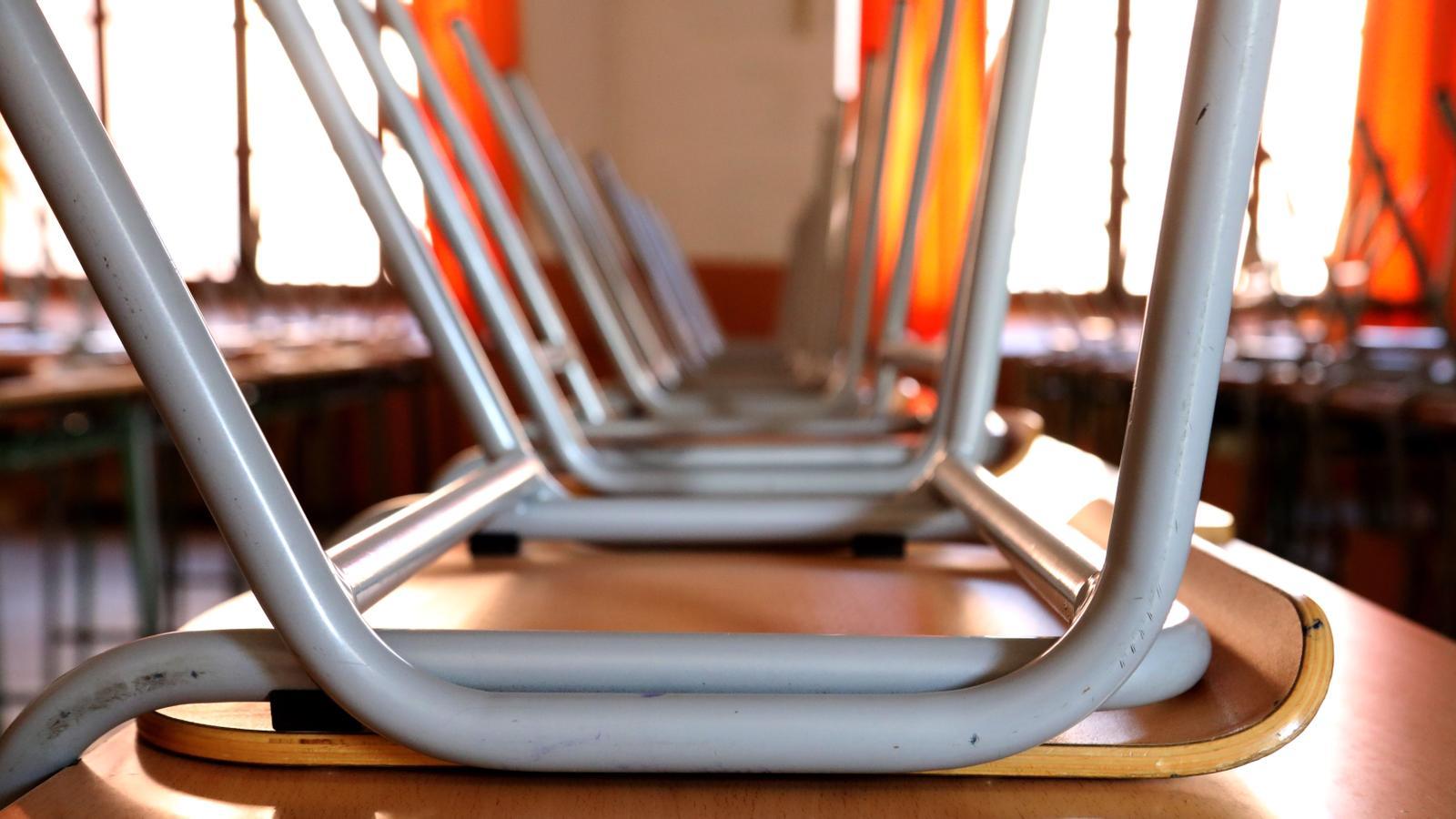

PalmaThe advancement of final exams and the closing of evaluation records for first-year Baccalaureate has altered the end of the school year in the Balearic Islands' high schools and has opened a growing debate among teachers, families, and students about the real meaning of June now. The decision by the Department of Education—which sets the closing of ordinary grades before June 5 and keeps classes until the 19th—aimed to reorganize the calendar, advance retakes, and dedicate the following weeks to both supporting students with pending subjects and maintaining teaching activity with approved students. However, on the ground, the majority perception is different: absenteeism has soared and effective learning time has been lost.

The Federation of Families of Mallorca (FAPA) has been one of the most critical voices regarding the implementation of the measure. The president, Xavier Ferriol, warns that the change has had direct effects on the internal organization of the centers and the real availability of teaching staff. In this regard, he points out that “they have removed hours of permanence for teachers, which causes a shortage of teaching staff. In addition, during the University Entrance Exams (PAU), there are teachers who provide on-site support as reviewers and are not available at the centers”. in situ as reviewers and are not available at the centers”.
Ferriol adds that this accumulation of tasks and absences generates a domino effect that directly impacts the functioning of the classrooms. As he explains, “there are centers that have dedicated two days to the claims of those who failed the first year of Baccalaureate, which means two more days without class. Some teachers are also at the PAU and have not been able to attend to the claims. The students' complaint is that they find themselves with the absence of teachers and classmates in the classrooms”.
In class until the 19th (on paper)
From a regulatory point of view and in response to families, the Ministry of Education maintains that the calendar is clear and leaves no room for interpretation. It recalls that the course instructions establish that teaching activities must continue until June 19 and that attendance is mandatory until then. It also insists that the period between ordinary evaluation and the end of the course must continue to have educational content, with reinforcement, tutoring, and guidance. "The current instructions clearly define the fully teaching nature of this period," maintains the Administration, which also assures that schools "have the necessary teaching staff to guarantee the normal development of classes until the end of the course".
But the reality described by many teachers and management teams is more irregular. At IES Sineu, Professor Tonina Siquier summarises the discontent forcefully: “We finished on Tuesday, June 2nd. Finishing the syllabus is a joke, because it is completely impossible, beyond any reality. They have stolen 19 days of the course from us. It makes no sense,” she laments.
As she explains, the disconnection of part of the student body is evident and also affects recoveries. “What is observed is that students with three, four or five failures do not intend to go to the end-of-June recovery, because they have already given up,” she points out, while admitting that only cases with few pending subjects try to keep up the pace, because in three weeks there is no time to recover. This situation is repeated in other centres. At IES Santa Margalida, Professor Marina Llobera explains that the change has been introduced without room for adaptation: “They changed the rules of the game with the course already started”. This has forced content to be cut: “With three fewer weeks of class, we inevitably had to cut somewhere. Furthermore, if students don't come now, we can mark them absent, yes, but their record is closed and will have no repercussions”.
If they are already approved, they don't go to class
The problem, various professors agree, is the inconsistency between the administrative closure of grades and the formal continuation of the course. “The students have officially finished the course and their academic record is closed. But, at the same time, they tell us that the teaching sessions have not yet ended,” laments a teacher. This ambiguity has had direct effects on attendance: “There are many students who say: ‘I have already passed this subject, I have already taken the exams... What's the point of coming?’”, says the professor from Santa Margalida.
In this context, the teaching staff is forced to reorganize the sessions. At IES Son Pacs, a teacher describes reduced groups: “Attendance is irregular. In a class of 28 students, I have had about fifteen; there have been sessions where there were even fewer, because there are students who 'play' and tell their parents that there is no more class.” This forces the work to be divided between new content and reinforcement: “I have taken the 19th century and I have redone it to review with those who have failed; and with those who have passed, I have already started the 20th century.” The result, she explains, is a feeling of saturation.
The situation is also reflected in the students' behavior. A student from IES Josep Maria Llompart describes a feeling of an early end: “We perceive that the course has finished ahead of time and that we are losing class hours that we still need, because what we don't do, we will carry over to second year”. On the other hand, a student from IES Ramon Llull has chosen to stop going to class: “I don't go anymore. All in all, why should I go if it seems like the course has already ended?”. He considers the new post-grade period to be of little use: “It's not like before anymore and you don't risk anything either and, besides, it's what some teachers tell you”.
The management teams also note this trend. The director of IES Ramon Llull, Josep Fillol, summarizes the pattern: “Students are absent a lot: those who have passed do not attend class and those who have to take the extraordinary exam hardly show up”. The school concluded the first year course on May 28.
End-of-course collapse
The FAPA insists that the problem is not just about specific organization, but about resources and the functioning of the system. Ferriol warns that the combination of factors has worsened the situation in schools: absences, reorganization of schedules, and teacher overload at a key moment of the course. Amidst this scenario, the Ministry maintains that the regulatory framework guarantees the continuity of teaching until the end of the course. But, in the classroom, teachers and families agree on a shared perception: the most affected by the change are the students, both those who have passed and those who have failed. For the latter, going to September was more useful.
