From Elche to Manacor: The curious round trip of Palm Sunday's palms
Artisan families keep alive the sale of palms for Palm Sunday, a tradition increasingly difficult but still present throughout the island
-
CAT -
CAST -
GER
PalmGardening has marked the life of the Navarro family. Originally from Elche, Antonio Navarro Maciá received one of the commissions in 1910 that would mark his life and force him to move to Mallorca. That was the year the Palma City Council decided, against all odds, to definitively activate the construction of the Sagrera promenade with the aim of enhancing the route leading to the Lonja, coinciding with the celebration of the Balearic Products Exhibition, at the beginning of the 20th century.
The intention, already planned in 1903, was the creation of a boulevard that would connect the route near the gardens of La Seu and the masterpiece of architect Guillem Sagrera, and it used the symbolism of the palm tree, already present both in the esplanade of the Lonja square and in the helical columns inside the medieval building.
So the City Council decided to call an expert from the city with the most palm trees in Europe. “It is curious how three generations of the same family have been in charge of the three sections in which the promenade has been built over the years”, explains Antonio Navarro (Manacor, 1972), grandson of the first and son of Felipe Navarro, who would later also be hired to supply and plant the 118 palm trees that were placed when the Marítimo promenade was inaugurated in 1958. “Shipped from the port of Alicante, each one cost 1,200 pesetas, plus 125,000 for transport”, adds Antonio, who as a child retraced his grandfather's steps and settled back in Elche.
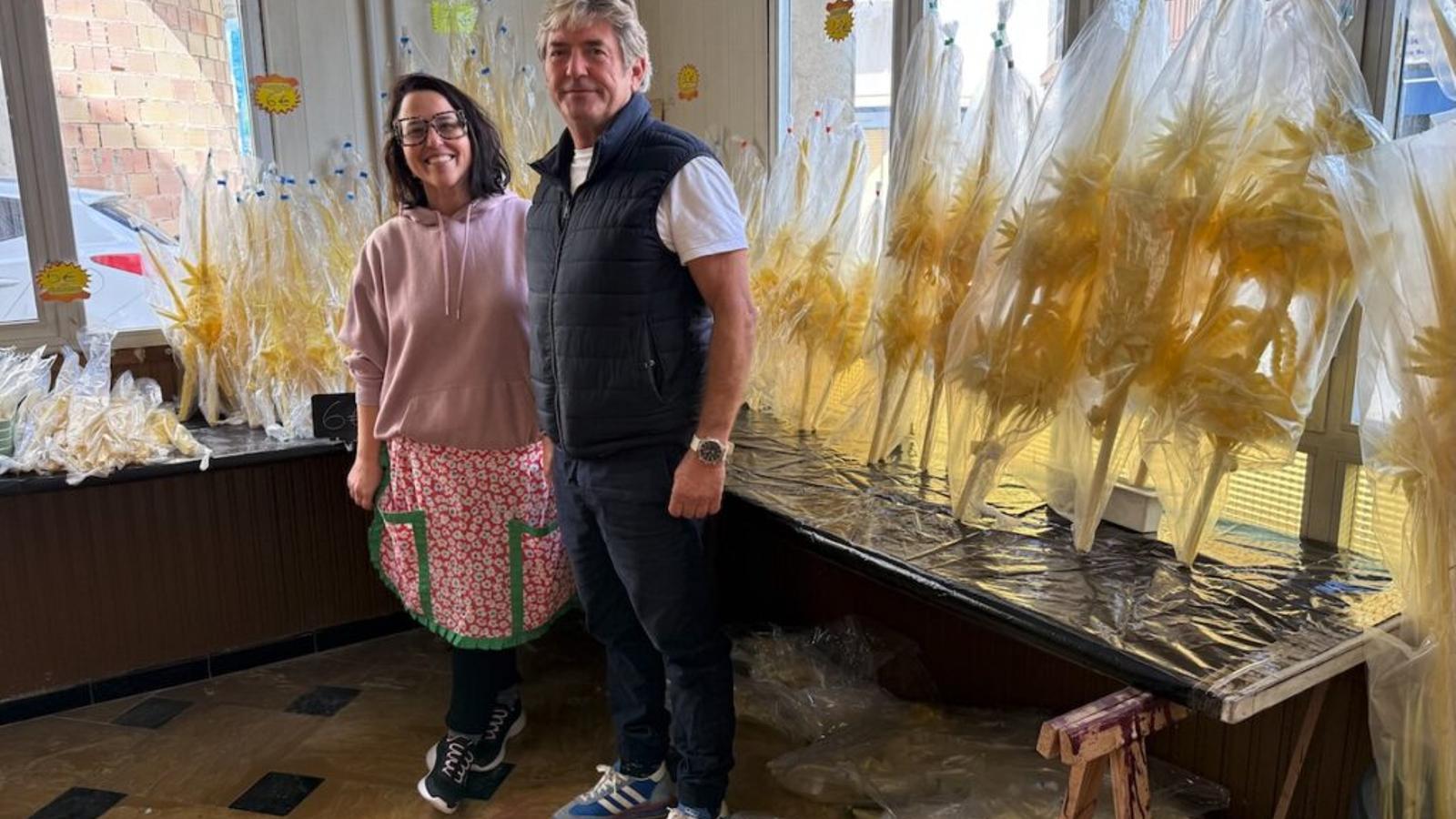
And what does this have to do with Holy Week? Easy: date palm trees and the family profession, always mixed with craftsmanship, have meant that throughout this time, emigrant Manacorians have returned to the island every year to sell one of the most in-demand and special processed products from the tree: the palms, handmade pieces that this Sunday children and families will take to the blessing of Palm Sunday, the start of Holy Week. A craft that begins by choosing the central fronds of each palm tree, those that, by being 'hidden' behind others, 'have not been able to photosynthesize and remain whiter'. A selection process that is immediately followed by washing away impurities. The moment when the leaves are submerged for 24 hours in chlorinated water, with the aim of obtaining an even clearer product; which is then left to dry in airtight chambers with sulfur. A process that usually begins in September, 'when the sun and heat are not so strong'.
Antonio Navarro's family business has been distributing and selling palms worked with varying degrees of elaboration throughout the island for decades: from Pollença to Manacor, where every year he rents a premises for two weeks on Avenida del Tren, where he sells spike palms (the simplest), two-ball palms, four-star palms, plain ones, plain ones with patterns, appliqués, and other special ones that bear the names of those who started the model, Sara or Noelia.
"Outside of Palm Sunday, it's difficult to sell them. Sometimes they ask us for floats, for El Rocío, or for appliqués or weddings in Elche, where this craft is more established," says Natalia Morán, who helps Antonio for a few days at the shop open in Manacor. "Now we have to work twice as hard to earn half," concludes Navarro when asked about sales: "We're managing, but because we also do other kinds of work. Every year it's a little less..."

From Elche, with loveAlso in Manacor, Pedro Llinás Peric and his eldest son, Pedro José, sell the last palm branches they have left at a rented stall in the Plaza de las Verduras, in the city center. For two weeks they have moved their headquarters here, normally located at their home, on Calle de la Cruz, number 11.
“We have been working day and night for a month so that no one here goes without, so that it is noticeable that it is Holy Week”, says Peric, while recalling that his skill with this raw material comes from when, as a young man, “I fell in love with a girl from Elche, who taught me how they were made in case I ever needed it to live”, he explains, amused, at 91 years old.
“We have worked with palm all our lives. It is a tradition that was taught to me and that I have tried to pass on to my children, because I believe that it is already a Majorcan tradition and that we must not let it be lost”, he claims with several models in both hands and while commenting on how the palm tree leaves are chosen and what the treatment process is, until reaching the final result.
