Vox and the PP hold up women's freedom to ban full-face veils: "Lessons on feminism, not a single one"
The right-wing parties approve a bill against the burqa and the niqab that will be sent to Congress

-
CAT -
CAST -
DE
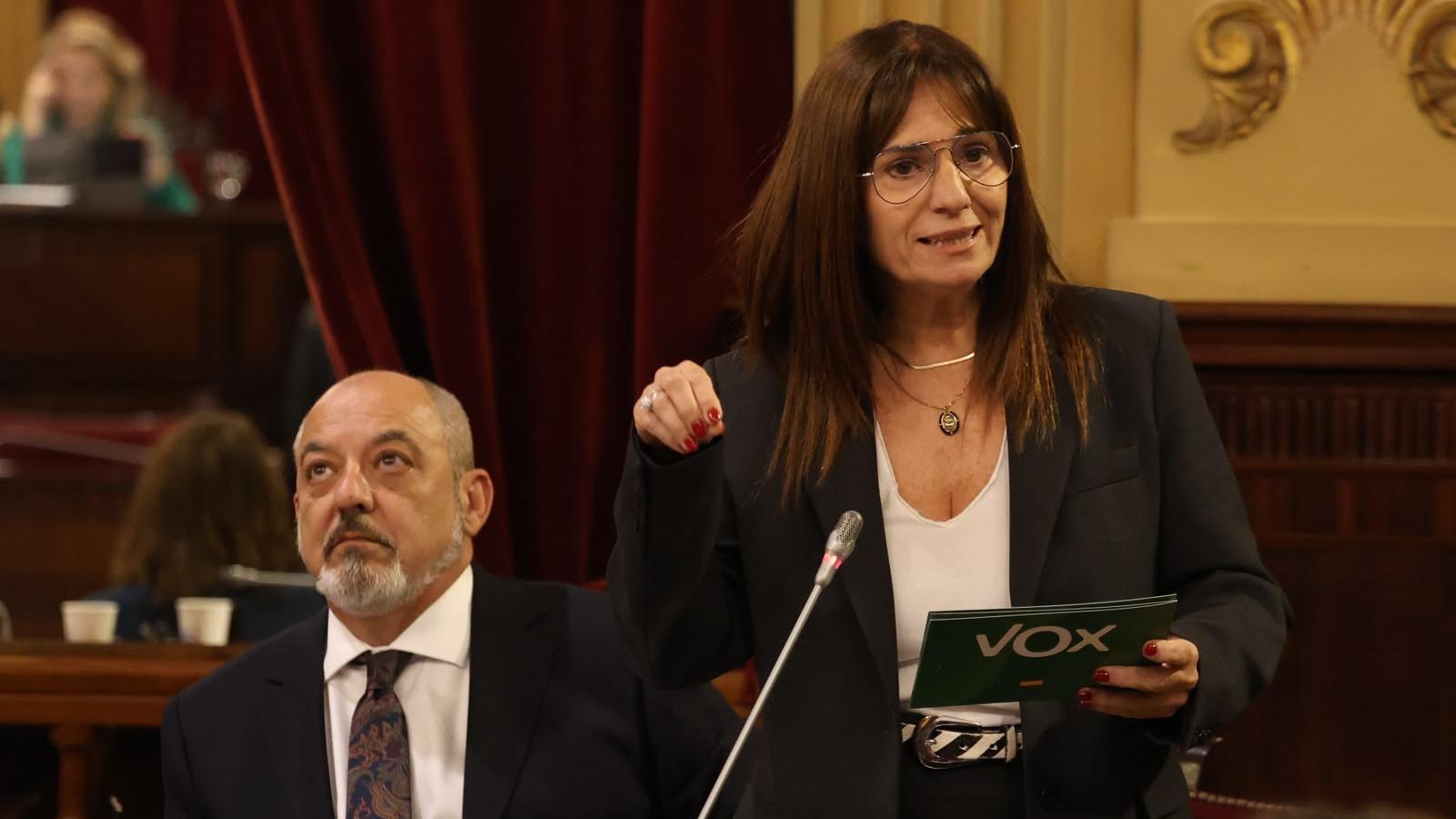
PalmaVox considers that its opposition to the burqa and the niqab has not yet been made clear enough. For this reason, the far right has brought a text to Parliament for the fourth time to prohibit the use of full-face veils in public spaces: a legislative proposal that has received the support of the PP and will be sent to Congress for processing. But this time, it has done so by claiming "equality" and "women's freedom" and leaving the Islamophobic discourse that characterizes the party in the background. "Lessons on feminism, to us, not a single one!", said the Vox spokesperson, Manuela Cañadas.

The regulation, which Congress will have to approve or reject, because Parliament has no jurisdiction over the matter, establishes the prohibition of the use of full-face veils in public spaces and incorporates sanctions ranging from financial fines to the expulsion of migrant women from the State. "I appeal to the women of Mallorca, Menorca, Ibiza, Formentera, and all of Spain," defended Cañadas. "Our grandmothers built this land with immense hardships, and our mothers broke the mold," she continued: "How will they look their daughters and granddaughters in the face if they lower their arms today in the face of the imposition of fundamentalism?". In a jab at the left, she warned: "Submission does not become freedom just because you call it diversity".
Although Vox is committed to eliminating the Comprehensive Law against Gender Violence, Cañadas has denied that her party is a denier of sexist violence. "What we say is that a man, by the mere fact of being a man, is not a rapist or an abuser," she continued: "The thousands, millions of men in this country are wonderful." "You are always so feminist," retorted the Popular Party deputy Cristina Gil to the left in turn. "You condemn the burqa, saying it is degrading, and then you refuse to regulate it," she criticized, and she criticized that the left had presented 16 amendments for deletion instead of proposing changes to the regulation.
Sanctions and expulsions for women
It will depend on the majorities that remain in the Lower House after the general elections whether this text is definitively approved and the use of these veils in public spaces is prohibited. The initiative establishes sanctions against the use of the burqa and the niqab and also the act of forcing a woman to wear them by parents and guardians. It also plans that "reoffending" in the conduct of wearing a veil "be sanctioned with expulsion from the national territory when they are foreigners".
The left: "This law punishes women"
Both PSIB deputy Teresa Suárez and the spokesperson for Més per Menorca, Josep Castells, and MÉS per Mallorca deputy Marta Carrió have conceded that "the burqa and the niqab are sexist symbols", but they have also pointed out Vox's contradiction, because the explanatory memorandum of the law begins by talking about "mass arrivals" of immigrants and attacks "the Islamist ideology" before referring to women's rights. "This law does not liberate women, but rather punishes them", she stated: "What society has ever liberated a woman by imposing a fine on her?".
Suàrez has accused the right-wing parties of wanting to "make people believe that a woman forced to wear a burqa or niqab has no protection in our country": "It is a matter already well resolved within our country's regulatory framework". The deputy recalled that point number ten of Vox's 2023 general election manifesto established the repeal of the Comprehensive Law on Gender-Based Violence and pointed out the contradiction in the far-right wanting to "repeal the laws that protect women in our country" and then bringing forward one "that claims to defend them".
MÉS per Mallorca deputy Marta Carrió has warned that "sexism is not something that comes from outside". In parallel, she considered that banning the burqa and the niqab for women will prevent possible victims of sexist violence from being allowed by their partners and families to go out on the street: "It forces the social isolation of these women". "The patriarchy already has enough strength to lock a woman inside her home for us to do their work for them", she said.
