The Work, the sung, the PP and regionalism
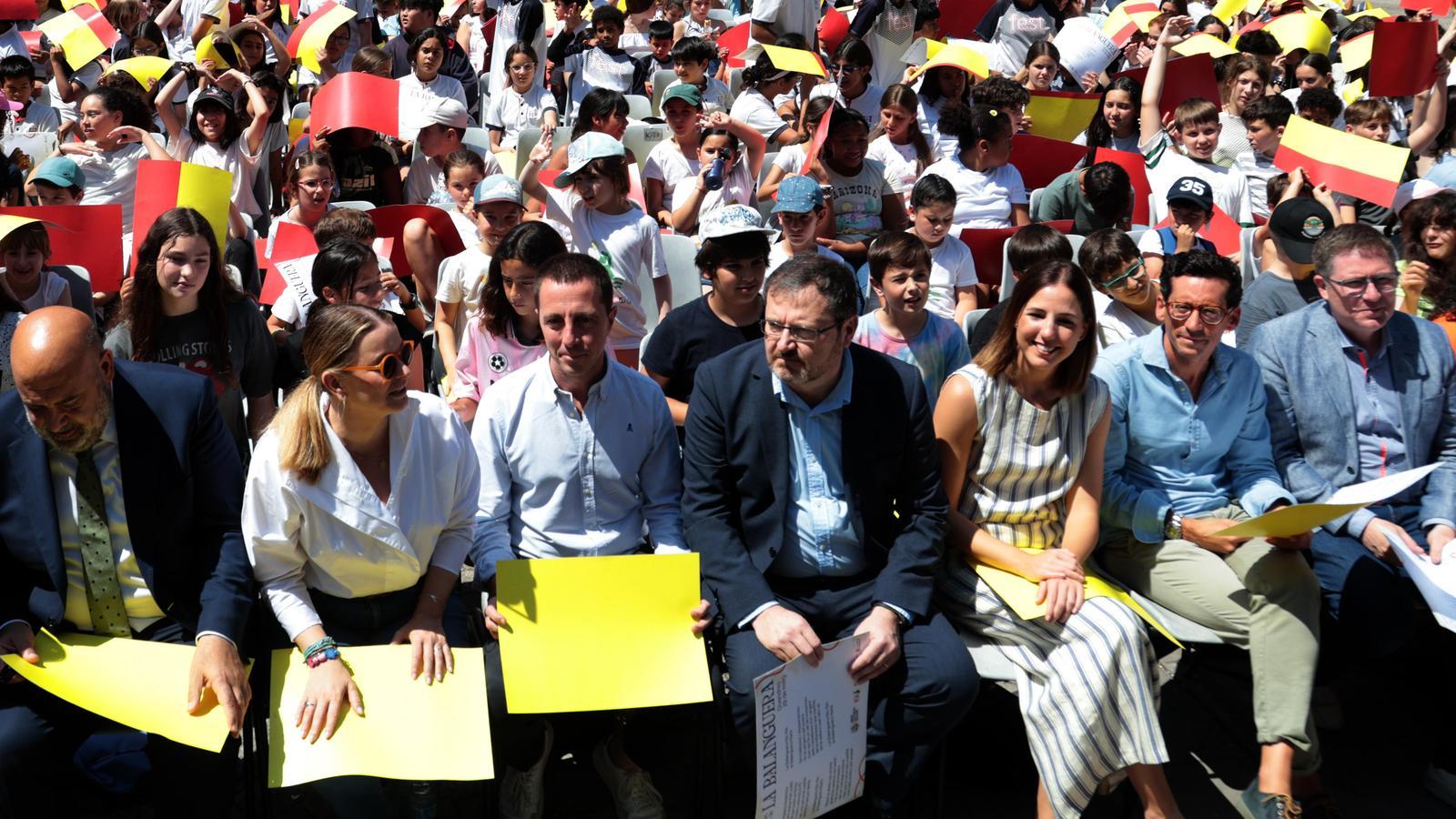

The recent popular singing of ‘La Balanguera’, organized by Obra Cultural Balear, was attended by Marga Prohens and other PP officials. The intention seemed to be, on the part of the organization, to hold a politically transversal symbolic event devoid of ideological connotations. It was achieved and the result was a great success in participation.
Some people have expressed criticism on social media about what they consider an incongruity: that the PP participates in the Obra's event when this group accuses that party of pursuing a policy that marginalizes Catalan, more than it already was. The misunderstanding can be understood, but there is another interpretation.
Catalan is becoming increasingly socially weak, marginalized by demographic replacement. It has never suffered such a bad situation. And there is no possible turning back. The organic leaders of Catalanism are aware of this and know that the only thing that can be done is, at most, to try to prevent the process of social minimization from accelerating too much. Given how things are going, that would be miraculous.
In this context, it is not inconvenient for the Obra to maintain open bridges with the PP. Quite the contrary, it is the only way to keep alive the possibility of its return –in reality, it has never been on the side of Catalanists, but that is another matter– from the clutches of Vox to the “consensus,” as the OCB says, although the aforementioned unanimity is a fantasy, even if it existed punctually in Parliament 40 years ago, it was by no means real within the PP and, much less so, in society at the time. And now it is chimerical that it could be “recovered.” However, it is always better to be able to talk and negotiate with the adversary than to break bridges.
This attitude of the Obra towards the PP does not prevent harsh criticism when it deems it necessary, but always by keeping an open hand. It is revealing that in a recent interview in May, the group's president, Antoni Llabrés, said that “it is true that the Balearic PP has more sensitivity regarding language and culture” than those in Valencia and Catalonia.
Prohens' participation in the singing would acquire the –implicit– meaning of thus helping to keep open the bridge that would be the hope that prohensism does not finally surrender definitively to Vox? It is reasonable to think so. Of course, there will be people who find that conflict and frontal clash in the style of what happened in the time of José Ramón Bauzá is better, but it gives the impression that –if the analysis were correct– the position of the Obra is more strategically intelligent.
However, it is true that the PP's position will depend on the only thing that counts in politics: electoral results. If next year it needs to pact with Vox, it will do so. To avoid doing so, it would have to have an absolute majority or an alternative agreement. None of the known polls give it an absolute majority. They put a ceiling of 28 seats. And a pact with the left does not seem possible. Then?
The only option, however theoretical it may be and however improbable it may seem, is that regionalism would return to Parliament with enough strength to add 30 seats with the PP. The problem is that neither UM –which is reborn this weekend– nor El Pi-Som want to join it. The former does not know what it is playing at. The latter believes it is enough on its own to have deputies again.
In politics, nothing is impossible. But some things are more probable than others. If there were two regionalist candidacies in Mallorca, for one alone to reach 5% –the minimum to enter the seat distribution– would not be among the most probable.
It is not superfluous to know the electoral framework in which regionalism will have to fight. Between 1983 and 2023, the vote for autochthonous parties (UM, PSM, UIM, CB, Bloc, Lliga, CxI, PI, Més...) fell on the island from 25% to 15%. The price of the first seat was almost stable during the last twenty years – from 17,000 votes in 2003 to about 18,000 three years ago – but next year – with a participation similar to that of 2023 and on the current census – it will cost more than 19,000.
El Pi garnered 17,000 votes last time and remained outside Parliament. Despite a campaign with three deputies, money, and political, social, and media prominence. Now, without any of that and in a very hostile environment for autochthonism – with growing national-level voting – it wants to enter the Chamber alone. As for the mysterious reborn UM, its chances alone are nonexistent.
If regionalism fails again, the PP will make a deal with Vox. It is as absurd to ask it for anything else as it is to ask the PSOE not to make a deal with Bildu. If regionalism were to unite and get two deputies, who knows if the PP's numbers would be enough, there would be the theoretical option for Prohens to get rid of the far-right.
While waiting for what happens next year, it seems most sensible for l'Obra to keep bridges open with Prohens. There is always time for war.
