Toponymy is not a political whim
-
CAT -
CAST -
GER
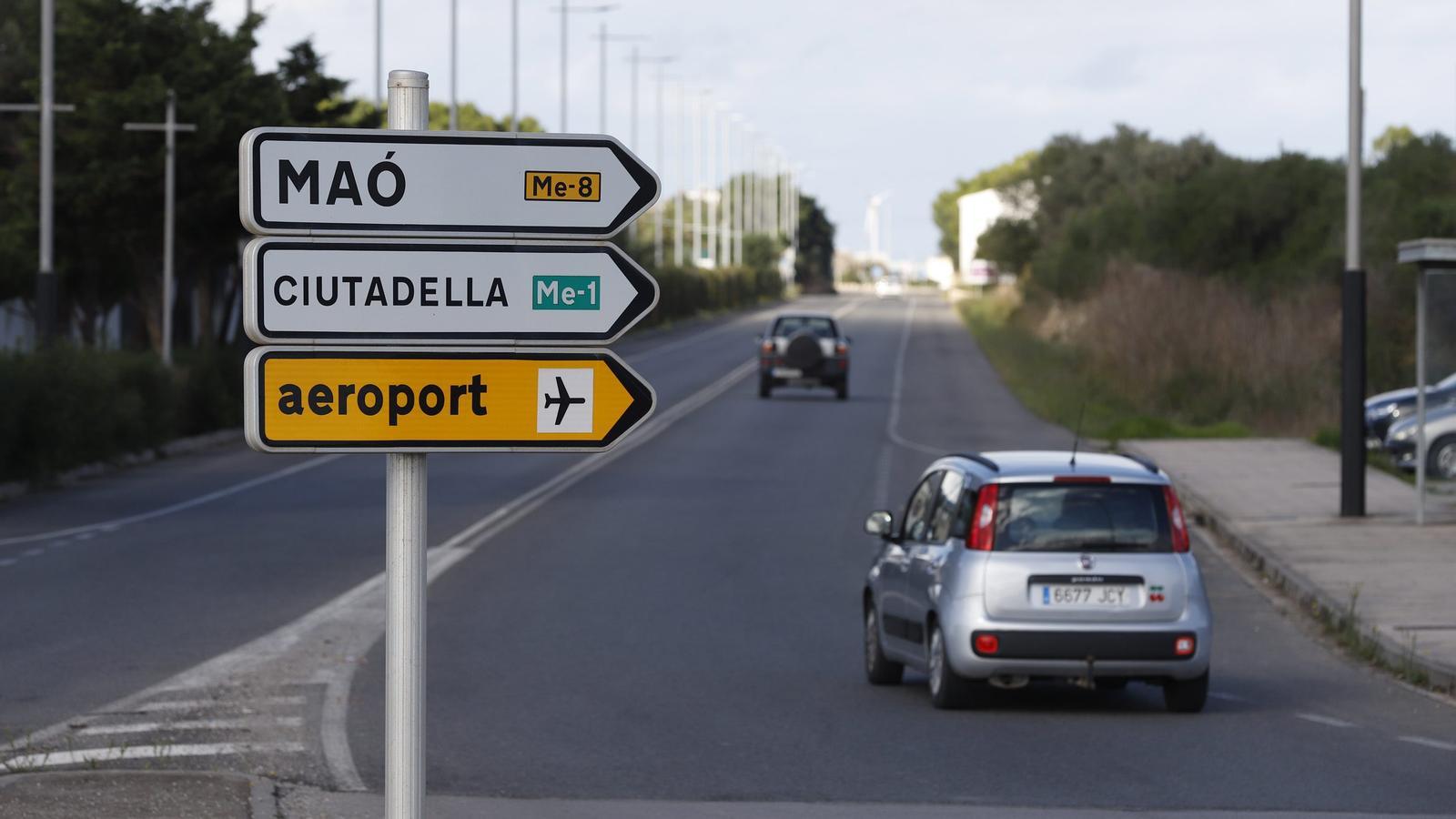
I read that the far-right party Vox says it will condition its support for the approval of the 88 amendments to the strategic projects law –a true shake-up of the current system that will modify almost thirty laws– on a change in the toponymy of the Balearic Islands: “That they return to bilingual toponymy, Palma-Palma de Mallorca, Maó-Mahón and others like Santanyí-Santañí”. The Government has already replied that it does not agree with this, as it contravenes the Law of Linguistic Normalization.
What Vox proposes is an unscientific mess. Names have a meaning and a correct designation that is often disregarded by political maneuvers, as is now demonstrated, at a time when, after a great deal of work on toponymic normalization, we had reached a generalized agreement. For professional reasons, I have had close contact with toponymy and I know that the names of things, places, and people, anthroponymy and toponymy, are also subjected to absurdities. Place names mark the territory, from microtoponyms –a sinkhole, a cliff, a hollow, a pass, a rock…– to macrotoponyms: from America (America due to Amerigo Vespucci), to Mallorca (from ‘Maiorica’, the 'major' of a group of islands). In toponymy, 'strata' are also formed. In the Balearic Islands, there are names from pre-Roman, Roman, Arab, Berber, Mozarabic strata, and, the vast majority, Catalan, which designate thousands of specific places. There are also 'obscure' toponyms, difficult to unravel in their origin.
On this very rich network, the mistreatment of the Castilianizing name of badly written toponyms spread – 'Casucha'' for ‘Carrutxa’, and ‘Lluchmayor'’ for ‘Llucmajor’. A first milestone was the correct naming, a task more or less resolved, not without battles, such as that of the mayor who wanted to recover the 'i' that was there before, and improperly, in Andratx! Thus, after various debates, the collection and normalization of toponyms, at an academic and political level, had been resolved until, from time to time, old bumps or holes and unresolved problems reappear. Among these latter, that of the invented neotoponymy of hotels and coastal developments, which I studied as the New toponymy of tourism’. Thousands of bars, restaurants, hotels, and tourist apartments become a dominant guide and reference with names lacking much grace: Hotel San Francisco, Bahía Palace, and Los Milanos, it doesn't matter. And, moreover, hundreds of developments (Shangri-La, La Siesta, Bellevue, Porto Cristo Novo, and Palmañola – put together with half of Palma and Buñola’–), new establishments, with their corresponding streets, from the calle del Pulpo to the calle del Calamar’. Some time later, I had to deal with the military of the Geographical Service of the Army to carry out the toponymy of the sheets of the National Topographic Map 1:25,000. Balearic Islands. A general told me, worried and indignant, in front of the new regulation that promoted the toponymic correction: “The names of the geodesic vertices cannot be touched, nor that of the Mediterranean Sea!”. Stories of a time gone by? Or will they be repeated now? Also, together with Antoni Ordinas, we directed the toponymy of the sheets of the map of the Balearic Islands 1:5,000, a reference map for autonomous cartography and for which, now, the Balearic Government itself is responsible for maintenance.
Names of falangists and military men
At the same time, street names with the heavy legacy of Francoism still survived – names of falangists and military men, above all – which made a recovery of the heritage of traditional names very necessary. Another problem hovered over our concerns, the abandonment of the countryside: microtoponyms were being lost forever with the death of farmers, shepherds and peasants. Philologists and geographers continued the task, which I don't mean to say is finished, but it is very well underway. Parallel to all this, it was necessary to apply the toponymic correction, which had been stifled by official cartography for years, done by foreign surveyors and military men, with ignorance and contempt for our language.
The toponymy and its management require preparation and knowledge, philological and geographical, above all. However, adventurous toponymists always emerge and mobilize – no previous work is known from them as experts in the field – always to ensure that nothing changes, that the error is perpetuated or that the toponym is not moved from its Spanish spelling. The blunders in the toponymy of official maps were impressive, inherited from those topographers and surveyors who transported onto paper phonetics unknown to them: the ‘molí Paperer’ was mapped as the 'molino de Popeye' and ‘Santanyí’ as 'Santañí''... I'll spare you the complete list of toponymic disasters. These commissions of amateurs who wake up with a sudden interest in toponymy often employ very questionable reasoning, scientifically speaking, such as: if the incorrect name is changed to the correct one, they say, the commercial or tourist brand will be lost and this will lead to economic losses. They try to gather sympathetic businessmen and politicians to their cause. This is the reason for the bifid toponym Eivissa or Ibiza. Or they use, also, other, let's say, pseudo-academic reasons. One of them, historical cartography. Look, I have published more than twenty works on ancient maps of the Balearic Islands and with toponymy on historical maps, one must be very careful; for many years some of these maps were made abroad and the cartographers copied each other, without ever having been to the place they wrote on the map. For example, for more than three hundred years, on many ancient, very valuable maps, the toponym 'San Hilario'' appears for Ibiza, which is none other than Santa Eulàlia. It is true that uncertainty in spellings is common, but the name of Maó, without the 'h' or the final 'n', is by far the most used on the famous ancient nautical charts. In a nutshell, doesn't a Georeferenced Toponymic Nomenclature of the Balearic Islands already exist? Doesn't the Government have a Commission for Toponymy of the Balearic Islands, created by Decree 36/2011, of April 15? Couldn't these amateur toponymists distract themselves with something less ridiculous to pass the time?
