Celestí Alomar dies, first Tourism Minister of the Pact and driving force behind the ecotax
Politician, geographer and columnist for ARA Balears, he challenged the hotel employers' association with a pioneering tax that he claimed as a tool for self-government
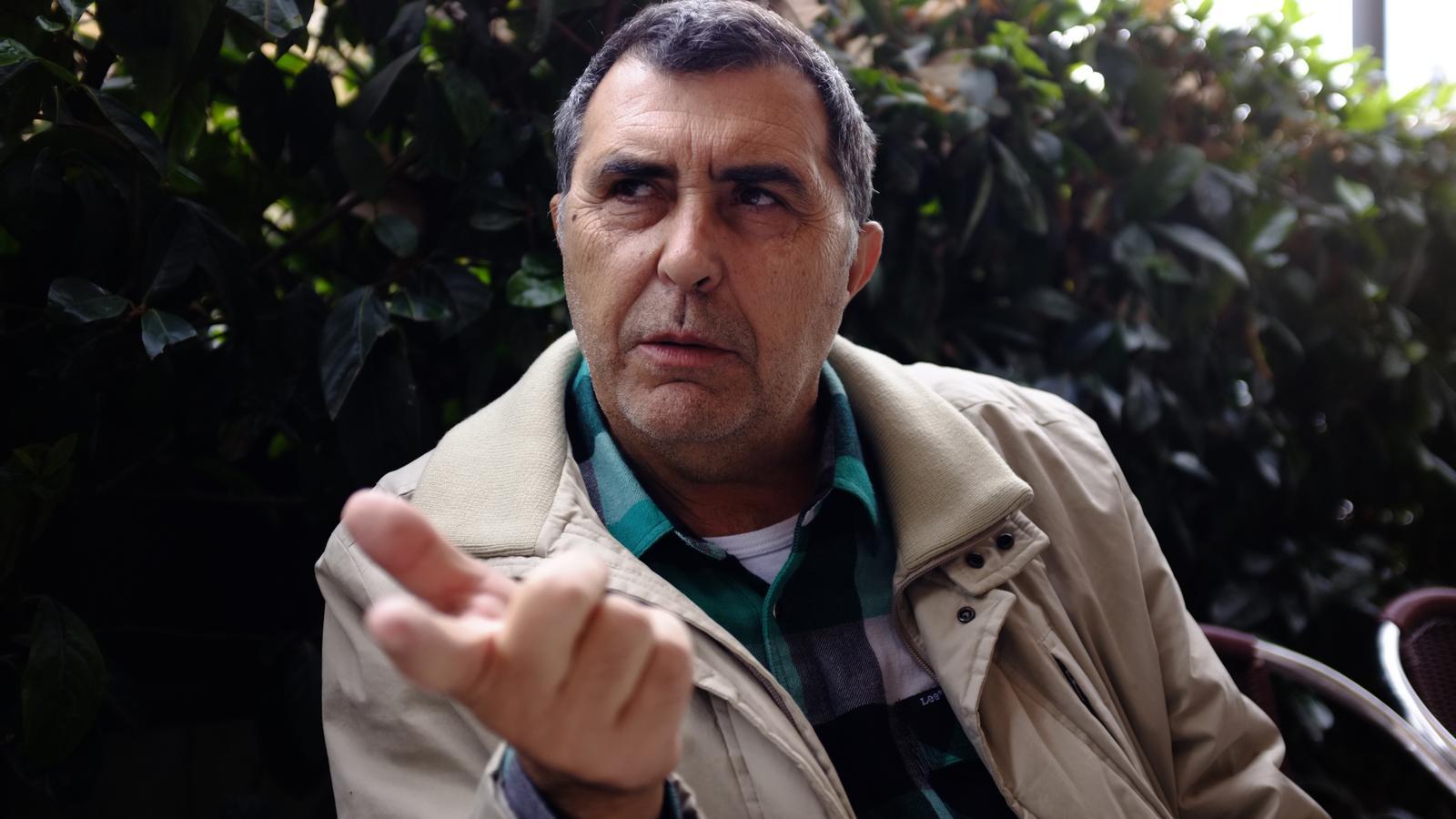

PalmaCelestí Alomar, former Minister of Tourism of the Balearic Government and one of the key figures of the first Pacte de Progrés, died this Monday at the age of 76. Alomar, born in Llubí in 1949, held the Ministry of Tourism between 1999 and 2003, during the first Government of Francesc Antich, and was one of the main promoters of the ecotax, after a strong confrontation with the hotel employers' association. Alomar, also a geographer, maintained an active presence in public debate on tourism, territory, and the economic future of the Islands until recent years, also as a columnist for ARA Balears as a columnist for ARA Balears.

In his texts he defended the need to overcome excessive dependence on tourism, preserve the territory against real estate and tourist pressure, and move towards a more diversified economy. Even in this 2026 he had intervened in the debate on the current Sustainable Tourism Tax: he defended updating its amount, but warned that it should not be conceived as a tool to reduce tourist arrivals, but to return resources to the protection of the heritage, landscape and culture of the Islands.

Alomar was one of the founders, on February 18, 1976, of the Socialist Party of the Balearic Islands, which would later become the Socialist Party of Mallorca. He was also Director General of Tourism Strategy during the last government of Felipe González.
Throughout his professional career, he worked as a consultant for the Inter-American Development Bank and the World Tourism Organization (UNWTO), and advised the governments of Mexico, Cuba, Colombia, and Guatemala, as well as that of the Mexican state of Zacatecas.
Alomar was closely linked to ARA Balears, for which he was a columnist and a member of the Editorial Board. His last article in the newspaper, Foners a Teheran, was published on April 14 of this year.
Mallorcan Left
Alomar's political career began long before his institutional phase and allows us to retrace a good part of the history of the Mallorcan left in the second half of the 20th century. During Francoism, he was a member of the Communist Organization of Spain-Red Flag and, later, of the PCE. In 1973, together with Antoni Tarabini, he participated in the founding of Gadeso and, in 1976, he was one of the founders of the Socialist Party of the Islands (PSIB), the embryo of the later PSM, although he left the project during the 1977 diaspora.

Between 1979 and 1980 he collaborated with the Artà politician Josep Melià during his tenure as Secretary of State for Information in Adolfo Suárez's UCD government. After working professionally in the tourism sector, Alomar returned to the Administration as an independent and held various responsibilities during Gabriel Cañellas's governments. Between 1990 and 1991 he was general manager of the Balearic Tourism Institute (Ibatur) and, from 1991 to 1993, director general of Tourism Planning of the Government.
In 1994 he moved to Madrid, where he was first appointed general director of Tourism Policy and later took over the General Directorate of Tourism Strategy, a position he held until 1996 during Felipe González's last government.
After years of independent political and professional career, in 1998 he decided to join the PSIB-PSOE. He explained it to ARA Balears with a definition of his own: ""I was at an age where I was tired of being a lone wolf". The opening of the socialist primaries and the election of Josep Borrell had convinced him that the party was moving towards greater internal democratization.
Critical look
That militancy did not prevent Alomar from maintaining a critical view of Spanish socialism. He had been Director General of Tourism Strategy for Felipe González's government between 1994 and 1996, but years later he stated in ARA: "I never believed in him or Alfonso Guerra."
In 1999 he was elected as a Member of Parliament and entered the first Government of the Pact of Progress of Francesc Antich as Minister of Tourism. He renewed his seat in the 2003 elections and continued as a Member of Parliament during the following legislature, until 2007.
Regarding the ecotax, Alomar also claimed it in terms of self-government: "Implementing a tax that contributed to the improvement of our environmental resources was a way of claiming national sovereignty." His relationship with the PSOE would definitively end in 2017, when he resigned following the socialist party's support for the application of Article 155 in Catalonia: "I could not allow my party to support" that measure, he stated.
A measure ahead of its time
The first ecotax came into force in May 2002 with the objective of allocating the revenue obtained from tourist stays to the recovery of the natural and cultural heritage of the Islands. The measure triggered a tough confrontation between the Pacte de Progrés Government and the hotel employers' association, which launched an intense campaign against the tax.
The PP's victory in the 2003 regional elections led to its repeal by the Jaume Matas Government. More than a decade later, the Francina Armengol Government recovered the principle with the Sustainable Tourism Tax, which came into force in 2016. A measure fiercely fought against during Alomar's term had ended up becoming a structural part of Balearic tourism policy.
Against the “dictatorship of tourism”
Alomar never renounced tourism, but he did renounce the absolute dependence that the Balearic Islands maintain on it. In the latest interview that was granted to ARA, published in August 2021, warned: "We cannot be subjected to the dictatorship of tourism." He considered that the Archipelago was suffering from "model stress" and advocated for reducing tourist places, creating labor alternatives in other sectors, and replacing the large numbers of visitors and overnight stays with indicators that also measured the environmental and social impact of the activity.
His conception of quality tourism moved away from the usual discourse in the sector. For Alomar, it did not consist of attracting richer visitors, but of making the activity compatible with the preservation of the territory, public services, culture, and decent living conditions and wages for workers.

