“He has turned me into his prisoner”: invisible violence within homosexual couples
Control, humiliations and isolation are also present within relationships between people of the same sex, a reality often silenced

-
CAT -
DE
PalmaPau is 28 years old and has been in a relationship with a 34-year-old man for five years. Now, Pau lives at his partner's house, has no job or income, so he is financially dependent on the very person who, according to him, has physically and psychologically assaulted him. He lost his job more than half a year ago and, since then, he has not been able to return to work. He has a diagnosed depression, has already exhausted his unemployment benefits, and has no family in Mallorca to ask for help or any other place to take refuge. “I don't have a job, I don't have income, I don't have a place to go, and I am financially dependent on the person who assaults me,” he summarizes. His situation, as a victim within a homosexual couple, is often invisible in the eyes of society.
This situation is the result of a relationship that, according to his testimony, has progressively deteriorated until it became an environment of control, humiliation, and aggression. “It seems that, due to the fact that we are two men, these situations cannot reproduce the same dynamics of power, control, and domination that we know from other relationships. And that is not the case,” explains Pau. “Sexism can also occur within a male couple, and sometimes even more intensely than between a man and a woman,” he adds.

Violence, in fact, does not always start with physical aggression. Teresa Ramos Díaz, a social educator and humanistic sexologist, explains that within same-sex couples it can take many forms and that, often, before the blows there are already humiliations, emotional blackmail, contempt, and deliberate indifference. "It occurs both among men and among women, but the second case is doubly invisibilized," she points out.
Pau remembers that, when he met his partner at some 'ball de bot' dance classes, nothing made him think he would end up living through this situation. Over time, however, he began to learn about episodes from the past that disturbed him. Some people who had been part of his partner's circle explained to him that they had distanced themselves because he had stolen money from them, a form of economic violence, and that his ex-partners had left him because of the aggressions and humiliations they suffered.
One day, a friend of one of his ex-partners let him know that Pau had asked for information about him. When his partner arrived home, he assaulted him. "He slapped me so hard that I fell to the ground," he relates. The next day he asked for forgiveness and promised him that he would not do it again. Pau forgave him and even ended up apologizing for having contacted those people. "I thought that, if we left that matter behind, we could continue our life," he remembers.
From control to isolation
For a time, he had the feeling that everything had returned to normal. Until his boss called him to tell him that they had lost several clients because someone had sent them offensive messages pretending to be him. He was stunned when he saw the emails: they were written in the early hours of the morning or during the weekends, precisely when he was on an outing with the youth club where he participates. When he asked his partner for an explanation, she denied it. “But I knew that I hadn't written those messages myself,” he says.
From that moment on, he explains, the physical and psychological assaults became constant. The situation worsened and he began to live with a fear he had never felt before. Ramos describes that the abuse is not limited to direct assaults, but can also take less visible forms, such as controlling communications, monitoring social media, limiting personal relationships, and preventing the victim from maintaining a life of their own.
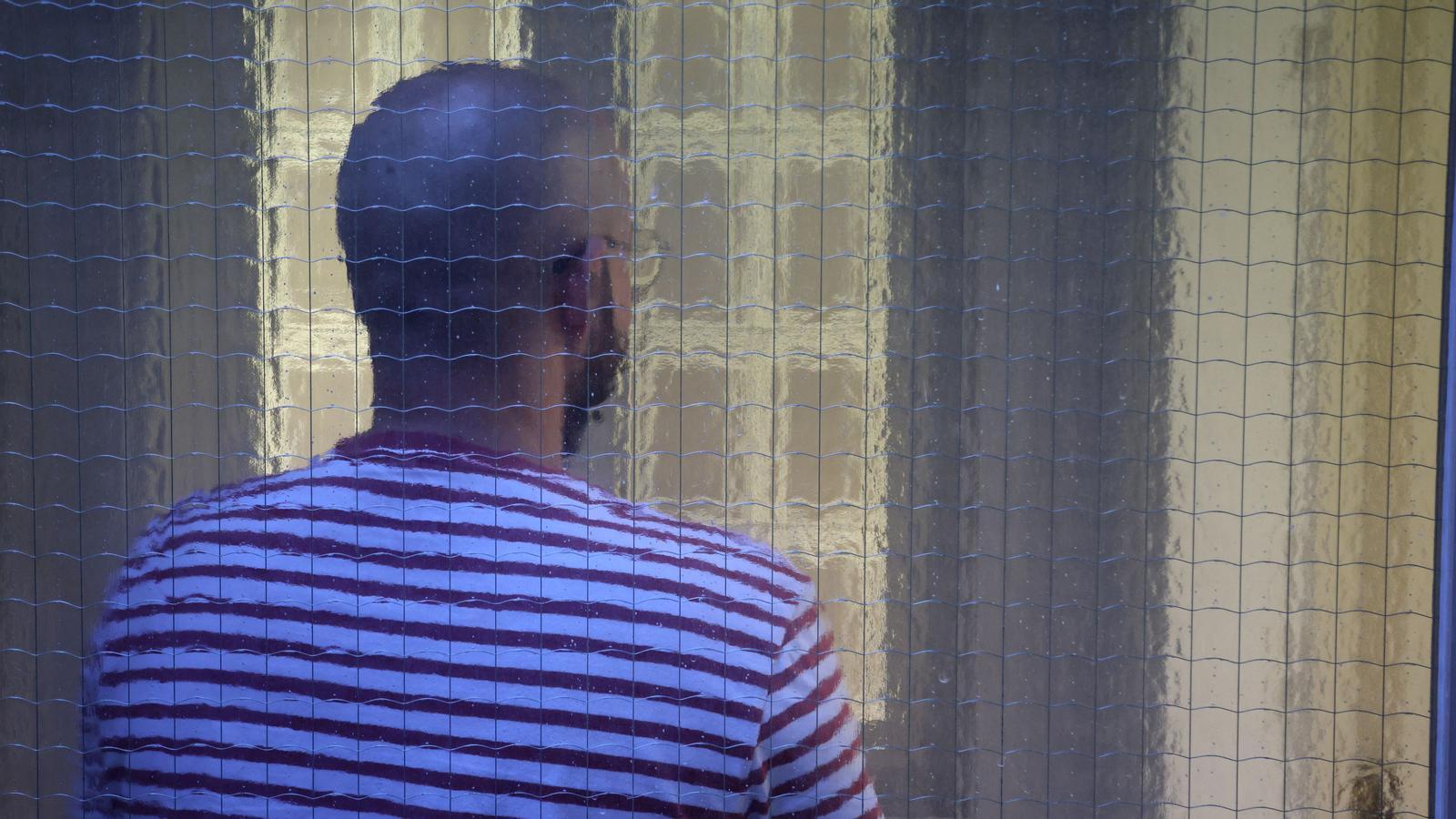
In Pau's case, this isolation has also been built through surveillance and restrictions within the home. He explains that, sometimes, his partner has left him locked in the house and that there are cameras that, according to the other person, serve to prevent robberies. He, however, asserts that she uses them to watch him. "Sometimes she asks me for things that it is impossible for her to know if she hasn't spied on me," he explains. "The house, which should be the place where I feel safest, has become a prison. She has turned me into her prisoner," he declares.
Teresa Ramos explains that preventing the other person from leaving the house, intimidating them, and keeping them in a constant state of alert can also constitute forms of violence, even if there are not always beatings. "It is not always necessary for there to be physical contact," she warns. As an example, she points to the act of bringing one's face very close to the other person to provoke a sense of threat. The victim's body remains on alert and, over time, this situation can affect their self-esteem and personal security.
Control can also have an economic dimension. Ramos points out that this violence manifests when a person controls their partner's money or even steals from them. In Pau's case, economic dependency has become one of the main obstacles to leaving the relationship. He is not from Mallorca, has no family on the island, and lives in his partner's house. Furthermore, after losing his job, he has no income of his own. “He knows it. He knows I don't have the money to start from scratch or anywhere to go,” he explains.
Stereotypes
Economic vulnerability is not the only factor that makes it difficult for a victim to recognize what is happening or to ask for help. Ramos points out that homosexual relationships have been surrounded by a specific invisibilization: it is often taken for granted that, because they are two people of the same sex, the relationship is necessarily egalitarian and relationships of domination cannot appear. This perception makes it difficult to identify abuse and can also cause those around them not to know how to react when someone explains that they are a victim.
Pau has also experienced this difficulty through humiliations related to his sexuality and the role he occupies within the relationship. He explains that his partner has used the fact that he is more sexually passive to make him feel inferior. “He has made me feel less of a man, as if being more passive in the relationship made me someone inferior. He has used this issue to belittle me and make me feel that I am worth less than him,” he explains.
The idea that two men cannot reproduce the same power dynamics that occur in other relationships is, precisely, one of the stereotypes that contribute to making these situations invisible. “What happens is that people think a man, because he is a man, can defend himself better,” points out Pau. Ramos agrees that this perception can make it difficult to recognize the violence involved. In couples of two men, he explains, there are still those who ask how abuse can exist if both are men and sexism is not involved.
This invisibilization does not mean, however, that one can claim that there is more violence in one type of couple than in another. Ramos warns that there is no data to determine in which gender more violence occurs within same-sex couples and considers it counterproductive to establish comparisons without evidence. For this reason, he calls for the experiences of all victims to be recognized and for the professionals who attend to them to have training to identify them without prejudice.
The double silence of the victims
In this area, there may also be specific vulnerability factors. Ramos explains that a person who has not yet made their sexual orientation public may have more difficulty asking for help if they fear having to come out of the closet before professionals or their environment. She also points out that the aggressor can use this circumstance as emotional blackmail, with expressions such as "How will you say I have abused you, when I have treated you so well?" or "If you say anything, everyone will know details of your relationship." It is not a situation that Pau has reported in his case, but it is part of the difficulties that, according to the expert, can affect other victims.
The fear of being left alone or not finding another partner can also contribute to maintaining an abusive relationship. Ramos explains that, in some cases, looking for a relationship again can seem especially difficult, because people feel that the number of potential partners is smaller or that they will not find someone with whom they can build a bond again. Pau identifies this same fear in many people who, like him, may live in a similar situation without speaking about it. "Some are afraid of the aggressor; others are afraid of being left alone, of not finding anyone else, or of thinking that if they leave that person, they will not have a relationship again," explains Ramos.
To this fear is added the shame of having to explain that the person who should love you is the one who abuses you. Pau considers that, in male couples, the lack of role models and spaces to talk about it makes it even more difficult. "If it is already hard to admit that you are a victim of violence, it is even harder when you have the feeling that nobody will talk about your case or that nobody will understand you," he says. His friends have often proposed meeting up, but he always finds an excuse not to go. "And I have become more and more alone. They really don't know what happens inside this house," he explains.
Recovering freedom
Depression has further aggravated this situation. He claims there are days when he doesn't have the strength to do anything and admits that, at times, he has even thought about committing suicide. “There are moments when I don't see any way out of this situation. I feel trapped,” he laments.
Ramos points out that, although in recent years there has been more social awareness about violence within homosexual couples, this does not necessarily imply that there are more reports. Part of the problem is that the people involved themselves may not identify what they are experiencing as a situation of abuse. In fact, he/she explains that sometimes couples arrive at therapy without being aware that there is violence in the relationship. That is why he/she considers it fundamental that police forces and professionals who attend to victims have tools to ask the right questions and do not start from prejudices about what a homosexual relationship should be like.
Pau has not yet been able to publicly explain everything that is happening to him, but he wants his testimony to serve so that other men recognize similar situations. He remembers how the relationship began, the 'ball de bot' dance classes and the first image he formed of the person he fell in love with. Now, love has turned into rage and fear.
He has the case in the hands of a lawyer and hopes to be able to leave Mallorca as soon as he has the strength. He wants to recover his job, the weight he has lost, and for someone to look after him for a while. But, above all, he confesses that he wants to regain his freedom. “No one should stay with a person who abuses them simply because they are afraid of not finding anyone else, of being left alone, or of having nowhere to go,” he argues. And he finishes with a declaration that summarizes what he hopes to be able to do when he manages to get out of this situation: “I fought hard to be who I am, to live in freedom. And I want to be free.”
