In Mallorca three swimming pools have been built every day in ten years
Terraferida warns of the strong impact of these constructions on water resources and housing prices
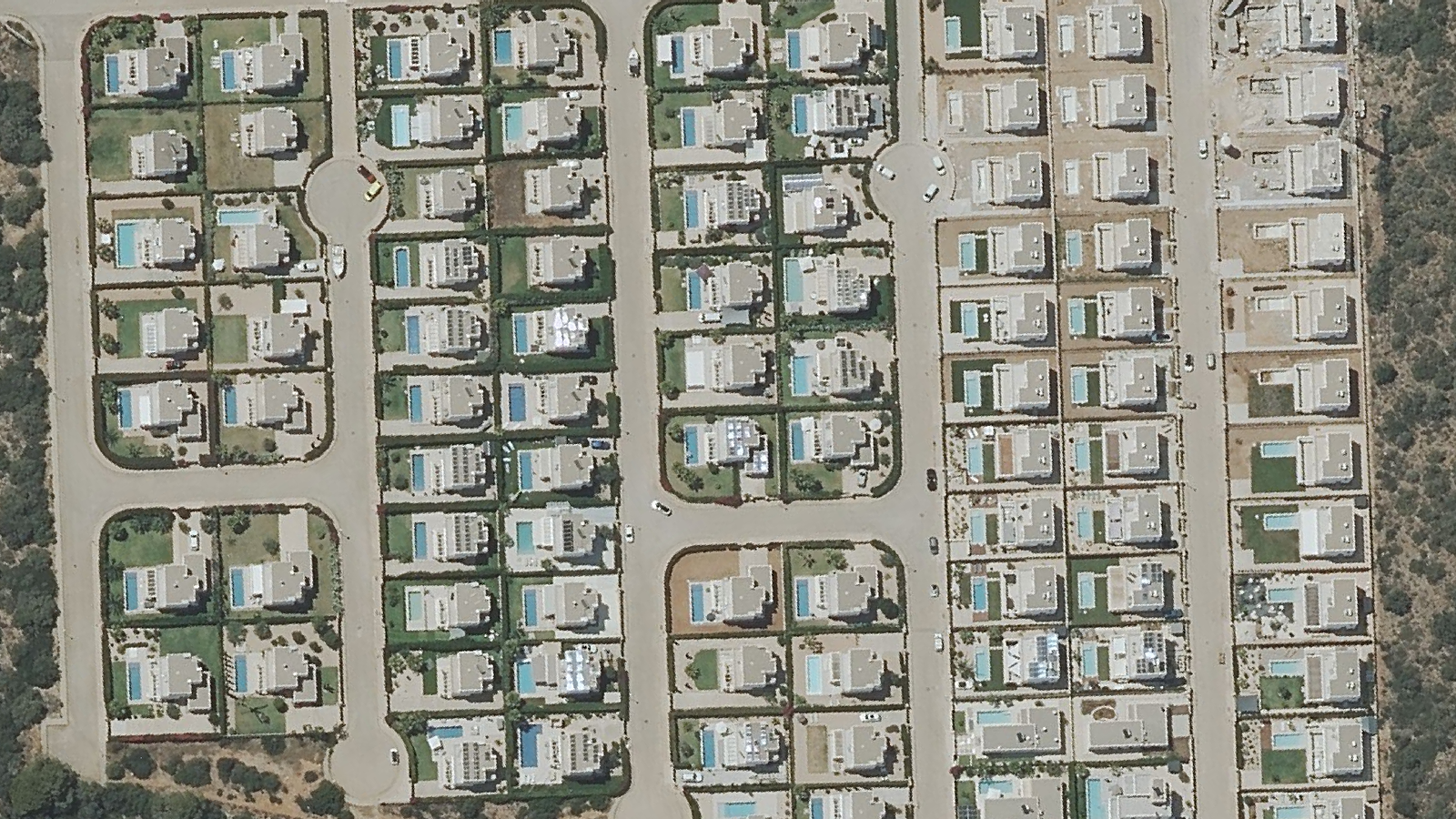

PalmaThere are 73,180 swimming pools in Mallorca, and 10,680 have been built between 2015 and 2024. That is to say, in the last ten years, three swimming pools have been built every day, according to the latest study by Terraferida. Panoramic views of Mallorca show more and more urbanizations in coastal areas and also villas on rustic land that have this infrastructure, surrounded by grass. According to experts, this grass is even worse because it consumes more water. All this, while this summer there were 47 municipalities on pre-alert for drought.
The municipalities where the most swimming pools have been built in the last decade are Palma (1,368) and its metropolitan area: Marratxí (815), Calvià (725), and Llucmajor (668). However, in relation to the number of inhabitants, more alarming cases appear: for every 10,000 inhabitants, the municipality where the most have been built are Ariany (626), followed by Santanyí (519), Campos (485), Costitx (402), Búger (358), Llubí (347), Selva (341), and Deià (327). As explained by geographer Mateu Vic, this increase corresponds largely to swimming pools built on rustic land. According to the organization's data, one in three swimming pools has been built on this type of land.

"Many times, the swimming pools that have been built on rustic land are accompanied by lawns," explained the platform's spokesperson, Tona Fuster. Taking into account that each hectare of lawn needs about 8,000 cubic meters of water per year, she added, "in a typical villa, with 600 square meters of lawn, this means 480 tons of water, 48 truckloads of water." Vic related these constructions to tourist rentals and real estate speculation: "The swimming pool automatically increases the value of the house and makes it more attractive for tourist rentals.
The platform warns that most municipalities have "serious water problems": "salinized wells, contaminated by nitrates, overexploited or dependent on future desalination plants, which means brutal energy consumption." For this reason, Vic has called for licenses to build swimming pools to be stopped, for developable land to be reclassified as rustic land to prevent new developments, for measures to be implemented to cover existing swimming pools and thus avoid water evaporation, and for progressive tariffs to be imposed on the price of water that penalize abusive consumption and caps on wells on rustic land.
"If swimming pools are needed, what should be done are public swimming pools so that people can access them, not one in every house," considered the geographer. The Terraferida study incorporates various panoramas of Mallorca with photographs of the swimming pools that have been built in the last ten years. For example, the one accompanying this news, which corresponds to a development in Dalt la Ràpita (Campos), where all the houses have their own swimming pool. They are also found in new buildings in Palma, such as a block of flats next to the Palma Arena where there are 74 swimming pools for the residents of the buildings.

In the Pla de Mallorca, the centers of the towns "have also filled with swimming pools", points out Vic. The reason is the urban morphology, with houses accompanied by a corral. "Every inch of land is used to build a swimming pool", he laments. Between 2015 and 2024, 23 swimming pools have been built every week.
