Works in Sineu's old town reveal Roman and medieval past
The archaeological monitoring of the works served to document structures and materials that now help to understand the urban evolution of the town
-
CAT -
CAST -
DE
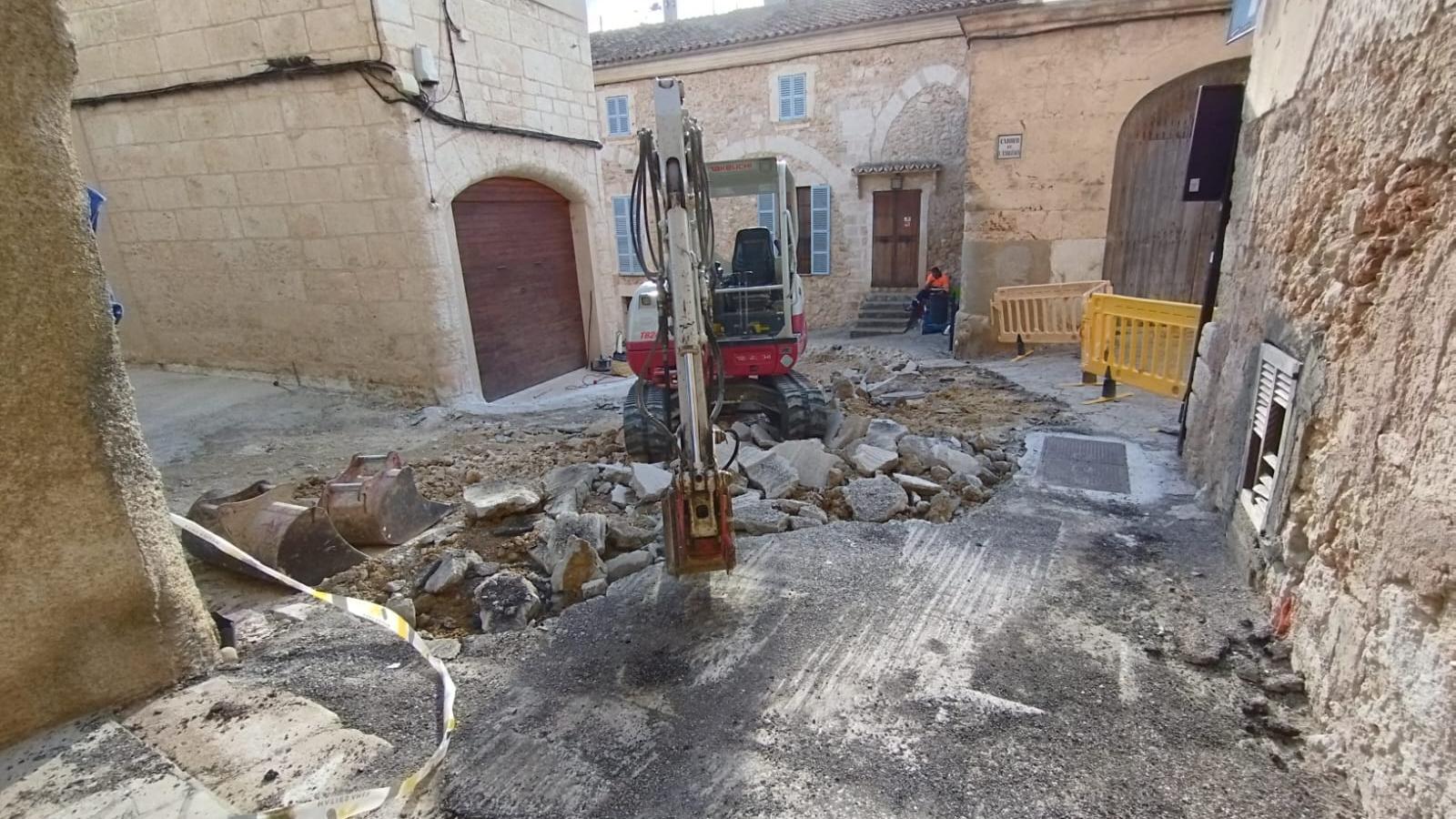
PalmThe beautification of the old center of Sineu not only served to renew the image of the municipality and pacify some of the streets in the center, but also, during the works, it became a window to the past. The archaeological monitoring of the works helped to document structures and materials that now help to understand the urban evolution of the town, with a particularly significant finding in Fossar street, where indications of the Roman era and the early Middle Ages appeared.
During the removal of the pavement and sidewalks of this street, the archaeology team identified a level of grayish sediment that covered the entire surface of the road. Inside this layer, coals, animal remains, and pottery fragments were found which, according to the initial analyses, could be dated between the Roman era and the early Middle Ages.
Given the importance of this stratigraphic sequence, which was found intact beneath the surface levels, the archaeological technician determined the immediate suspension of tasks in this sector. Finally, in a meeting between the City Council, the construction company, and the archaeologist, an alternative solution was agreed upon for installing the sewage system: to place the conduits just above a pre-existing dirty water ditch, in order to avoid excavating and destroying the oldest archaeological levels. And also to remove the streetlights and trees that had been planned to be planted in that area, so as not to damage the subsoil in case of future excavation.
The work on Fossar street is added to the discoveries made on Hospital street, where the ancient cobblestone paving was located, marking the transition to a more consolidated road during the modern era. Throughout the intervention carried out on these streets in the old town, various key elements have been documented, such as hydraulic structures, tile and stone conduits essential for water supply, and ceramic materials, fragments from the 17th and 18th centuries that confirm economic activity in the area. These pieces have already been cleaned, dated, and transferred to the Museum of Mallorca for their permanent custody.
The applied methodology, based on photogrammetry and technical drawing, has ensured that no historical data is lost during the modernization of services (water, electricity, and sewage). Although Sineu's urban planning underwent many reforms during the 20th century that damaged part of the subsoil, the reports conclude that valuable vestiges of traditional urban planning are still preserved.
The remains that have not been extracted for laboratory study have been protected and re-covered, ensuring that the history of Sineu continues to be preserved under the new pavement for future generations.
Tomeu Mulet, the mayor of Sineu, points out that “the initial intention was to equip this renovation with more trees, but we understood that the solution was to place them in these large pots or planters so as not to damage the remains”. Mulet also adds that “with this intervention, the municipality reaffirms its commitment to doing things right in terms of heritage, listening to professionals and always thinking about an old town that is, in its own right, one of the historical landmarks of Mallorca”.
