From Mallorca to the world: the science that is born from tourism
With more than 80 professionals and four own laboratories, NEXBIOLINEA has made the health needs of hotels a research, technology and training activity that it now exports everywhere. A business history that shows that tourism can also contribute to diversifying the Balearic economy
-
CAT -
CAST -
DE
PalmaOn Sunday, November 15, the Majorcan microbiologist Sebastià Crespí spoke in Tokyo before Japanese specialists in hospital water hygiene. He had been invited to share his experience in the prevention of infections related to water installations. The fact that a scientist from Mallorca is requested in Japan to speak about this matter has a lot to do with the knowledge acquired over decades of working for the tourism sector of the Islands.
Crespí is the founder and scientific director of NEXBIOLINEA, a Majorcan company dedicated to environmental health, food safety, and the prevention of health risks. He began by meeting the needs of hotels and today also works for cruise ships, hospitals, and other facilities in different countries. His path is a demonstration of how tourism specialization can give rise to economic activities that go far beyond tourism itself.
From the classrooms to the laboratories
Born in sa Pobla in 1955, Sebastià Crespí studied Biology and Pharmacy in Barcelona. Upon returning to Mallorca, he combined teaching with his work as a clinical analyst at the Miramar Polyclinic, where he came into contact with the health-related issues of tourist establishments. After an initial business experience, in the year 2000 he founded Biolínea with the intention of creating an international digital training platform for professionals in the sector.
The idea came too soon. Hotels were not yet prepared for that modality of training, and the company shifted towards consulting, laboratories, and face-to-face teaching. That first attempt, however, already addressed a shortcoming that Crespí had detected: the lack of specialized training to manage certain facilities.
“A hotel is much more complex than it seems. There are water networks, swimming pools, kitchens, air conditioning... And everything must function with health guarantees. The problems we have encountered have forced us to look for answers and to research. That is how we have learned many of the things we now apply in other countries,” explains Crespí.
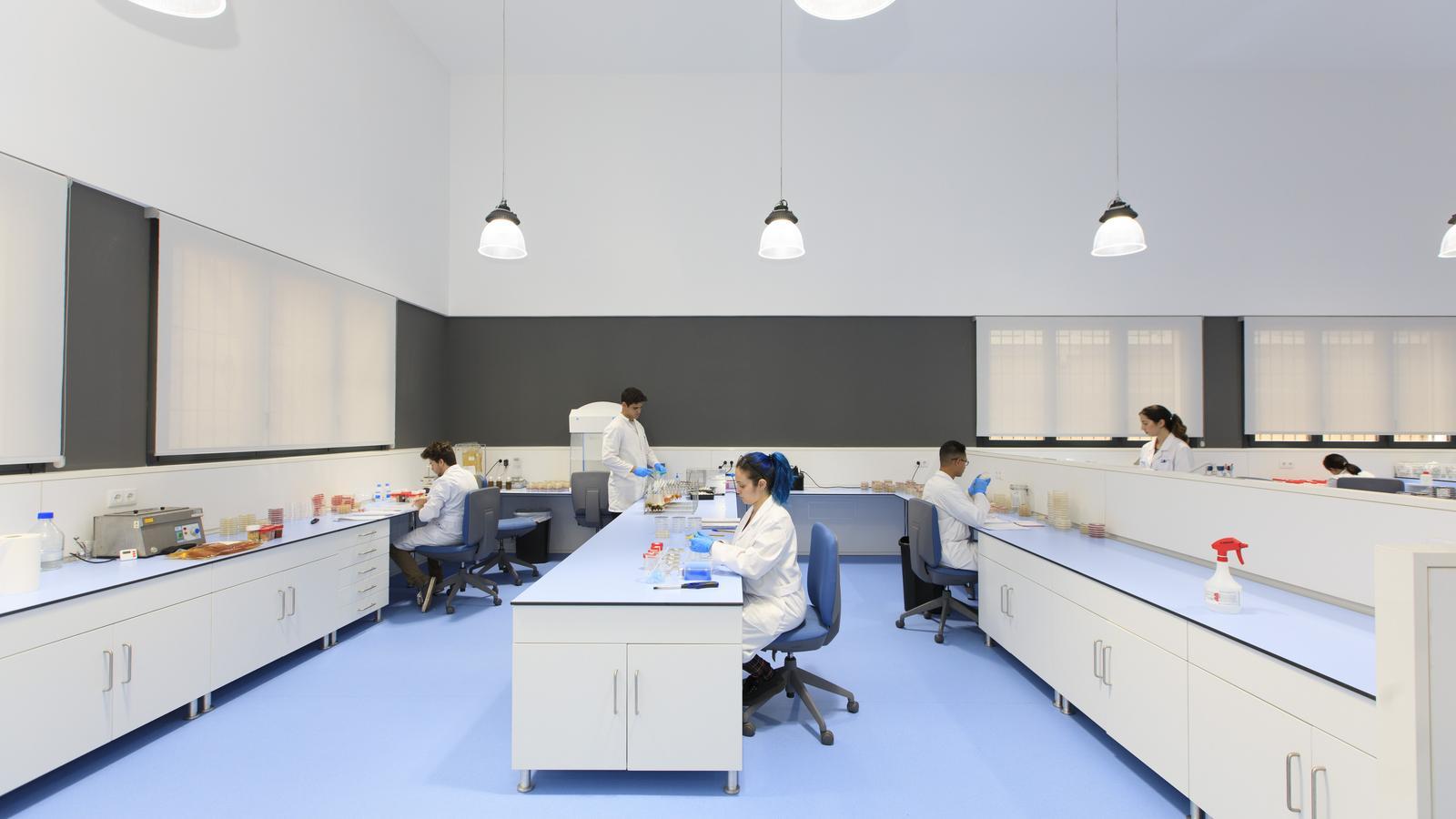
Today NEXBIOLINEA has more than 80 professionals and four own laboratories: in Palma, Gran Canaria, Punta Cana, and Cancun. The one in Mallorca has modern facilities and specialized scientific equipment, an infrastructure little known outside the sector. The forecast is to close 2026 with a turnover approaching 6.5 million euros.
The incorporation of his son Pau Crespí, current executive director, gave a new impetus to the business. During the pandemic, father and son decided to grow in Mexico and the Dominican Republic, where they already had hotel clients. Having just completed 25 years of history and under the new brand NEXBIOLINEA, the company now has international activity in the Caribbean, Greece, Tunisia, and Dubai.
“We saw that what we had learned in Mallorca also served to solve problems in other destinations. Clients asked us to accompany them, and we decided to take the step. Growing abroad also allows us to expand the team and invest in new projects,” explains Pau Crespí.
Science and health emergencies
Part of NEXBIOLINEA's work consists of investigating infectious outbreaks. One of the best-known cases was that of legionellosis at a hotel in Calp (Alicante), between 2011 and 2012, which caused 44 affected people and 6 deaths. Sebastià Crespí participated in the scientific investigation that allowed for the identification of contaminated water accumulations hidden under the spa pool and a better understanding of how the infection had spread.
These types of interventions have led them to work far from Mallorca. During 2026 alone, they have participated in outbreak investigations in Dubai, South Africa, Rwanda, and Cape Verde.
The research has also borne fruit in the scientific field. In 2023, an international team led by Crespí described a new species of bacteria identified in Mallorca, Legionella maioricensis, with the Majorcan microbiologist as the first author of the description.
In September, NEXBIOLINEA presented a study at the international legionella congress in Zurich, developed from more than 43,000 samples collected in 400 buildings. The research analyzes why some facilities have recurrent microbiological problems while others maintain stable results. It is what researchers call the personality of the buildings.
"It is not enough to perform an analysis and see if it comes back positive or negative. We have to understand what is happening inside the facilities and why certain problems repeat. If we know this behavior better, we can act before an incident appears," explains Crespí.
His experience also reached the World Health Organization (WHO) during the pandemic, when he collaborated in the development of international recommendations for managing COVID-19 in tourist accommodations, which served as a reference for reopening health protocols.
From the laboratory to the digital brain
Technology is now one of the company's growth paths. NEXBIOLINEA is working with EISI Soft, the developer of EISI HOTEL, on a digital brain for hotel health and safety that is expected to be implemented starting in 2027. It will incorporate a digital agent so that professionals can consult facility information and access health knowledge useful for their daily work.
The company already uses BioAuditApp, its own platform for managing audits and health controls, and has developed an application for pool control. It also participates in projects such as ECOALJIBE, which seeks to reduce the water necessary to clean tanks, and CRYPDIOX, which researches new disinfection systems against resistant pathogens. It is also part of the Chemical Industry cluster of the Balearic Islands.
“We have many years of experience accumulated by our technicians. The challenge is that this knowledge does not just remain in the hands of those who visit a facility, but can be utilized by the professionals who work there every day,” points out Pau Crespí.
Professionals for a complex industry
Training continues to occupy an important place in NEXBIOLINEA's activity. Through Hotecma, and with the collaboration of the Hotel Business Federation of Mallorca (FEHM) and ASIMA, it promotes dual training programs in hotel maintenance, environmental health, and circularity.
The goal is to prepare technicians to manage increasingly complex facilities, a need that the company has known since its beginnings. It is now studying taking this training model to the Canary Islands and the Caribbean.
“We can have good laboratories and a lot of technology, but we need people who know how to apply all this knowledge. Training is essential for facilities to function well and be safe,” points out Sebastià Crespí.
The story of NEXBIOLINEA raises a fundamental question for the Balearic economy. The experience acquired in an industry as important as tourism can serve to create specialized companies, promote research, and generate qualified jobs. In this case, the sanitary safety of Mallorcan establishments has been the starting point for a scientific and business activity that today reaches as far as Japan. What is exported is no longer just a service, but the knowledge acquired over years to be able to provide it.
