Toni Bestard: "Before you entered the cinema just for the poster"
Film director

-
CAT -
CAST -
GER
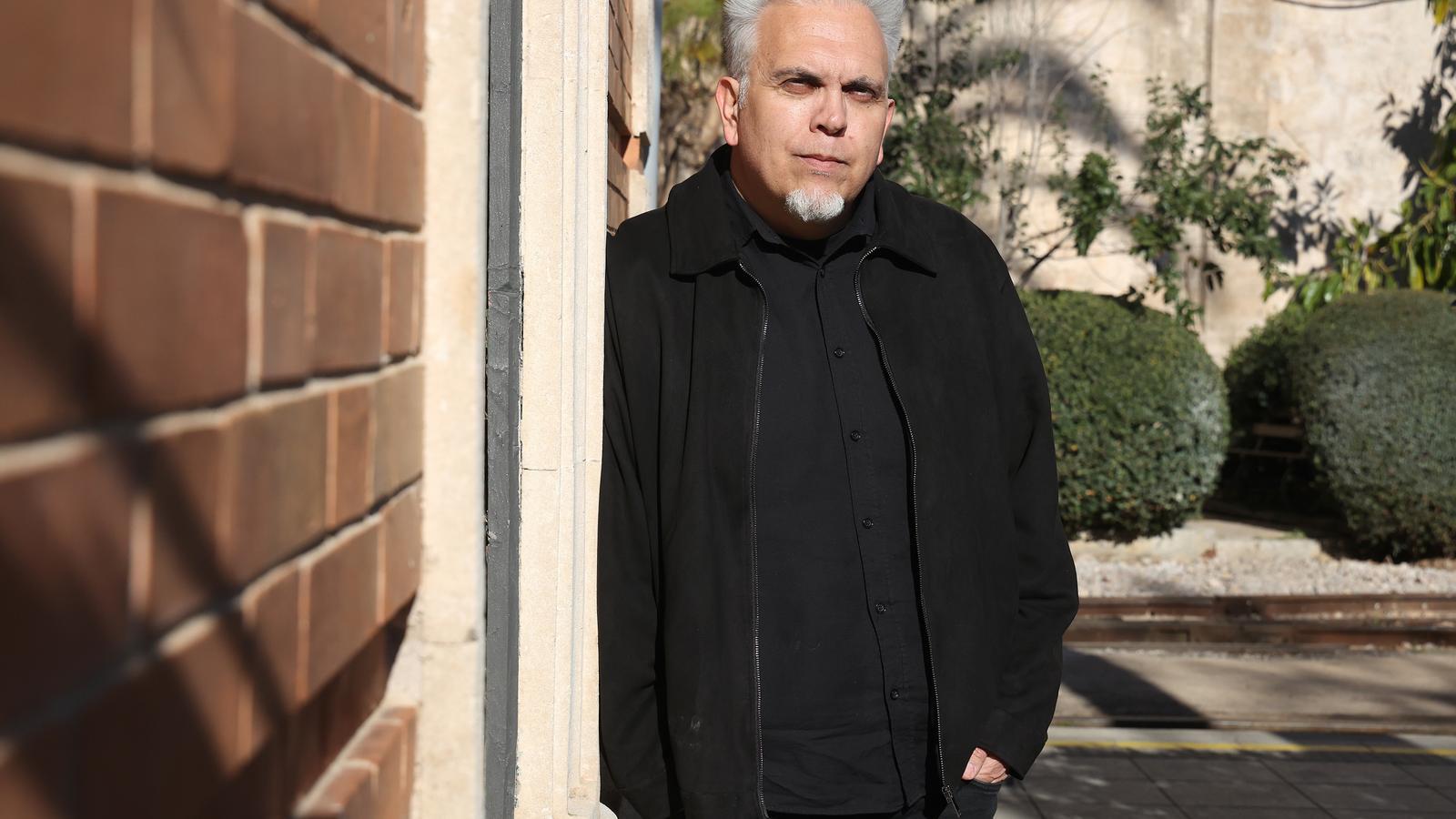
PalmaToni Bestard (Bunyola, 1973) has about twenty audiovisual projects under his belt, including the series Norats and Fúria and feature films such as Pullman, I Am Your Father and El perfecto desconocido. In 2017 he directed the short documentary El somni efímer, a piece that now closes the exhibition Palma, ciutat de cines, dedicated to the old cinemas of the City, which can be seen at La Misericòrdia. On the occasion of this re-release, he talks with ARA Balears about cinema, memory and new projects.
How did the idea for El somni efímer
come about?
— When I was little, going down from Bunyola to Palma to go to the cinema was an adventure. In the early 80s there were no social networks or trailers on the internet. The first contact with a movie was the poster. I never realized that those images were hand-painted, I thought they were enlarged prints and that was it. It so happened that one of the great cinema facade painters, Rafael Ruiz, was the father of a friend. I discovered that this art was ephemeral: they painted on the wall and, after a few weeks, it was erased to make another one. It seemed fascinating to me. First I wanted to make a documentary focused on him, but then I investigated and saw that this phenomenon had also occurred in Madrid, Barcelona, and other capitals. Nevertheless, I wanted to focus it on our reality.

What made the figure of a poster artist like Rafael Ruiz unique?
— In Mallorca there was a lot of cinema and he practically dedicated himself exclusively to painting posters for all the theaters. He spent the week going from one cinema to another. He did it very well, he was a very good painter. In other cities, the posters were not always so artistically successful. In Palma there were two large business families with many theaters and the quantity of posters produced was impressive. That practically all the production fell on a single person became a peculiarity of ours.
As a filmmaker, what value does manual work have in the promotion of a film?
— At that time, printing systems were expensive. What Rafael did was to enlarge the information from a small poster and turn it into a giant advertisement. It was pure advertising. I remember driving my mother's car past the Metropolitan or the Rivoli and seeing those paintings from the outside. They attracted you immediately. Its function was to enlarge the poster and, with it, the desire to enter the cinema.
Has the disappearance of this profession changed the way we perceive movies?
— Totally. At that time it was common to go see a movie just for the poster. There were no other advertisements. At most, the video store guy would give you a recommendation. But the poster was essential for people on the street to enter the theater.
Let's talk about your career. One of your latest works, Norats, generated controversy at its premiere.
— The bubble got very big, and not our fault. We created a fiction based on real events and told them from a narrative perspective. But a controversy arose that intended to make the series invisible. And the opposite happened: it gave us more visibility. I would like the people who criticized the series to see it. There is no political stance, we tell what happened. Being able to tell stories with freedom should be what is normal and logical.
What projects do you have underway?
— I am preparing an animated short with Baldufa Films, with the collaboration of IB3, and we are looking for more support. I am approaching traditional animation, seeking an artistic touch. The idea is to launch the production in 2026. In parallel, I am preparing a horror feature film, Render. I am a lover of horror cinema and, in more than twenty years of career, I had not dared to tackle it. Now, I have let myself be carried away by the more cinephile part and by what I would like to see as a spectator. It is a very personal horror and, like many of my works, with cinema within cinema.

How would you define your filmography?
— There is a common place: the cinema itself. It is part of my life, not only as a profession, but as a spectator. I have made commissions, dramatic comedy, more vindictive shorts… but metacinema is the point where everything crosses.
Has your way of approaching projects changed over the years?
— Unfortunately or fortunately, not much. Every project is like you have to prove again that you can do it. In Spain, experience is not always a degree. My profile is complicated and it always costs a lot to move forward with each production.
What is your creative process?
— Things come out of very simple things: an image, a sound, a conversation on the bus. Observing the world. Nowadays there is little observation; many people look at their mobile phones and don't lift their heads. I like to walk and notice details. I don't force the creative process: ideas arrive.
Is there any pending issue?
— Many. The day I don't have curiosity, it will be a bad sign. You need curiosities and goals. Even if many projects don't work out, the most important thing is to try them, like the animation project.
How do you value the state of cinema made in the Balearic Islands?
— Something curious has happened: there is a very interesting batch of young filmmakers. People trained here and abroad. Institutions have provided support for years and this has helped create an industrial fabric. Even so, there is always a need for more, because competing with production from Madrid is very difficult. Cinema is not just culture; it is industry, it creates jobs and projects the territory. Without institutional support, it would be very complicated to survive solely on box office or viewings, because they are not enough to make us known.
