Extended
The caricature does not distort reality but accentuates it, in such a way that this daring, irrational and outlandish point makes the metaphorical drawing of the human condition arrive more effectively
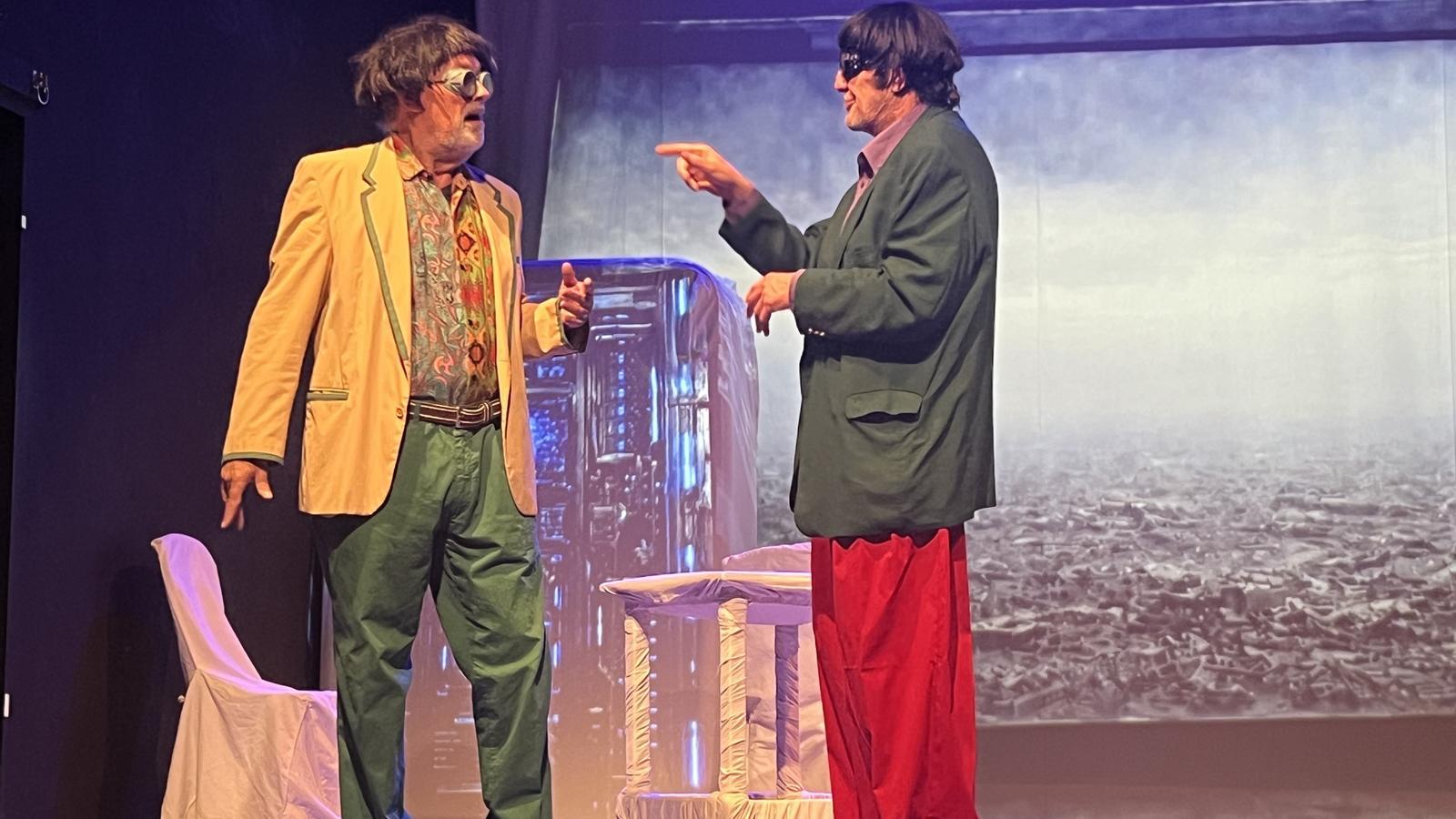

PalmaThe program notes of Calidoscopi, the latest creation by Estudi Zero, state that “characters are moved by absurd, violent, or profoundly human situations”. True, but it would be even more so if the conjunction were copulative instead of disjunctive. If the situations are absurd and violent, it is clear that they are undeniably very human. The caricature does not distort reality but accentuates it, so that this bold, irrational, and bizarre point makes the metaphorical drawing of the human condition arrive with more effectiveness. That the performance is composed of different small stories brings the Sans seal, in such a way that it transports us to that journey that Karl Valentin was piloting in this very room. For the occasion, several authors are listed in the roster of Calidoscopi –Esteve Soler, Juan Mayorga and Joël Pommerat–, which makes the mood of the different sketches raise the heat of each one considerably. There is no white humor. All contain a high dose of venom, in the same proportion as causticity and sarcasm, and without fear of crossing red lines.The first story, that of the man run over by a bus, about which I will say no more because it would be a spoiler, sets the tone of the performance. Black humor in its purest form. Human cruelty or lack of humanity, which in this case is the same, shines with all its splendor. That of the couple who confess to their twenty-year-old son that he was not a desired child, exponentially increases the portion of inhumanity. That of the seller of anything you can imagine is a mirror directed towards the stalls. And so on. All in all, rounded off with a musical number performed by Dominic Hull, a My way in the purest crooner style, accompanied by the rest of the cast and dressed as Fortunio Bonanova and the Glamouramas were in their glorious American years. Naturally, in such a diverse ensemble it is not easy to find the ideal point of homogeneity, but, even so, the performance treasures enough uniformity, both in the different stories and in the interpretation of the seven protagonists, who in such a marathon performance become an immense crowd of characters, always dressed very differently. Only a small caveat, the wigs are not very necessary. With the different changes of register, which are there, it is enough.
