The retreat of Catalan is not the fault of young people
The professor at UIB and president of the Philological Section of the IEC, Nicolau Dols, attributes the situation to public policies and the conditions of language use

-
CAT -
CAST -
DE
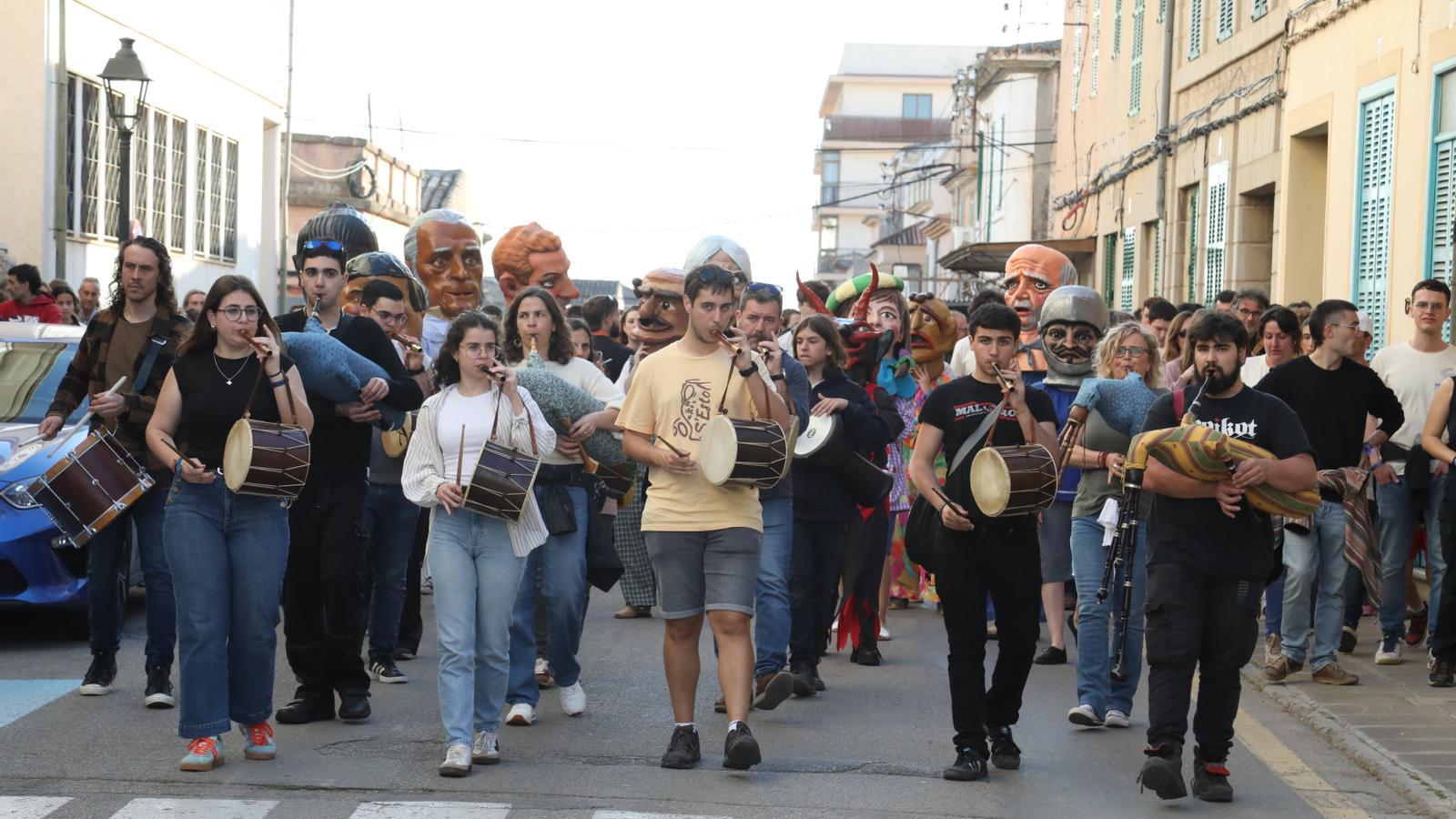
PalmCatalan has not disappeared from the lives of young people in the Balearic Islands. It is heard in classrooms, in conversations between friends, and in many homes and environments. But it no longer always comes out on its own. Increasingly, speaking it is a choice – and it is here where its immediate future is being played out. The success of initiatives like Acampallengua and the youth presence at language rallies show that the muscle remains active and capable of mobilization. It is not just a symbolic issue: these are spaces where the language is practiced, reinforced, and projected into the future. This year, the first edition of Correllengua Agermanat will test this commitment.
In this debate, however, it is worth shifting the focus. As Nicolau Dols, professor at the UIB and president of the Philological Section of the IEC, recalls, “today's young people are identical to yesterday's young people; there is no problem with them.” In fact, he insists that “the decline of Catalan is not the fault of young people,” but rather “it is the responsibility of the Administration and, in particular, of the Government.” This idea forces us to look beyond individual behaviors and analyze the conditions that facilitate or hinder its use.
The most recent data point to a loss of momentum in the use of the language. According to the 2022 Youth Survey, only 8.7% of Catalan-speaking young people between 15 and 34 years old maintain Catalan when someone addresses them in another language, far below the 22.3% recorded in 2004. Few also use it from the outset with strangers, a relevant indicator for understanding the real presence of the language in the public sphere.
However, these figures do not describe an abandonment, but a change in habits that can still be reversed. Young people grow up in more diverse environments than ever before, where languages, origins, and references coexist. In this context, Catalan remains present, but it is no longer always the automatic first choice. This does not necessarily weaken it: it places it in a territory where it gains weight when used with will and consciousness.
Reprogramming Catalan speakers
This reality also has to do with perception. As Dols points out, “the perception that a 16-year-old young person may have today is that, if they address a stranger in Catalan, they may have problems”. Cases of linguistic discrimination contribute to this climate: “All this creates a climate of helplessness” and, often, “the natural reaction is to avoid conflict”. Thus, “the problems of young people in this area are, above all, about perception”. It is not so much a lack of will as an adaptation to a context perceived as uncertain.
In fact, there are indicators that suggest this relationship with the language evolves over time. The youngest are the ones who switch languages the most, while this trend moderates as age increases. More than a break, this suggests a process of consolidation. “Surely, what young people do today is more visible than what they did before because the conflict is evident”, notes Dols, in a context where the language is also defended more explicitly.
The territory continues to show clear differences. In Menorca and the Part Forana of Mallorca, Catalan maintains a very solid and natural presence. In Palma and the Pitiusas, on the other hand, it coexists more intensely with other languages. But even in these contexts, the language is present: not as the sole option, but as one more within a diverse and changing ecosystem.
This balance is clearly seen in the educational sphere. In the 2025 University Entrance Exams (PAU), almost two out of every three exams were answered in Catalan. This is a lower figure than in previous years, but it continues to position the language as the majority in a key moment, with territorial contrasts but with a sustained presence. It is also an indicator that, despite the difficulties, Catalan maintains a solid base in educational spaces.
In the early stages, there are also clear signs of continuity. More than 80% of families in the Balearic Islands choose Catalan as the language for their children's first education. In a context of demographic and social change, this is a significant decision that reflects a positive perception of the language as a useful and integrating tool. In many cases, this choice is not only a matter of identity but also a desire to offer more opportunities to children.
This does not mean there are no challenges. In Ibiza and Formentera, the situation is more delicate, both in terms of social use and educational outcomes. But it is also where the linguistic reception and integration work carried out by schools and entities is most visible. In particularly complex environments, Catalan continues to find spaces to take root, often thanks to grassroots initiatives and the involvement of the educational community.
Tool for cohesion
The role of the school is decisive. It not only teaches the language, but also turns it into a shared tool. It is often in the classroom where many young people –wherever they come from– incorporate Catalan normally and make it their own, to a greater or lesser extent and capacity.
The global context also influences. The weight of tourism, mobility, and the need to master other languages have changed the rules of the game. But this has not expelled Catalan, but rather has placed it within a multilingual scenario where it coexists with other languages. And in this scenario, having more than one language is not an exception but the norm.
In this regard, Dols summarizes it clearly: “Young people, in linguistic matters, are like any other generation: they act the same as adults”. And he adds: “If something is necessary, they do it. If they perceive that the effort will be useless, they think twice”. Therefore, we must “create objective conditions so that using it is not a heroic act, but a necessity with benefits”.
The data are clear, but not definitive: “Positive actions are needed that go far beyond campaigns or advertising” and “to create the conditions for knowing and using Catalan to be beneficial and necessary”. If this is done –he concludes–, “the situation is reversible”.
Catalan continues to be spoken. Perhaps not always, but in many spaces of daily life. And every time it is chosen, it gains weight and meaning.
A living language is not one that does not change, but one that adapts. Catalan does not start from scratch. It is a present language, with a social base and with spaces where it is central. And, in the hands of young people, it has a whole future ahead of it.
