Espurna: "We do not aspire to earn money or great commercial success"
Music group winner of the Ciutat de Manacor de la Cançó award
-
CAT -
CAST -
DE
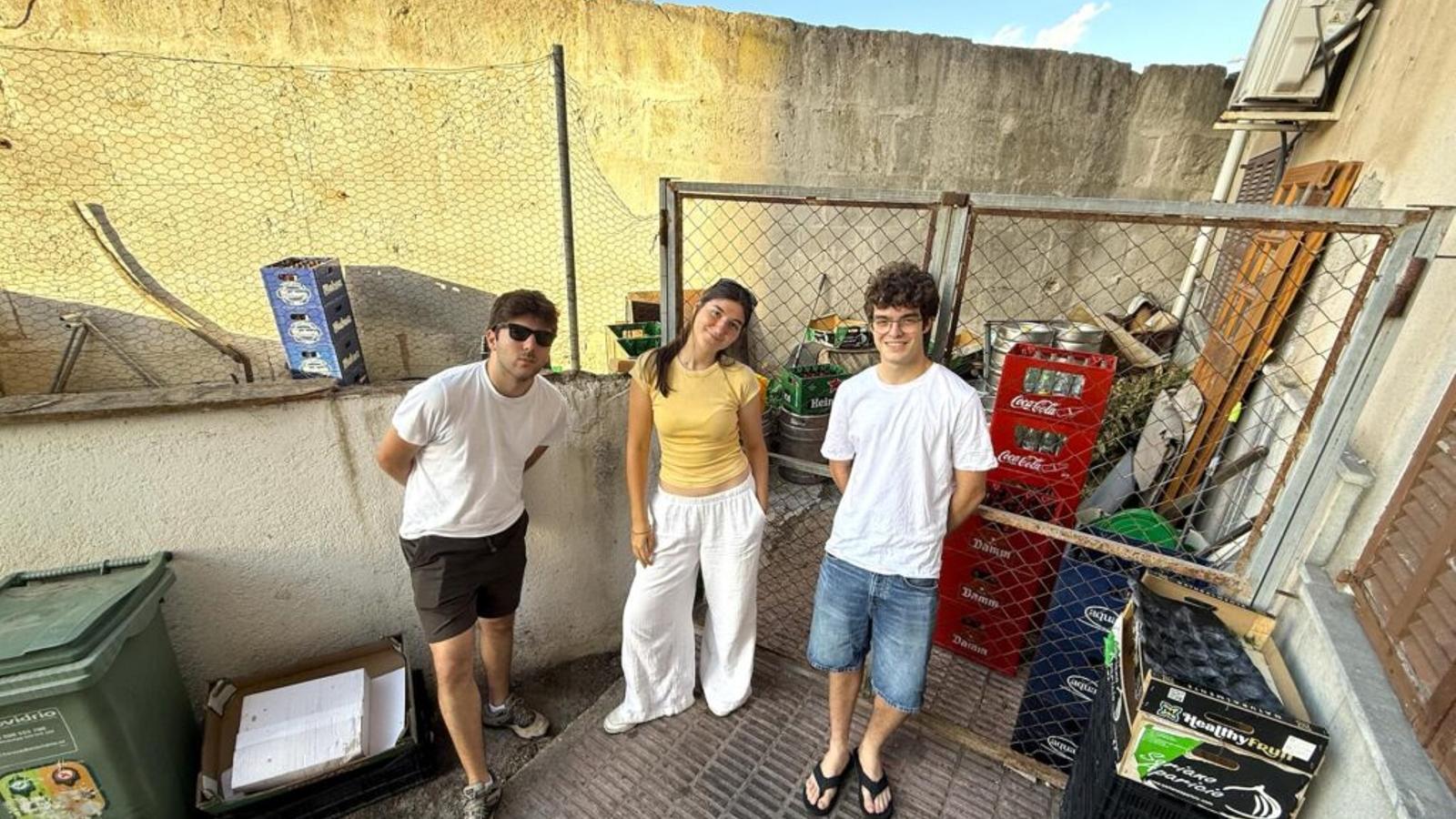
ManacorArnau Galmés, on bass; Roger Moragues, on guitar; Joel Moragues, on drums, and Ari Santos, on vocals. They are Espurna, the band that has just won the Ciutat de Manacor de la Cançó award. An award that reinforces the work they have done over the last year and a half and the EP of three songs they have just released on Spotify. We talk to them for a while to know their immediate plans.
Where does your name come from?
— Arnau Galmés: It's not that it has any particularly deep or studied meaning. We simply liked the sound of it. We tried out names and this is the one we liked the most. Also, because it's a word that isn't used much anymore in our everyday Catalan, because we tend to fall into the barbarism of 'spark'.
Was it a surprise to win the CIutat de Manacor prize for the song Guillem d’Efak?
— Roger Moragues: Totally. We weren't expecting to win the competition, to be honest. You could say we were going to "try our luck", and we already considered it a success to have been selected. The victory was also a surprise, because we participated without expectations, mainly to showcase the work and the songs we have. But this also strengthens our desire to do more things, of course.
— A. G.: Besides, when we saw who had been selected with us for the final, we thought of a third place or something like that. It was a joy.
What is the creative process like. How do songs come about?
— Ari Santos: Roger contributes the initial ideas on guitar, and together we build the melodies, lyrics, and vocals. Then, with Arnau, we develop the music and the complete songs. The songs are born very naturally, guitar and voice, and then they are built with the whole band until we find the final sound.
What are your plans now?
— R. M.: Expand the repertoire to be able to start performing concerts this summer and gain experience as a band, in order to finish defining our own sound.
— A. S.: We have between 8 and 9 songs in different stages of production that we want to finish and add covers to reach a duration of approximately one hour, with about 40 minutes of our own material and the rest covers that fit our style.
What is the motivation for forming a band?
— A. G.: Enjoy making music together, without commercial expectations. The band was formed to make the music we like, and this continues to be the main motivation. We don't aspire to make money or achieve great commercial success; we prioritize the creative process, our time together, and a project that we feel comfortable with. If the project is to grow, it must do so naturally.
How do you see the local landscape?
— R. M.: It is a diverse scene that has always been renewed with new bands as the years have passed. We now admire projects like Garrafa Nadal, Reïna and Plan-ET... and these in turn grew up listening to groups from a generation before theirs... and so on. Perhaps what is missing is a network of small venues and stages to perform and free municipal rehearsal spaces.
Does the path lead to the release of a physical record?
— We want to release a physical record, but without rushing. We prioritize continuing to compose and work on the sound. When we have 12 or 13 solid songs, it will arrive.
