Balearic education, face to face: the seven teaching unions debate the future of the school
The round table, which has been held at the Estudi General Lul·lià, has addressed the future of public and concerted schools, Catalan in the classrooms, school segregation and the labor demands of the teaching staff, just 15 days before the union elections

-
CAT -
CAST -
DE
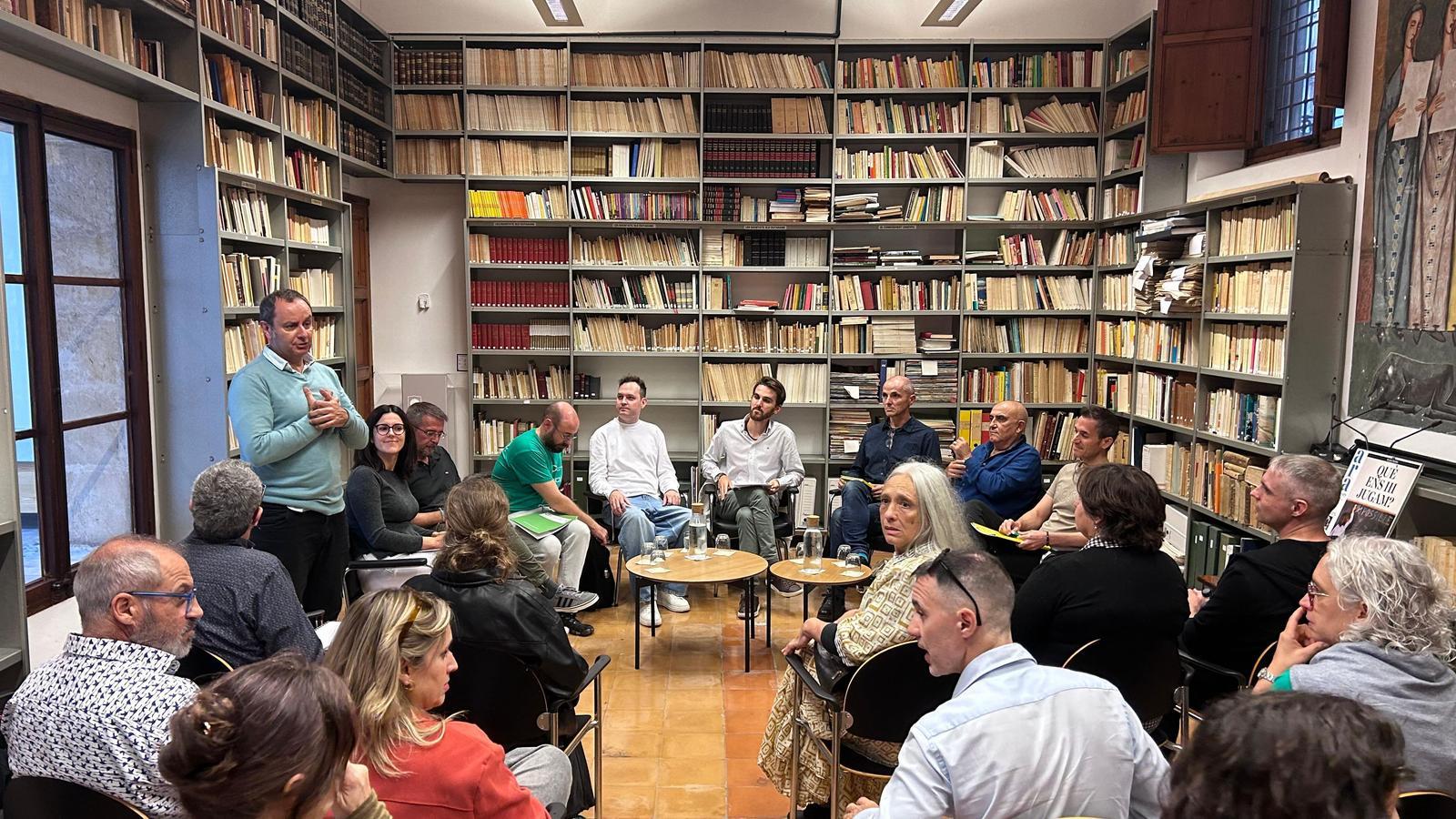
PalmaARA Balears brought together this Tuesday the seven trade unions with representation in the education sector of Mallorca—STEI, ANPE, SIAU, UOB, CCOO, UGT, and Alternativa—at a roundtable discussion at the Estudi General Lul·lià in Palma to analyze the current situation of the education system and debate the main challenges facing teaching in the Islands. The meeting, moderated by Jaume Cladera Mas, head of the Education section of ARA Balears, served to compare the diagnostics and proposals of the different organizations at a particularly relevant moment for the sector, just 15 days before the union elections on December 2nd and with the negotiation of the new 2027-2031 education agreement on the horizon. The speakers were Azahar Tortonda (UGT), Mario Devis (CCOO), Biel Vives (UOB), Joan Crespí (SIAU), Miquel Àngel Santos (Alternativa), Vicenç Garcia (STEI), and Victor Villatoro (ANPE).
The unions have demonstrated that, despite the differences in approach and the frictions that often mark their relationship, there are more points that unite them than separate them. They share a good part of the demands and objectives in defense of teachers' rights and the improvement of the education system. However, the usual discrepancies, the disputes to gain representation, and the different strategies of union action end up diluting this common base and make it difficult for the shared demands to translate into a unified and more forceful voice before the Administration.

During the debate, issues such as the mobilization capacity of the organizations, the need for organizing, and the pressure mechanisms available to them to achieve improvements in the system were brought to the table. Also addressed were what the priorities and red lines of the unions should be in the negotiation of the next educational agreement. Another central axis was the schooling model of the Islands and the relationship between public and charter schools. In this area, there was a debate about the expansion of charter centers, the obligations they should assume in the schooling of vulnerable students, and the necessary measures to combat school segregation.

Language and professional problems
Catalan in the classroom, in a context of declining social use, has also had a prominent space in the conversation. Union representatives have been able to address compliance with the Minimums Decree, the need to advance towards an immersion project, the implementation of linguistic projects in schools, and the idea of the school as the last bastion of the language. Educational inclusion and ratios, teachers' working conditions, and bureaucratic overload have completed a large part of the agenda. The meeting ended with a question addressed to the seven organizations to identify what differentiates each one from the others, beyond the shared demands. From class-based unionism to assembly-based projects and a perspective focused on the Balearic Islands were some of the responses.
