Education ignores its highest consultative body when it questions the educational model
A report from the College of Teachers analyzes 366 contributions from the CEIB and concludes that the Ministry is almost twice as receptive on technical matters as on substantive ones
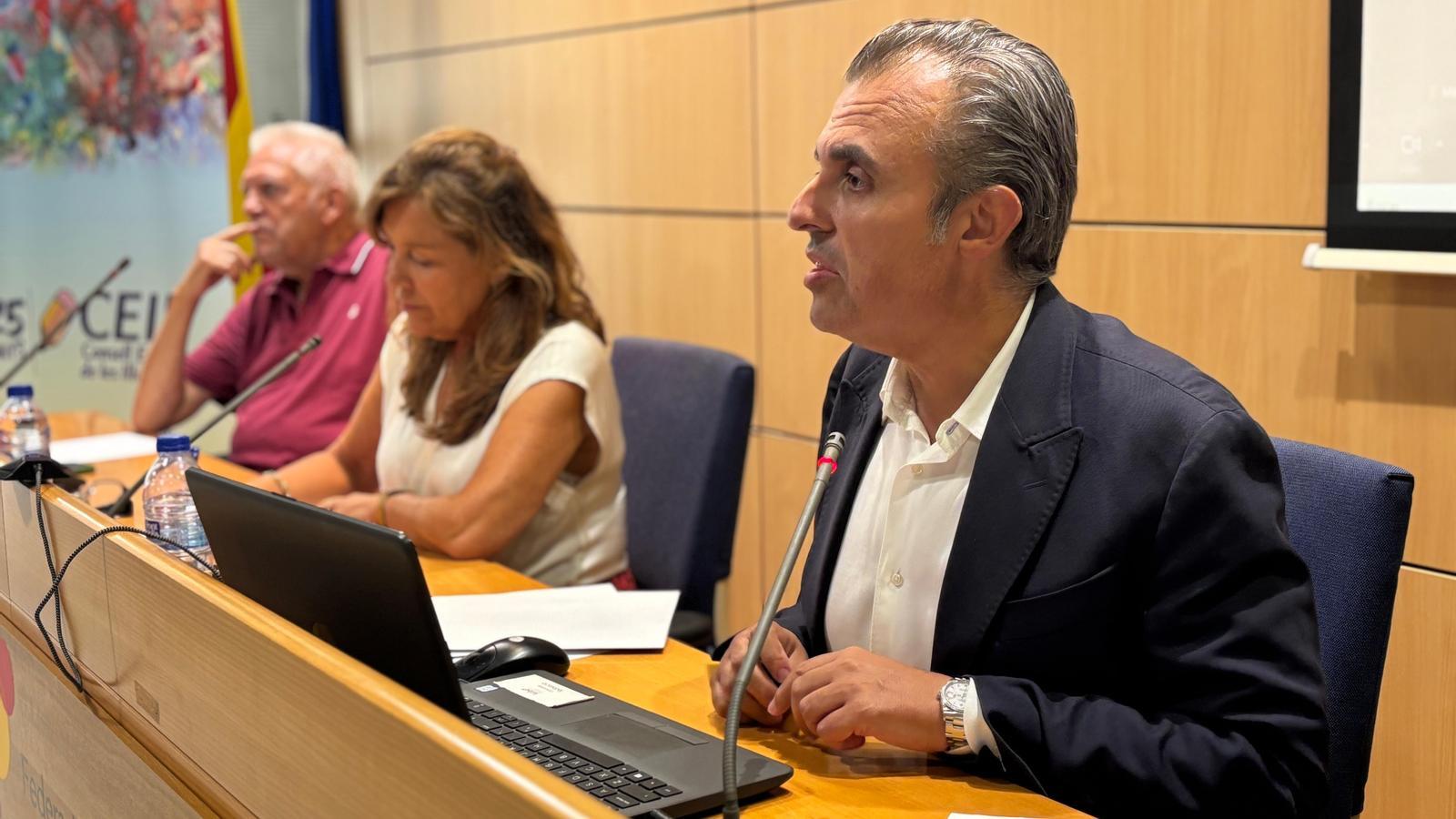

PalmaEducation ignores almost seven out of ten substantive proposals made by the School Council of the Balearic Islands (CEIB), the highest consultative and educational participation body, where the different sectors of the educational community are represented. Of the 227 substantive contributions that the CEIB made to the last five decrees analyzed, the Ministry only accepted 71 fully or partially (42 accepted and 29 partially accepted; in two of the five cases, the CEIB had proposed the withdrawal of the entire project.), a total of 31.3%.
The data is part of a report by the Professional College of Teachers of the Balearic Islands, which has analyzed 366 contributions from the CEIB during the processing of the last five approved educational decrees. The study concludes that the Ministry of Education is almost twice as receptive when proposals affect technical issues as when they propose changes to its substantive decisions.

Specifically, of the 139 technical and formal contributions (drafting corrections, terminology, systematics, regulatory references, and internal consistency issues), Education accepted 83 totally or partially, 59.7%. On the other hand, of the 227 substantive contributions —related to rights, obligations, resources, educational organization, curriculum, equity, planning, ratios, free tuition, and other material decisions of educational policy— it only assumed 71.
The low receptiveness to substantive amendments is compounded by the reduction in deadlines available to the CEIB to analyze and amend educational regulations. Ordinary reports have gone from the 60 working days established by the previous regulation to a maximum of 30 days, while in urgent procedures the deadline has been reduced from 20 to 15 days. The change affects, among others, draft decrees and orders in the educational field. Education has justified the measure because "the deadlines are being aligned with those of the Consultative Council". "We understand that if the Consultative Council can meet these deadlines, the CEIB should have no problem," say sources from the Ministry.
The problem is that the two bodies do not have the same resources to carry out this task: the Advisory Council has members who dedicate themselves exclusively to it and a legal support team, while the CEIB is made up of individuals and entities that carry out this function outside of their working hours. This further reduces the effective time the School Council has to study the documentation, debate proposals with members, and prepare reports before the regulations continue their processing.
Blanket rejection
The detail of the five decrees analyzed allows us to see this difference even better. In the draft decree on educational concerts, the CEIB made 36 technical or formal contributions and 40 substantive ones. None of the 40 substantive contributions were accepted, neither totally nor partially: all 40 were rejected by the Ministry. These proposals affected issues such as the duration of concerts, the relationship between public and concertado offer, ratios, the renewal of concerts, gratuity, fees, resources, and control mechanisms. Finally, the decree extends the duration of concerts to 10 years, compared to the 6 currently in force, and incorporates measures such as the compensation that Education will assume in certain contexts for dismissals of teachers from the private concertado sector.
In the Integrated Training and Education Program (PCFI), the CEIB did not make any technical or formal contribution and only made a substantive one, which the Ministry dismissed. Furthermore, the School Council had directly proposed the withdrawal of the draft decree.
The same happened with the decree that regulates the controversial Baccalaureate of Excellence, which foresees 70 places in Mallorca, 30 in Menorca and 30 in Ibiza. The program separates students with the best academic results from the ordinary system to offer them more in-depth training. Critics have synthesized their criticisms with a question: "Would people agree to create a Baccalaureate for sufficient students?". The Ministry, on the other hand, defends the program in the name of diversity attention. In this case, the CEIB also made a single substantive contribution, which Education dismissed. As with the PCFI, the School Council had requested the complete withdrawal of the project.
The decree on dining halls and cafeterias presents a different panorama. Of the five analyzed, it is one that shows more receptivity from the Education department. CEIB made 45 technical or formal contributions and 81 substantive ones. Of the substantive ones, 31 were fully accepted, 8 partially, and 42 rejected. Thus, almost half of the substantive contributions were incorporated fully or partially. In the ESO's planning and curriculum project, CEIB made 58 technical or formal contributions and 104 substantive ones. Of these latter, 11 were fully accepted and 21 partially, while 71 were rejected. Furthermore, there is a substantive contribution that the regulatory impact analysis report does not expressly qualify as accepted or rejected.
Voice is given, but not heard
The College of Teachers considers that this data points to a clear difference between the formal participation of the educational community and its real capacity to modify the Government's decisions. "The CEIB seems to have a significant capacity for impact on the technical quality and the deployment of norms, but this capacity diminishes notably when its contributions come into conflict with decisions that define the educational model promoted by the Government", the report points out.
The study does not conclude that CEIB's contributions are ignored in all cases. The Regulatory Impact Analysis Reports (MAIN) show that proposals are examined, answered, and, in numerous cases, incorporated. The difference is that this receptiveness is much higher in technical matters than in substantive decisions, which are based on the experience and professional judgment of people who are in daily contact with educational reality.
In fact, the two projects that show the most substantive receptiveness are precisely those concerning dining halls and cafeterias and the organization and curriculum of ESO. On the other hand, the contrast is greatest in projects affecting central, more ideological options of the educational model: concerts, PCFI, and the Excellence Program in Baccalaureate. In these three cases, the 42 substantive contributions were dismissed.
The same report warns that the analysis only includes five draft decrees and that this hypothesis should be tested with more files, including draft orders. However, the College considers the difference between the 59.7% acceptance of technical contributions and the 31.3% of substantive ones to be significant.
The importance of CEIB
The College of Teachers emphasizes the institutional dimension of the School Council. The CEIB is the highest body for consultation and participation of the sectors affected by the general programming of non-university education in the Balearic Islands. Therefore, it is not just another participant in the process of drafting regulations, but the institutional space where the different sectors of the educational community are represented.
The report admits that the Government has full legitimacy not to accept the proposals of the School Council, as the reports are not binding. "The discrepancy between the Government and the CEIB is perfectly legitimate: CEIB reports are not prescriptive and do not substitute the political and regulatory responsibility of the Government," the document points out. But the Council considers that the reiteration of these discrepancies on fundamental issues is significant. "The CEIB is not just another participant in the hearing process, but the institutional body for participation of all sectors of the educational community of the Balearic Islands," it states. Therefore, the document concludes that "a repeated divergence between the substantive proposals and the decisions adopted by the Government is, therefore, significant data for evaluating not only the formal existence of participation mechanisms, but also their effective impact on the definition of educational policy".
