I desire the calm of the ‘pijes’: silent luxury is rest and repose
I compare the mothers of influencers with mine and those around me, and I don't see any coincidence.

-
CAT -
CAST -
DE
PalmaI am fascinated by observing the lives of 'posh' people. They are my favorite narcotic. That is why, every morning, with coffee, I take a dose of them. I consume them above all through their video blogs on YouTube. And I have a couple of favorites, all Catalan, from the upper diagonal preferably. They are "posh people who organize your life", as the Amiga Date Cuenta would say. Their lives –occupied between shopping at Ametller, barre or pilates reformer classes, and Indiba treatments– provide me with the necessary dose of fantasy to face my day, helping me to deceive myself enough to believe that today will be just as easy.
Aspirationalism is the key to these profiles. In principle, it was designed for material issues: brands wanted us all to identify with them –regular girls, like us– and, therefore, for us to believe that we could all afford a Louis Vuitton. That is why it was so important to show themselves natural, in their day-to-day lives: so that we would confuse their life with ours and say to ourselves: come on, I deserve it too.
The Louis Vuitton, however, was the Trojan horse. What we didn't know was that, while they showed us their beauty routine, they were unfolding before us an even more subliminal and inaccessible aspiration: their lifestyle, the silent luxury of rest and repose. You might be able to own the Louis Vuitton—after many hours of overtime or a loan—but the closer you get to it, the further you will move away from what they are really selling: time and care for yourself. There are those who still want to drive an Audi or a Mercedes to move up in class, ignoring that what they will never be able to afford is another body, zero kilometer, with an intact back; nor a new face, from eight hours of daily sleep.
When I observe the life of my trusted 'posh' friends, I look especially at their mothers. Whenever they appear on the scene, they do so as if levitating, with a relax of Diazepam. Their movements are so languid that they make you believe that time has stopped. You never find them rushed, in the middle of a task; they are never interrupted. They are like a chameleon. They have the peace of a thousand Buddhas. Their expression, placid, satisfied. Sometimes they appear gathering flowers and branches from the garden. Other times, making lunch. Others, dressed up and ready to go out for dinner. But they never hurry, they are never worried. As if everything always turned out just as they expect.

I compare the mothers of influencers with mine and those around me, and I don't see any similarity. My mother is always worrying about something. Any setback makes her lose sleep. For some time now, it is her eyes that seek my comfort. She is a knot of anxiety. And my mother-in-law, for her part, is a powder keg. Even at rest, she has the metabolism of a hummingbird: she is frantic, she trips over herself when she chats because all her thoughts crowd her mouth when they try to come out. None of them exude this calm.
Marc Giró aptly said, "those of us who are poor, women, the sissies, the wretches of the planet must hurry to say things because maybe there isn't space," because we have become accustomed to having a limited time for speech and attention. And it is so. The world does not wait for us, not for women, nor for sissies, nor for the working class. Our condition as ants forces us to be fast, because we have to reach everything: the bus, the second job, making dinner. The life we lead eats up our time. Unlike the 'posh ones,' we have to do more with less.
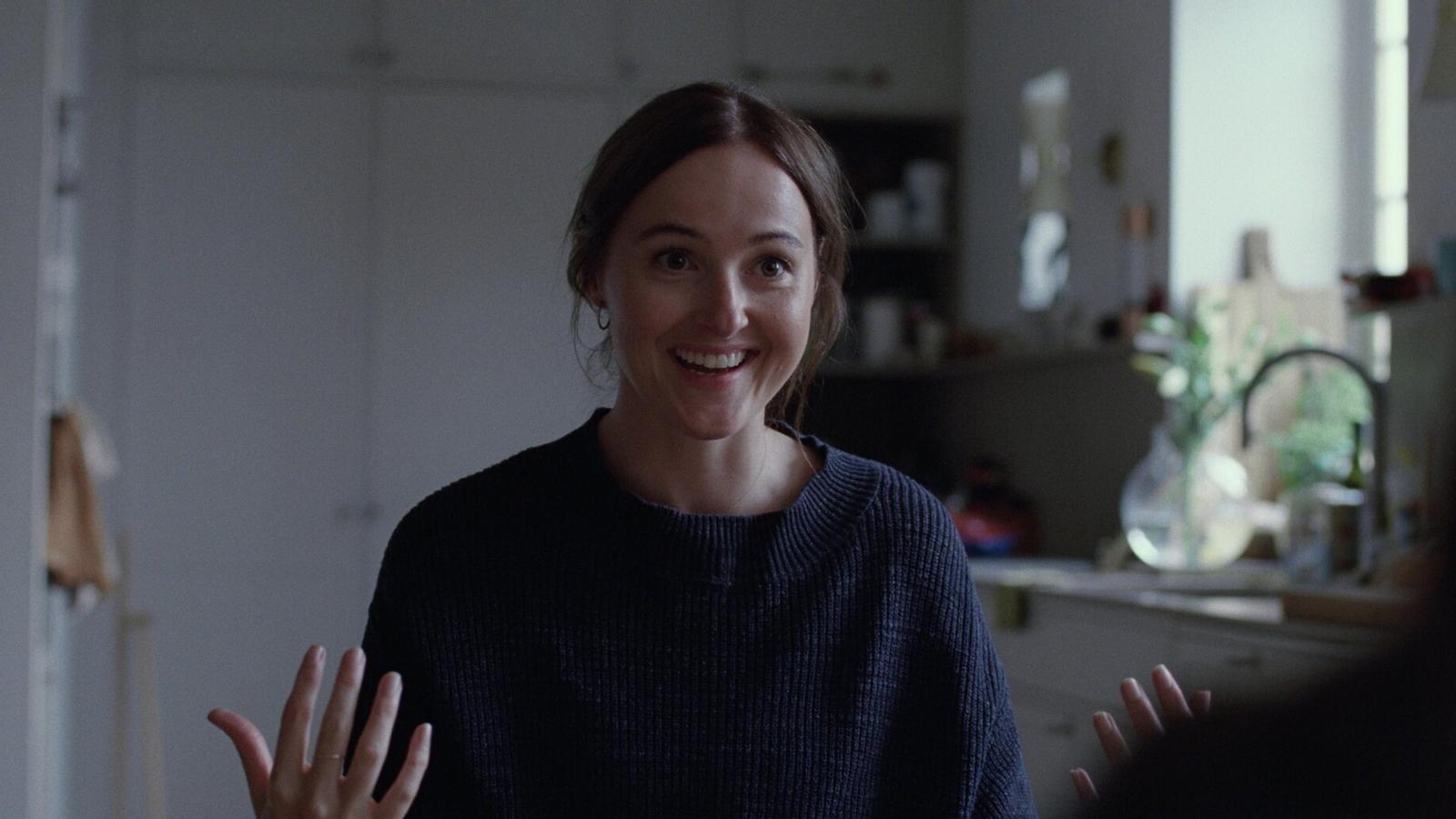
Tranquility is beige. And stress is the horror vacui of my home. I strive for restraint and subtlety, just like the house and the emotions of The Worst Person in the World, by Joachim Trier, but necessity imposes itself in the form of a butane gas heater. My reality is rather strident: bright like the fuchsia of the throw blanket on the sofa and indiscreet like the reggaeton playing on the speakers. What can we do: it is not silent luxury, it is loud mediocrity.

Lorena G. Maldonado and Juan Evaristo Valls Boix talk about this, and very well, in the latest episode of Una hora con Lorena. "Luxury is now slow living," the journalist invites us to discuss, while opening up the "privileged skull"—as she calls it—of Valls. "The spatial figure that best embodies contemporary alienation is not a prison, but a race in which we cannot stop running," the philosopher warns. "Rest and slow living have become a luxury, a privilege, and a commodity. And it is important to claim this as a right for everyone," asserts the author of JOMO (Anagrama, 2026).
What he says next makes me understand it: "Nothing interests the upper classes more than naturalizing, invisibilizing, their privilege and showing it as the fruit of their effort and merit, and not of inherited capital. [The upper classes are interested in] showing that this person deserves to be there or that their privileged situation responds to a natural order for which they are neither guilty nor responsible. Everyone knows how to recognize a good linen fabric or a rested face," Valls declares. And I nod.
