"A friar hit me on the head and I rolled down five steps."
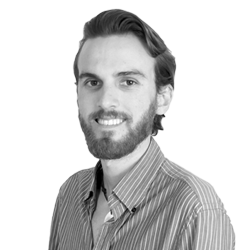
Joan Rigo (Campos, 1949) is one of the many young people forced to leave their village to study as boarders in Palma

-
CAT -
CAST -
GER
Palm'My School Years' is a series by ARA Baleares that reconstructs what education was like in Mallorca decade by decade through first-hand accounts. This week we delve into the 1950s.
When I was four years old, They took me to school from the Sacred Heart of Jesus nuns in Campos. There were separate classrooms for boys and girls, and everything was very rudimentary. I didn't want to go. We lived in the countryside with my godmother and cousins, and I was used to running free around the village. When my godmother He used to take me to schoolAs soon as we got close, he'd bolt. She'd chase after me, but I wouldn't stop. One day I hid behind a gate and they didn't find me for hours. Lunchtime had passed and they were still looking for me. Even as a child I was like that: stubborn and in love with freedom.
Then I went to the Joan Veny i Clar school until I was seven. There was only one teacher for about thirty children. From there I went to the choir school and started as an altar boy. There were two types: those of us who sang and the altar servers, who helped the priest. We were all under the direction of Vicar Miralles, who, on feast days, would tell us that the church should shake. Classes were held in a couple of rooms that served as classrooms. We spoke whatever language we wanted, and we did many things in Mallorcan. Keep in mind that many of the teachers were from the village: Bruguera, Lladó.

From Campos to Palma, and internal
When I was ten, I was sent to study at La Salle in Palma. It was a big change. I was a country boy, and suddenly I found myself a boarder with many other children and friars who controlled everything. I had a hard time the first six months. I missed my village, but above all, I missed my freedom: being able to go out, go fishing at El Trenc, run through the fields. Everything there was much stricter.
At La Salle, there was a lot of discipline, and also violence. I was sometimes beaten, but mostly I saw other students being hit hard. If something happened and no one said who did it, they'd hit us on the fingers with a ruler. The prefect would walk down the corridor, and if he'd dragged a troublemaker out, he'd grab him by the ear and drag him back inside. If he came out again, he'd get a good whack that made his lips touch the floor. Every day we went down to Mass at 7:30, and one day I was chatting. A new friar had arrived, and he hit me on the head as I was going down the stairs, and I tumbled five steps. We looked at each other, I saw he wasn't coming toward me, and I breathed a sigh of relief.

A coin he spoke to in Catalan
The issue of language use was curious. Among the boarders, if we spoke Catalan, we passed around a coin that the friars had put up for a game. Whoever had it at the end of the week didn't go home. Everyone was on their guard. There, Castilian Spanish had to be spoken at all costs, because most of the friars were from the Iberian Peninsula.
There was a heart at the school, but they took it away from me. It all goes back to the day we were singing the La Salle hymn and I sang it wrong. The friar pointed at me, took me up to the piano room and forced me to sing a rather threatening song by myself: If you don't learn solfège, I can see you ending up in a very bad place.They wouldn't let me return to my heart.
However, I remember my childhood fondly. I was happy at home, and in Forabila, too. What was truly difficult was that first year away from home. I remember that on Saturday at noon, school would finish and the train to the villages would be full of students returning home. When I arrived in the village, I felt that everything was mine again.
*Text prepared based on the interviewee's testimony
