'Zamburiña' or scallop: how to avoid confusion so that you don't get served one at the price of the other
In restaurant menus and also in markets, you can see the label 'mixed shellfish' on cheaper mollusks that are not actually assorted shellfish.

-
CAT -
CAST -
GER
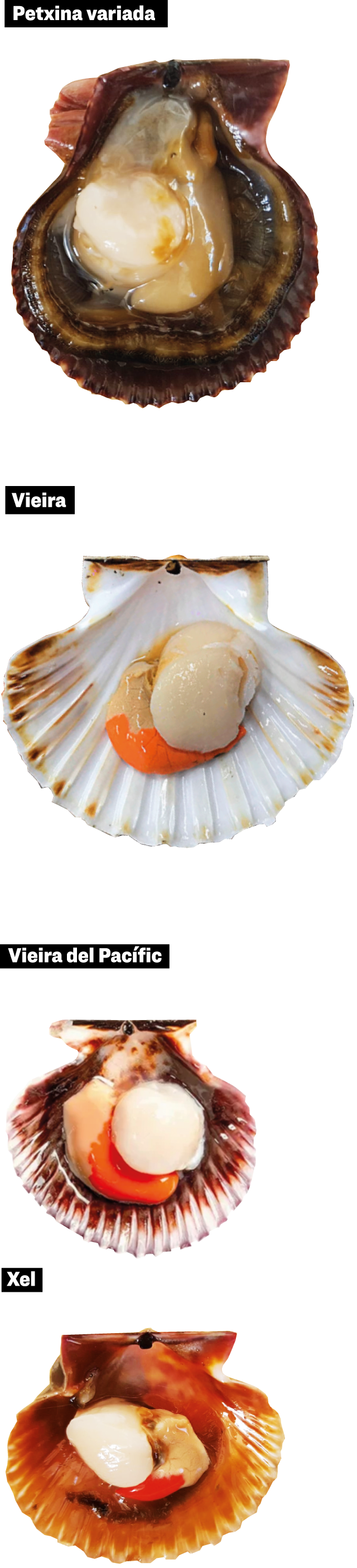
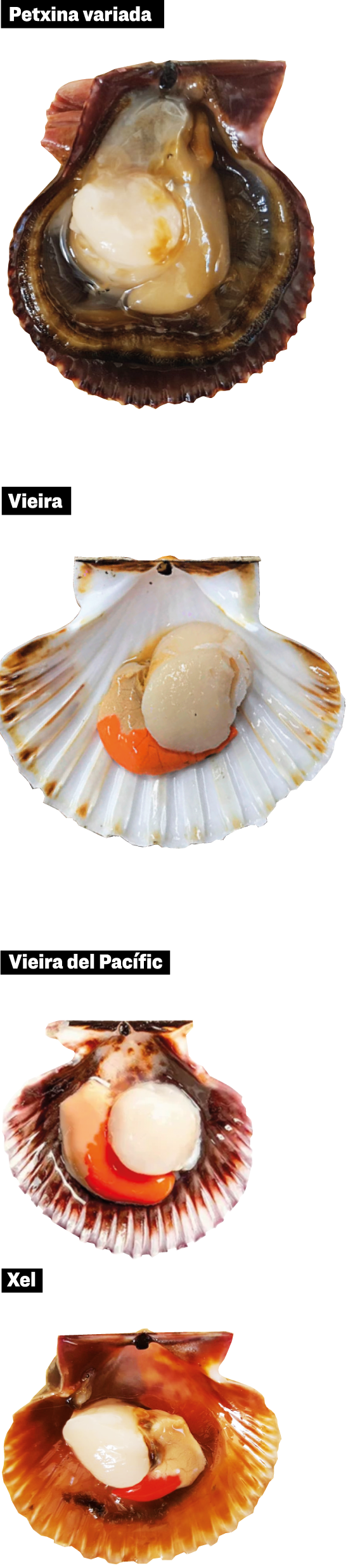
BarcelonaIt happens more often than it should, and, to think rationally, we might believe that it happens due to confusion and lack of knowledge and not so much because they want to pass off the scallop (which is cheaper on the market) as an expensive and prized mollusk like the mixed clam (the scallop(in Galician). The fact is that they look alike but are different, very different. On the one hand, scallops have a light, almost white shell and an orange gonad. On the other hand, mixed shells have a dark shell and their gonad is not orange but light-colored, like the rest of their body. They are bivalve mollusks, which means they have two parts, two valves, and they live in the Atlantic and also in the Mediterranean. However, there is a key difference between the two when they reach the market: mixed shells have a very high price because, in addition to the fishing bans that regulate them, their catch, when permitted, is scarce due to overexploitation, while scallops have a lower price and are caught more frequently.
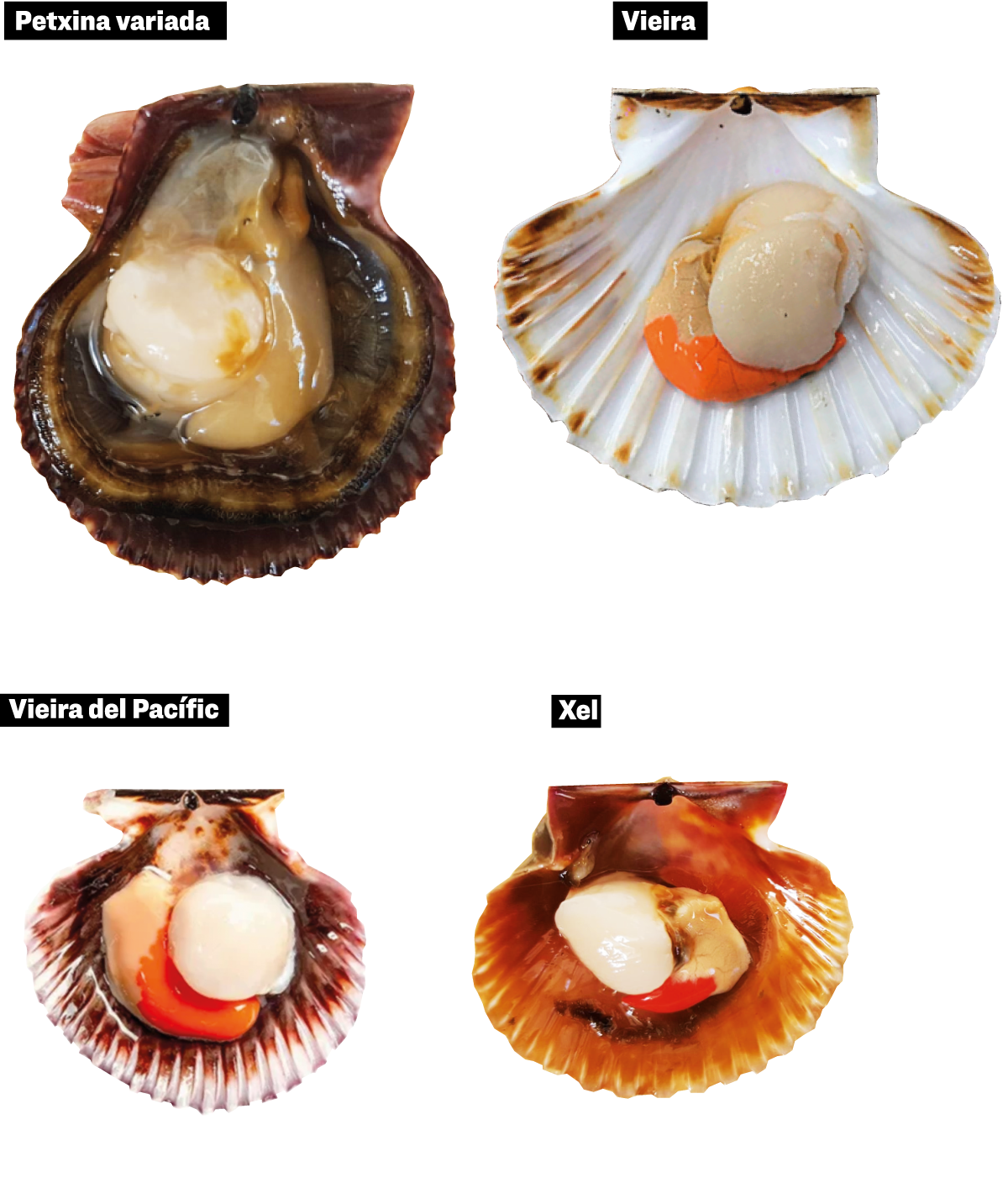
Orella única
Orelles simètriques
Closca
clara
Gònada color taronja
Closca superior plana
Closca fosca
Sense gònada color taronja
Orelles asimètriques
Orelles asimètriques
Gònada i muscle més grans
Gònada i muscle més petits
Orella única
Closca fosca
Sense gònada color taronja
Orelles simètriques
Closca
clara
Closca superior plana
Gònada color taronja
Orelles asimètriques
Gònada i muscle més grans
Orelles asimètriques
Gònada i muscle més petits
Orella única
Closca fosca
Sense gònada color taronja
Orelles simètriques
Closca
clara
Closca
superior
plana
Gònada color taronja
Orelles asimètriques
Gònada i muscle més grans
Orelles asimètriques
Gònada i muscle més petits
At the Estimar restaurant in Barcelona, marine scientist Arnau Subías believes the confusion is often "due to misinformation, because if we had them side by side, we'd see that the differences are very obvious." He doesn't think it's so much about deception, and therefore inflating the final price. Chefs like Víctor Ródenas, from the Maleducat restaurant in Barcelona, also agree with this assessment. But, of course, in practice, whether the confusion is intentional or not, assorted shellfish are always more highly valued in fish markets and also in the public imagination. So let's take a closer look at how different they really are.
To begin with, the scallop has a light-colored gonad; that is, the organ that secretes both sperm and eggs is beige. They secrete both types because they are hermaphrodites, reproducing in the water when they release their eggs and sperm. Regarding the gonads, it's worth noting that there are other marine species, such as sea urchins, whose reproductive system is what we eat, and the more orange it is, the tastier it is. But let's return to the scallops. There are more essential differences in their valves, that is, their external structure. Scallops have a single "ear" and their shell is dark, very dark. And to drive the point home, the shape of both valves is convex. In contrast, scallops have a bright orange gonad, a light-colored shell, and symmetrical "ears"—both ends are exactly the same.
This intense orange color is the same in the case of the other types of scallops, the chel (voandeiraGalician) and Pacific scallops. And, in both cases, the ears are asymmetrical: one end is more pointed than the other, which is more rounded.
Size is the difference
And there are even more differences between the two mollusks that cause confusion, the scallop and the clam, and it's a matter of size. If you find a large, thick bivalve mollusk on your plate—so large, in fact, that its shell is often used as a plate—you have a scallop in front of you, never a clam (a scallop)because the latter are always of smaller dimensions.
When it comes to eating them, they're all very similar. We only eat the muscle and reproductive organ of the scallop and the various clams, because the other parts, which include organs like the stomach and gills, are discarded. So, in the market and in restaurants, you'll only see these two parts eaten: muscle and gonad. We can eat them raw, especially in Japanese dishes like sashimi and nigiri, or grilled, with a traditional garlic and parsley relish. When they're caught in the Pacific, they arrive frozen at our markets, and the same is true for those that come from the Atlantic, although we can also buy them fresh. The end of the year is a good time to find various clams at the market, because that's when they're in season, and you'll need to be prepared to spend a bit more because the price is always high.
Finally, in all cases, these bivalve mollusks need to be purified. This means that, once caught, they are placed in tanks of purified water to remove what they have filtered while living at sea. Scallops and other shellfish, such as mussels, oysters, and razor clams, must be purified for between 24 and 72 hours before reaching the market. This is not only because they have filtered everything in the sea, but also because it removes sand. This latter characteristic makes them similar to, and distinguishes them from, other shellfish, such as sea urchins, which are herbivores and therefore do not filter seaweed. A scallop cannot be picked up from the sea and eaten because we could ingest fecal bacteria, whereas a sea urchin can be picked up, opened (the task is not easy without the proper tool), and each of the orange gonads eaten. If the gonads are bright orange, it indicates that the urchin is female. And one final note: scallops and various shellfish are considered by chefs to be top-shelf mollusks, and that's why countless recipes have been created to showcase them. It's simply a matter of knowing which ones to eat.
