Four and a half recommendations
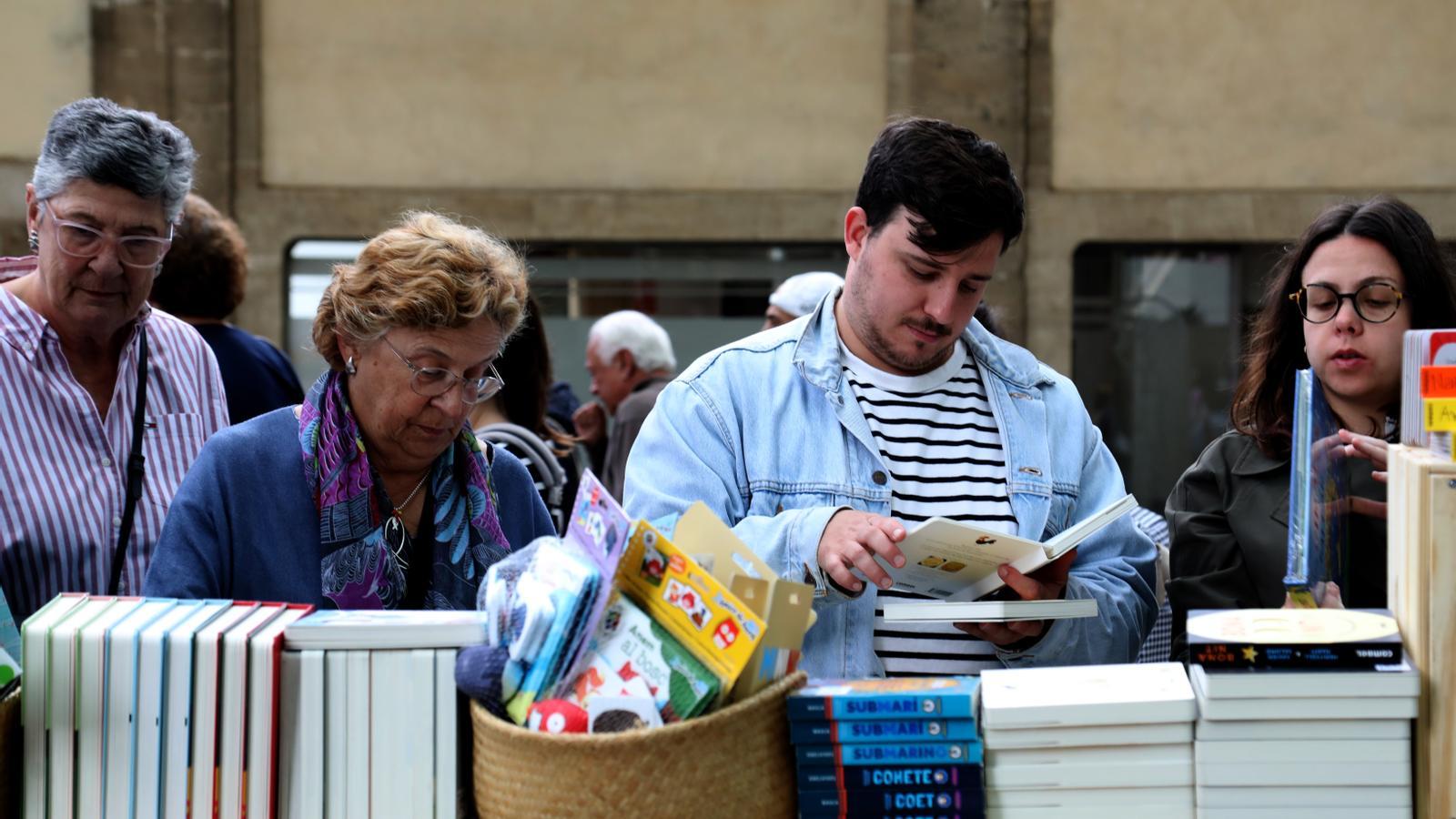

What do you want, to sell a lot or to write well?Speaking of the difficulty of living off what I write, a colleague posed this painful question to me.Let's be clear: publishing houses are not charity organizations, but businesses like any other, they have to pay salaries and survive in a complex cultural context: surrounded by two very powerful cultures, the authors of this small country insist on writing in Catalan, without any powerful state to support us, with Portuguese institutions that don't quite believe in it, with booksellers who have limited space and receive new releases every week with the support of large groups with a powerful promotional machinery that usually prioritizes non-literary criteria.I suppose the goal would be to make culture in Catalan profitable. And this is where consumers have a lot to say. What books do you buy? Are you aware that we hold in our hands the most effective way to make Catalan culture profitable? Well, buy a lot of books, and buy books written in Catalan.To make an impact, I'll give you four and a half recommendations for books written by Balearic authors that, if we had a normal country, would be among the bestsellers.– Winter Sun. Dora Muñoz. Edicions Xandri. July 1939: a group of Majorcans heading to the popular Olympics in Barcelona found themselves caught between two worlds, quite literally: Republican Catalonia and Francoist Mallorca. They left for three days, which ended up being three years.Muñoz shows us her great versatility (have you read Errada de comptes, her latest crime novel? It's also fantastic!). Here she changes register and hooks us with a great command of narrative tension, which is not easy at all. Sol d’hivern is a story based on a real event, and life very often doesn't fit literary tempos, but Muñoz knows how to keep us hooked on the story.– How do you want, brothers, for me to sing? Joan Pons Bover is doing fantastic promotion for this novel, with a piercing lyricism, a tribute to lost loves, to the grief of what never was. Published by Illa Edicions, with two temporal arcs, from the desolate routine of a nursing home to the despair of losing one's first love in post-war Formentera. A breathtaking book, written with a careful and precious language that you won't be able to stop reading.

– First were the stars. Joan Moragues, Angle Editorial. As I was a member of the jury for the Ciutat de Palma prize, I had the privilege of being among the first people to read this absolute delight, which poses the limits of science and ethics: A scientist who has made it possible for millions of lives to be saved has also been the designer of chemical warfare. The moral conflict that this novel poses is spectacular. Furthermore, it is written with tremendous nerve, and also posing many other ethical threads: the right to a dignified death, abusive relationships, the disdain for women scientists…

– The path home. Neus Costa, Ediciones Aïllades. I claim the importance of poetry and recommend this book which, despite having just come off the press, is already on its second edition: An intimate and apparently simple collection of poems (only apparently), born from an emotional process linked to the loss of a friend. This work is born from silence and emptiness. By recreating the path she usually took to get to her house, she turns it into a metaphor for memory and grief. Do not expect, however, a dark or depressing book: it breathes great tenderness and lyricism, it is full of gratitude for what has been lived, for the life journey shared over so many years. Formentera becomes a symbolic space, a refuge and a mirror that can make us resonate with the griefs we all have, when over the years we see how life separates us from those we would like to accompany us always.

Furthermore, I insist on this book, because if we Mallorcan writers complain about the centralism of the Catalan cultural circuits, where if you don't publish in Barcelona it seems like you don't exist, imagine how much more difficult it is for authors from Formentera. Precisely for this reason we should all buy it, but I propose that you buy it for other reasons: Because it is poetry, because it is well written and because you will like it a lot.The average recommendation is for Prometeo de mil maneras, by Carles Rebassa, this year's Sant Jordi prize. I haven't read it yet, but everything points to it being worth it.

Let's go back to the initial question, and I will answer it: I want well-written books to sell a lot and have an outlet. I want writers to be valued for how we write, not for whether we appear in the media or for followers on social networks, or if we are famous in some other area. I want publishing in Catalan to be profitable, and this is our responsibility as buyers. Have I convinced you? I hope so.
