How she was, Xisca Mora, according to her younger brother: "When something has hurt her, she has kept it to herself and that has made her stronger"
Pau Mora Veny, brother of Balearic politics, tells us the best kept secrets of his childhood

-
CAT -
CAST -
GER
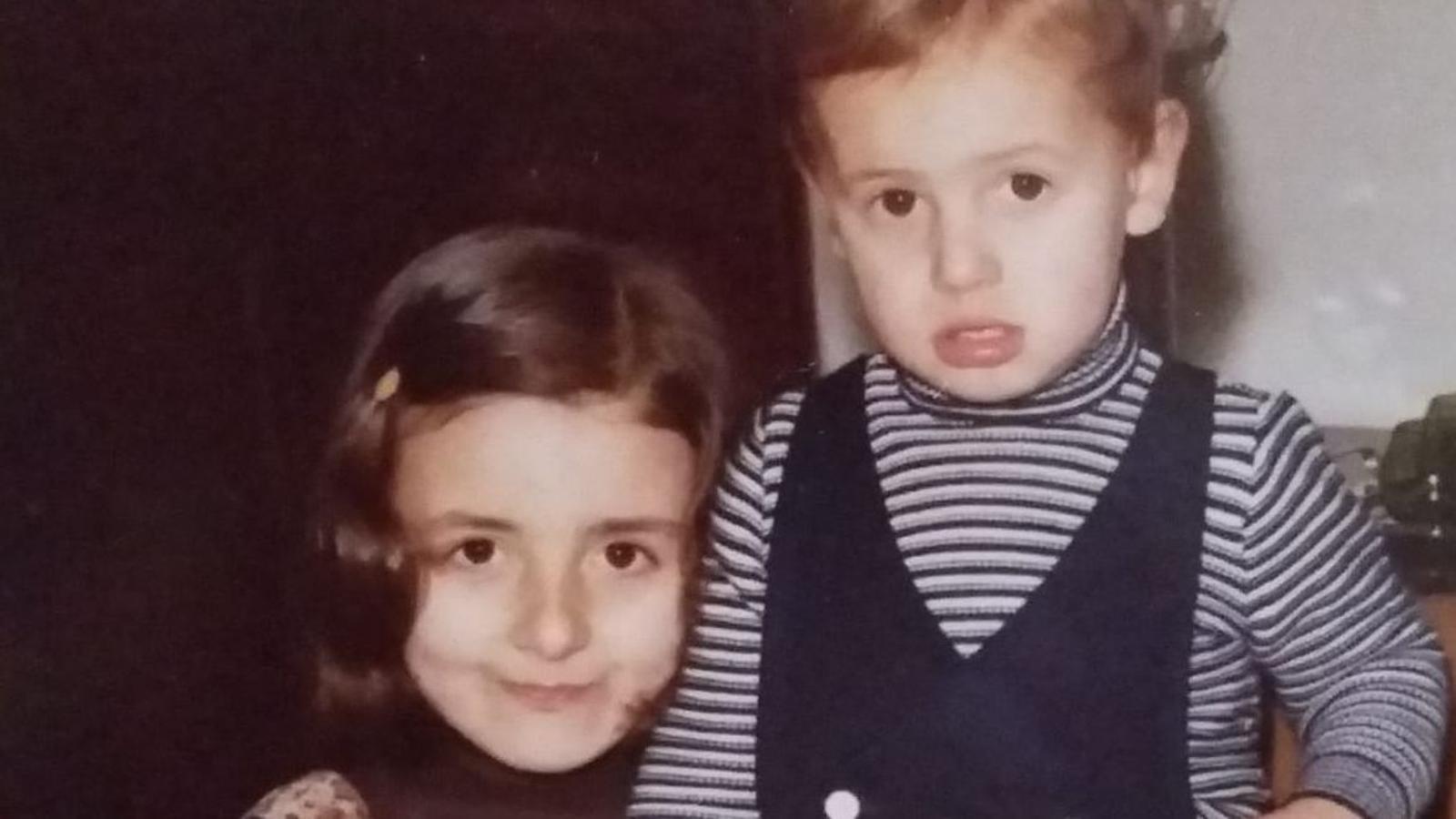
PalmaIt's made of Umberto Tozzi. But let's go back: she was born in a house of onions, so she had to be an onion, yes or yes. From a very young age she showed interest in drawing and today it is her way of "unfolding". She played with Nancys, but she often exchanged them for her little brother Pau's Airgam Boys, with whom there is a four-year age difference. It is he who brings us closer to the figure of his older sister, politician Xisca Mora Veny (1971). She recently left the mayor's office of Porreres, her hometown, after 13 years.
"The first memories I have with her are walking down the street holding hands. I think she soon took on the role of big sister and never abandoned it. I owe her much more than she owes me," Pau begins. "If there were moments of jealousy, they were few," he says. Xisca, according to her younger brother's view, was a quiet girl, very clear-headed and very diligent. "As a child she was very perfectionist, very measured when doing things," he points out. And he laughs a little, because he, he says, was quite different. He gives the example of when they did their homework at home, next to their mother, who was a housewife, but she had her quirks: "Xisca finished her homework early, and I got angry! At home, they never had to chase after her, but I can't say the same!" he recounts. To his father, he says, they would sometimes misbehave on Saturdays, when his mother went to help at the Sa Cermi restaurant – a place in Porreres where they held communions and baptisms –: "On television it was
Saturday Cinema, and when the two rhombuses appeared, they sent us to bed immediately! We stayed up late and we felt sorry...".
When she had her communion, Xisca was given a cassette: “We used to record the Eurovision songs by holding the cassette to the TV speaker, and we also recorded ourselves singing, as if we were artists.” In fact, she has it, the artistic flair. She took painting classes at a time when there were no extracurricular activities, things were done differently: Xisca went to paint in a garage with a woman who taught her. “She painted very well, and still does. Today, painting is a way for her to disconnect and open her mind. Recently, she gave my children, Aina, Pau, and Toni, three devil faces she made, and she even painted their clothes.”
When she reached adolescence, Pau was Xisca's and her friends' plaything: “They used to paint me, dress me up… they did everything to me!”, she recalls with joy, making it evident that friendship is one of the pillars of the two siblings, between them and with others: “She has always been friends with my friends, and I with her friends. Often, when they were a bit older, with her group they would rent a house in Colònia de Sant Jordi… and I wouldn't miss it, I would go along!”
Not everything was always smooth sailing, they also had disagreements, especially because they are both “much too stubborn”. Over the years, however, and as Pau sees it, these differences have become a way to get closer. He says she has given him “good advice”, and has been a role model for him –just like his parents–, as well as “the best confidante”.
Pau believes that a political career is linked to the values they were instilled with at home: justice and equality. When she had the opportunity to enter politics, she reflected it in her own way. And she reflects on it: “Politics has brought her many good things, but it has also taught her that not everyone acts with the same intentions as she does. This has caused her disappointment and personal wear and tear. Even so, she has never shown it much: when something has hurt her, she has kept it to herself and that has made her stronger”.
