Palma's General Plan only allows ground floor and first floor construction in Son Espanyolet. The ground floors are being replaced by homes with little Mediterranean style, which have generated immense disappointment among long-time residents. The new inhabitants are European citizens who do not participate in the activities of a neighborhood that still retains some dynamism. The neighborhood association has denounced on more than one occasion the excess of tourist rentals held by the company Alzina Living, which has also been responsible for demolishing traditional houses. Almost no building is listed and, therefore, they can be demolished.
From grandma's house to the Nordic attic: Son Espanyolet's mourning
A Maya Valencia artistic project collects the memory of the corrals and traditions of an area of Palma that, like others in the Islands, is losing its traditional physiognomy at the hands of speculators and investment funds
15/05/2026 - 21:31 h.

4 min
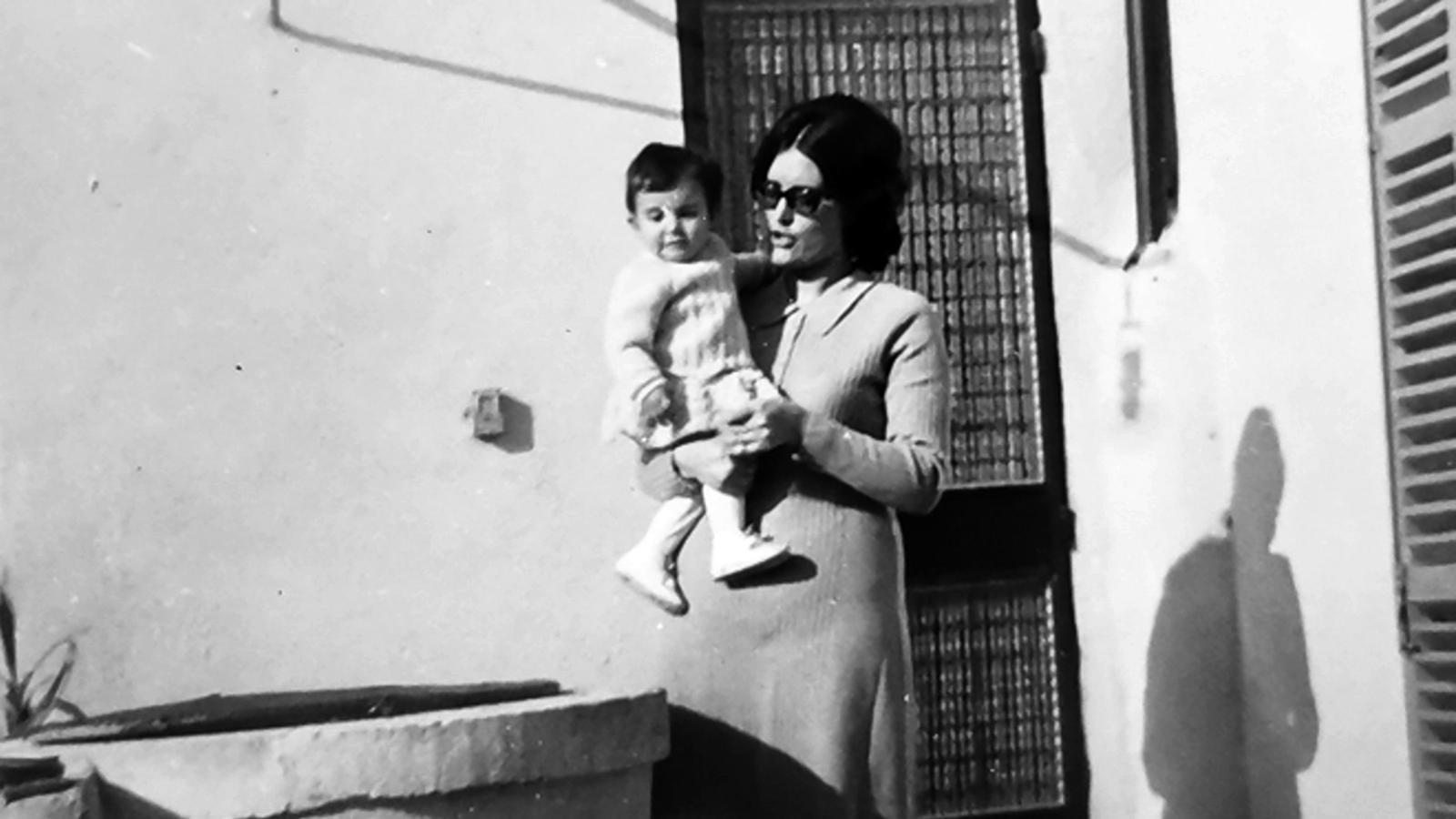
PalmYear 1994. In Son Espanyolet, a residential neighborhood of Palma characterized by its ground floors and corrals, life revolves around a couple of nerve centers. There is a parish center, owned by the Theatines, which hosts everything from the Espanyol basketball club to the now-defunct Nostra Terra theater company. On a corner, on Contestí street, a haberdashery is much more than a shop: it is a meeting point, where many people who learn to sew and crochet spend their afternoons.
The owner, Francisca Niell, mother of seven children, became a grandmother that year. Maya, the granddaughter, describes her grandmother's figure and, above all, the human landscape and relationships that Francisca had woven at all levels. “Everything happened at my grandmother's house and at the haberdashery. People met there, we talked, we told each other about our lives. I remember how my brother, my cousins, and I spent hours in the small corral. You could hear larks and other birds, we played, it was our base, our refuge,” recalls Maya Valencia.

Ca Sa Padrina: Letter to my Grandmother’s House, Maya Valencia has turned rage and frustration into a project,Ca Sa Padrina:Letter to my Grandmother’s House, a visual creation she presented at the Cortona festival (Italy), where she won an award. “It has meant receiving artistic support to evolve it,” she comments. The exhibition has also had the support of the Institut d’Estudis Baleàrics (IEB) and currently consists of a journey through the moments of Maya’s grandmother’s life and the elements that are gradually disappearing from a neighborhood like Son Espanyolet, where many traditional ground-floor houses still survive. “ I suppose I needed to assimilate the loss of what had been the pillar of my childhood and adolescence, and I have tried to portray the feelings of belonging, love, and connection with a space, a neighborhood, a family, and a people,” recounts the artist.
For about 15 years, the Son Espanyolet neighborhood has undergone a progressive change, a result of the enormous interest from Nordic people. Known by some geographers as the “oil heel” of gentrification, which originates from Santa Catalina, Son Espanyolet finds ground-floor houses with courtyards that are gradually being sold and transformed into townhouses. “The first thing they did in our case was to remove the trees. The lemon tree, the orange tree... I saw how the birds were disoriented. There was a small ecosystem, which connects all the courtyards, and this model destroys it, no matter how much they talk about sustainable projects afterwards. It is a rupture, a break with our essence, and the pity is that we don't know how to prevent it,” laments Maya.
Neighborhood meeting
This young woman gathered some neighbors from Son Espanyolet a few days ago to discuss the gentrification process and the expulsion of traditional life from this part of Palma, a phenomenon that “is not exclusive, not even by far, to this neighborhood,” she assures. It was an emotional gathering, and participants expressed their desire to fight “against selling.” “Not to give up. Not to yield to the absurd amount of money they offer you. But not everyone can. My family, we were seven siblings, and they saw no way out. But my heart aches because we couldn't save grandma's house,” she concludes.
Maya Valencia hopes her project will serve to “make society reflect, because the situation we are suffering is everyone’s responsibility, some more than others.” “I live in Barcelona, where I have a job, but someday I would like to return to Mallorca. And from here, from Barcelona, I see with great sadness how I won't be able to return, at least if I want to have a home. We are not aware of the impact this has on society,” she emphasizes.
Maya believes that young people today are the most affected by the fact that housing has become a financial asset, a speculative space “in which millions are moved and enormous margins are generated.” “But out of all this, what is left for us young people, who have seen a neighborhood all our lives, a space for coexistence, houses where we used to gather? Nothing is left for us. Only memories, nostalgia, and immense frustration at seeing that we have no future. There is a model of big capital that has driven us out and stolen our space. It is difficult to accept,” she says.
One of the biggest concerns for young people is knowing what their future will be with housing prices. The children and grandchildren of Son Espanyolet “in general cannot even dream of owning a property there, neither purchased nor rented.” “A barrier has been erected, with prices that are intended for other people. It's not that we can't afford to buy in Son Espanyolet, it's that we will never be able to buy in Mallorca. We couldn't have imagined this a few years ago, but now my generation has thrown in the towel,” she continues.
“We have to react”
Since she launched the project Ca Sa Padrina:Letter to my Grandmother’s House, Maya has received an endless stream of messages and comments, especially from people who agree with her analysis and who feel “removed, challenged”, says the author. “It is a kind of collective mourning and also a catharsis. People who come to the visits we have made in the neighborhood get emotional, we encourage each other, and, in a way, we raise a bit of a clamor”. “We have to react”, assures Maya. “We are not alone, thousands of people want to put an end to this model. It is complex, there are many causes, but we cannot stand still”, she concludes.

A neighborhood that has also seen the arrival of tourist rentals