The Government publishes 20 studies of the Trench Plan after the TC has struck down the repeal of the Memory Law
The Government has made public the investigations framed within the Trench Plan one day after the Constitutional Court has halted the repeal of the Memory Law
-
CAT -
CAST -
DE
PalmaThe Memòria de Mallorca association applauds, one day after the Constitutional Court's ruling overturning the repeal of the Democratic Memory Law approved by the PP and Vox, that the Government has made public 20 research studies prepared within the framework of the IV Plan of Pits on the victims of repression, the Civil War and the search for disappeared persons.

The entity has highlighted that, for the first time, its demand for a census of victims to be published from the perspective of International Human Rights Law is being addressed. The Memory Law, the repeal of which the Constitutional Court has suspended, proposes the development of policies for historical recognition and dissemination based on the studies published this Wednesday.

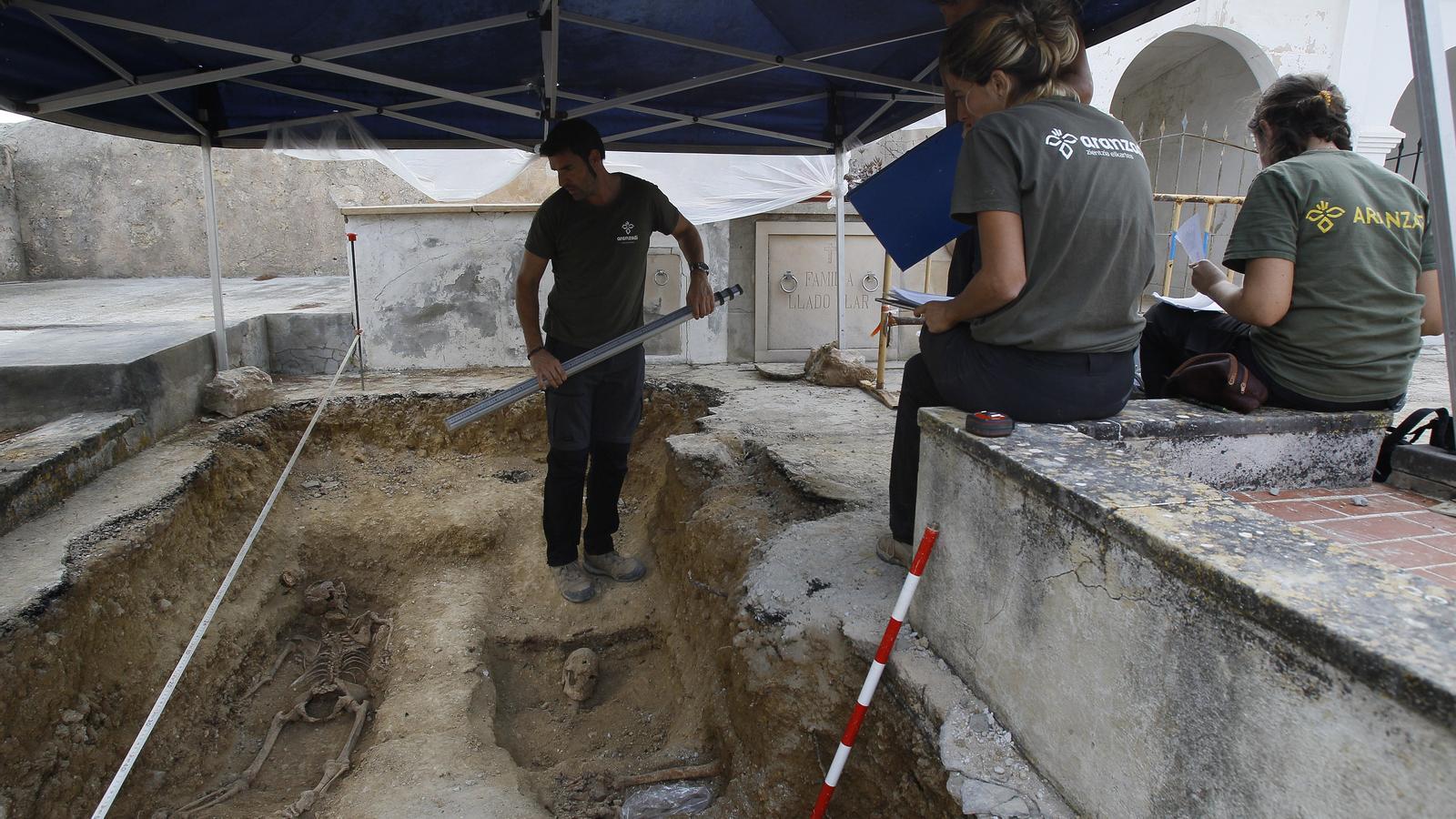
The compilation made public by the Government includes five specific historical studies on the burial of people murdered during the Civil War and the post-war period, among which the new map of mass graves in Menorca stands out, in addition to various investigations into possible locations in Mallorca, Ibiza, and Formentera and a balance of the openings and exhumations carried out between 2014 and 2022.
Thus, they are made available to the public and researchers, 15 monographs dedicated to the contemporary history of the Balearic Islands, with detailed works on the main sites of Francoist repression, the landing of Captain Bayo, and the bombings suffered in the Balearic Islands during the war.
Among the published documents are also an updated census of victims, a catalog of air-raid shelters, the history of the town houses, the analysis of the Balearic exile, and the location of the fundamental archives linked to this historical period. The collection of historical research also sheds light on the presence and activities of German and Italian citizens who were directly related to European fascist regimes and who permanently settled in the Balearic Islands after the Second World War.
All texts were previously approved by the Commission for Missing Persons and Graves after a scientific review process to ensure compliance with the required homogeneous technical criteria, as detailed by the Executive.
