Mahler, a point apart
The Chamber Orchestra of Mallorca presents a journey through the universe of Gustav Mahler at Bellver Castle
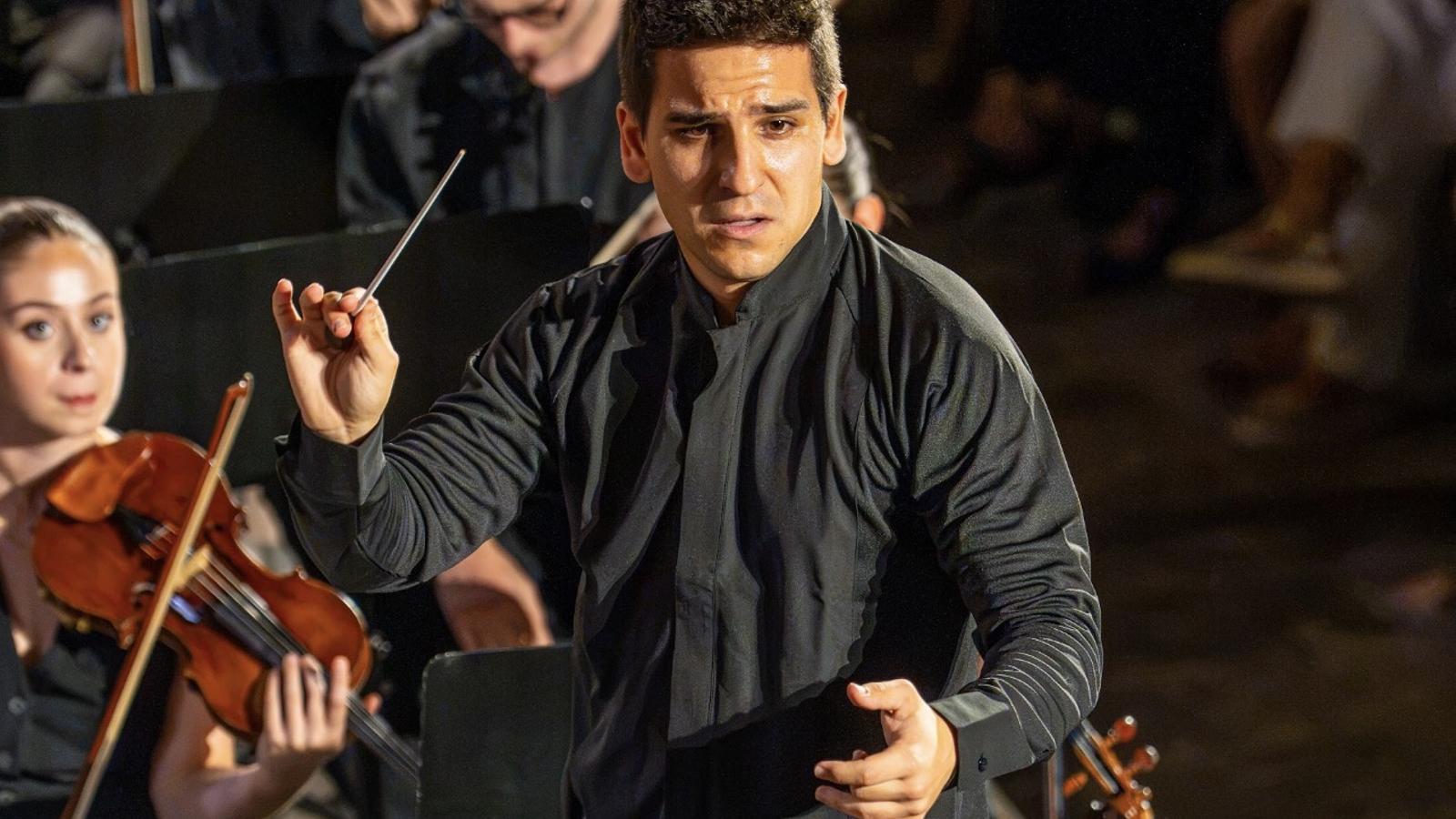

-
CAT -
CAST -
DE
PalmaThe Orquestra de Cambra de Mallorca seems, for a long time, since the day it was born, that growing is part of its character, of its DNA. The latest test by fire is, without a doubt, the challenge of facing Gustav Mahler in the monographs that each year they dedicate to a composer, behind the Pollença Festival and in the same enclave. But this is another story that we will have time to talk about, but which in some way has to do with the concert with which Bellver Castle rounded off the summer season. A farewell, on the one hand, and a presentation card, on the other. A great prelude and a program that to call demanding is an understatement, a great understatement.
Bernat Quetglas at the head of the formation continues to demonstrate that there are no limits and that the horizon of the formation has long ceased to be merely promising. We were able to enjoy the evidence in this first Mahlerian monument that they performed, the Adagio from Symphony No. 10 in F-sharp minor. Another composition with countless legends that go beyond the musical staff, while history states that Mahler's tenth was the great dynamiter of romanticism. A separate point.
The Orquestra de Cambra de Mallorca, reinforced as never before and as it should be to face the Mahlerian peak, already from the subtle and solemn beginning of the violas, this great musical experiment that is the Adagio, made it clear that achieving the challenge was not only very possible but more than probable. The intensity of such an explicit movement gained consistency, discourse, grandeur, until it reached the famous cacophony where the orchestra becomes a single instrument, an immense and spectacular pipe organ. Twenty majestic minutes with the added value of being the last piece, the only movement that the composer left completely finished, who always lived tormented by the fear of death just after composing his Ninth, as if there were no possibility of surpassing Beethoven even with the number of symphonies.
But if Mahler's last composition was an exquisite obstacle race that the OCM had overcome with flying colors, climbing the Symphony No. 1 in D major was no small matter, on the contrary, for some reason it is known by the nickname of Titan, even though this is a trademark and a tribute to the novel of the same title signed by Jean Paul Richter. The story of how the alias went back and forth could fill another article, but what has remained monumental is what we were able to hear with an orchestra that, in addition to the enthusiasm it always brings and Quetglas conveys, we must add a whole series of qualities that show exponential evolution. As is now the case with this Titan, which is an infinite kaleidoscope of everything, from a bucolic first movement where the orchestra distilled all the descriptive harmony required, to a funeral march, which even now is surprising within the context of the piece, but no less sublime for that. Exultant sounded the "tempestuous and agitated" final movement, which served the ensemble to crown an evening as labyrinthine and profound as it was impressive.
