My father was much more than someone who committed suicide
The Government launches support groups and workshops for suicide loss survivors as families and experts warn of the weight of silence, guilt, and stigma
-
CAT -
CAST -
GER
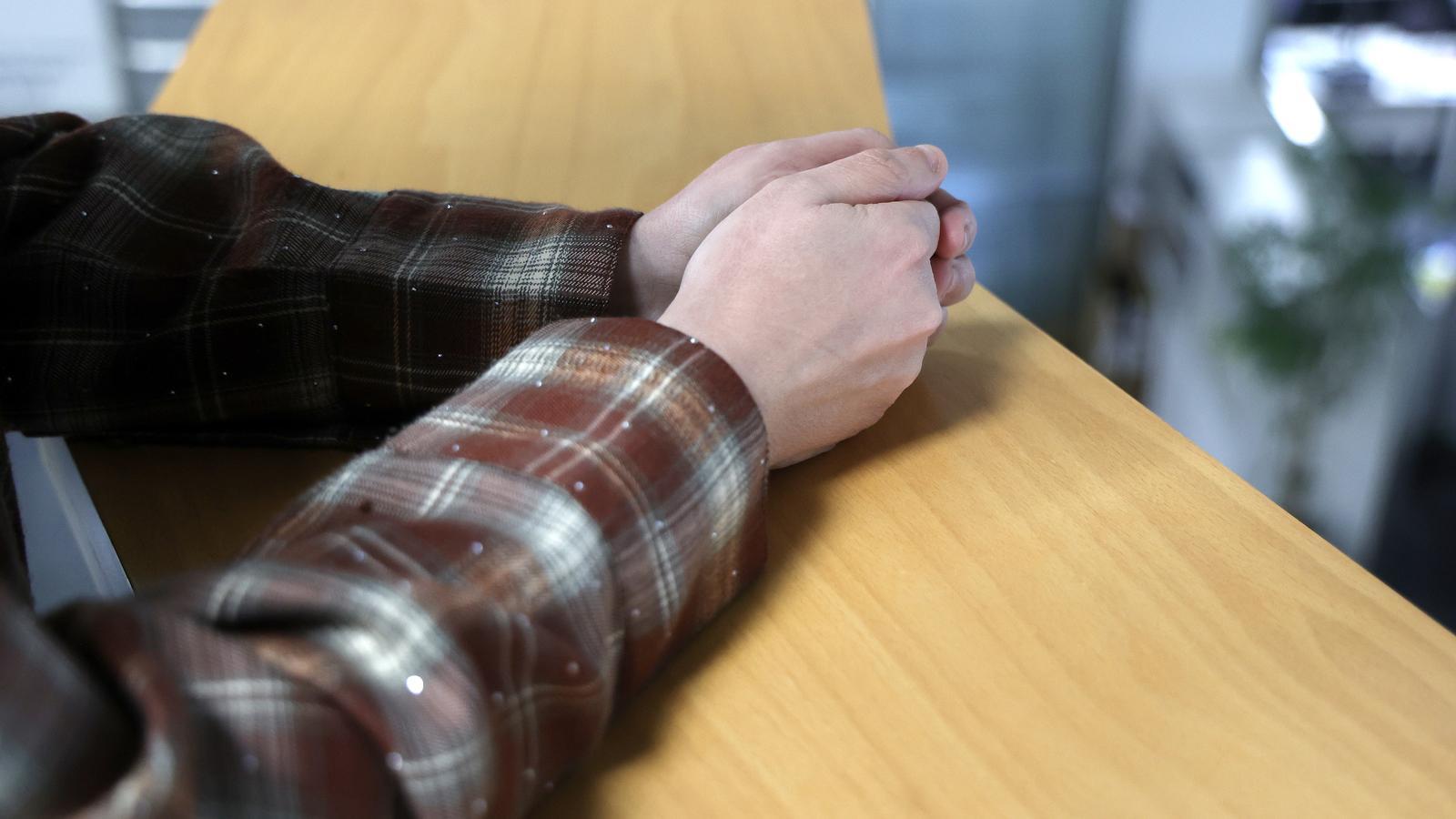
PalmA call announced on January 7, 2001, to Marta Balcells that her father had died. They did not tell her the cause. He was 55 years old and had heart problems. She inferred that he had suffered a sudden heart attack. She flew from Palma to Barcelona. Upon arriving at the family home, she noticed a very strange atmosphere. “People looked at me in a strange way. I thought it might be due to the impact of the death, but it didn't add up,” she recalls. A cousin pulled her aside and told her that her father had committed suicide. “I remember those days as something brutal, very shocking. The situation was chaotic because we couldn't see the body or organize the funeral, as we depended on the forensic investigations. It was very painful to think about what he had done, but you also need to understand it.”
Like Marta, hundreds of people have had to face the grief of the death of a loved one by suicide. From a psychological perspective, they are considered survivors. To the complex pain of loss, they add unanswered questions, feelings of guilt, and a silence that underpins social taboo. In this regard, the Ministry of Health – in collaboration with the Red Cross – has launched a support service for survivors that aims to assist 450 people in the next two years through mutual help groups, workshops, and orientation sessions. The objective is to minimize the emotional, social, and community consequences of suicidal behavior.
25 years ago, Marta did not have this kind of resources. In fact, the first suicide prevention and care program in the Balearic Islands was not created until 2015. “The data were already alarming, but the potent taboo has caused prevention to be delayed. Before, there was not even specific training for professionals,” recalls the head of the Mental Health Coordination and Planning service of the Government, Lola Gabaldón, who was part of this pioneering program as a social worker at the Inca Hospital.
Gender bias
In 2024, 98 people took their own lives in the Balearic Islands: 77 men and 21 women. The gender bias is explained because they use “methods that are more lethal, with less possibility of rescue”. Women, however, accumulate more attempts and ask for help more frequently. The average age of the deceased is around 48 years, associated with “vital changes such as work crises, economic problems, or relationship breakups”.
Beyond the cold data, necessary for prevention work, Gabaldón insists that suicide is multifactorial. It is due to a set of risk factors and situations –genetic predisposition, socioeconomic and family situation– and must be combated by dismantling myths such as the contagion effect. “Talking about suicide does not cause more suicides. It is like thinking that if your doctor asks you if you drink or smoke, you will start drinking or smoking when you leave the consultation”.
In fact, it recommends that physicians, after a progressive approach to the patient's condition, ask “the key question”: “Have you ever thought about suicide?”. “Many professionals avoid it due to the weight of myths, and we all have to reflect on what we have with this word and not lose sight that those who suffer do not think about harming themselves generically: they are thinking about their suicide. It is a process: first the idea appears, then the person begins to structure how, where, and when. If halfway through this process they find a place to talk about it and receive help, it can stop. We have to generate safe spaces without judgment”, she asserts.
Days before her father's death, Marta spoke with him on the phone. “It was a very deep call”, she recalls emotionally. He told her he loved her. She loved him too, but she sensed that something was wrong. “I noticed something strange and I got worried”, she admits. On January 7th, the confirmation.
“I needed answers and I didn't have them. At first, everything is confusion. You feel anger. You ask yourself over and over again why, and the feeling of guilt assails you. I had already bought the tickets to go see him, why didn't he wait for me? Later you understand that that call had been a farewell. I was devastated and I isolated myself. I felt so much pain that I thought that if I explained it, I would hurt others. People didn't know what to say to me, and I didn't want to explain it either. I remember going to work and saying I had allergies, when in reality I couldn't stop crying”, she confesses.
She took refuge in her partner and a couple of colleagues with experience in similar situations. “Those who had gone through the same thing were the ones who helped me the most. I had a conversation with a colleague that was a turning point. She was very honest. She told me that this wound would always be with me, that sometimes it would open up, but that I could continue living. It's completely true,” she adds.
Leading cause of external death
Suicide is the leading cause of external death, meaning death not caused by illness, in Spain. In 2023, 4,116 people died, more than eleven a day. Each of these deaths leaves a profound impact on those close to the deceased: experts estimate that between six and ten people – family members, friends, colleagues, and acquaintances – are affected by each suicide. In 2025, Spain approved the first specific state plan for prevention, a state strategy that seeks to coordinate the health and social response to one of the main public health problems. The Balearic Islands have a rate of 7.1 suicides per 100,000 inhabitants, slightly lower than the state average, which stands at 8.5. Furthermore, hospitals in the Islands attended to more than 1,500 emergencies due to suicidal ideation or attempts in 2024, more than 300 of which were in minors.
Despair
Beyond the possible causes for why someone decides to take their own life, “behind it there is a person who suffers a great deal and does not want to die, but rather to stop suffering”, according to expert Lola Gabaldón. Among all the risk factors, she points out two of capital importance: “The rupture of bonds, feeling that you are a burden to others and hopelessness, the sensation that nothing will change”. This suffering is perceived as “infinite and unbearable” and only when the person finds a minimum possibility of relief or support “can they begin to emerge from this place”.
Gabaldón warns about the use of ‛well-intentioned phrases” such as ‘think of your children or your family’ because, “far from helping, they can increase guilt and the feeling of worthlessness”. “We must not judge. What for one person may seem insignificant, another may perceive as devastating”, she adds.
Suicide, the expert points out, is linked to a society marked by the rise of individualism and the loss of community fabric. Bonds weaken and, in this context, loneliness and isolation act as triggers for suicidal behaviors. And the stigma remains rooted from a cultural and religious point of view. Until a few decades ago, for example, suicides were buried outside the cemetery fence.
Changing sidewalks
“There are survivors who cannot talk about the subject even with their families, because it is silenced. Everything crumbles. It happens in small environments, in towns where people change sidewalks to avoid having to ask when it would be enough to say ‘how are you?’. Silencing it has an effect on the other person: it increases shame and guilt. It prevents openly experiencing grief”, she explains.
About this silence, Gabaldón warns that “it is likely that there are more suicides than the figures reflect”, because those that end up registered as accidents or suspicious deaths are left out. Hence the need to protocolize psychological autopsies or “deeper” epidemiological studies.
For Marta, silence stopped being an option a long time ago. That's why she emphasizes the need for empathy and honesty. For her, therapy has helped her to know herself and to reconstruct a complete image of the person who gave her life: “When someone dies like this, you run the risk of their whole life being reduced to that last moment. My father was much more than someone who committed suicide. He was a great person, whom everyone loved and who loved me very much. With the silence of suicide, we don't just silence the death; the person also disappears, as if their life were erased. And that's what hurts the most. That's why, for me, it's important to keep remembering him and keeping him alive in my life and the lives of my children”.
