Albert Herranz: "Palma is hidden under franchises and we have to recover it"
Historian
-
CAT -
CAST -
GER
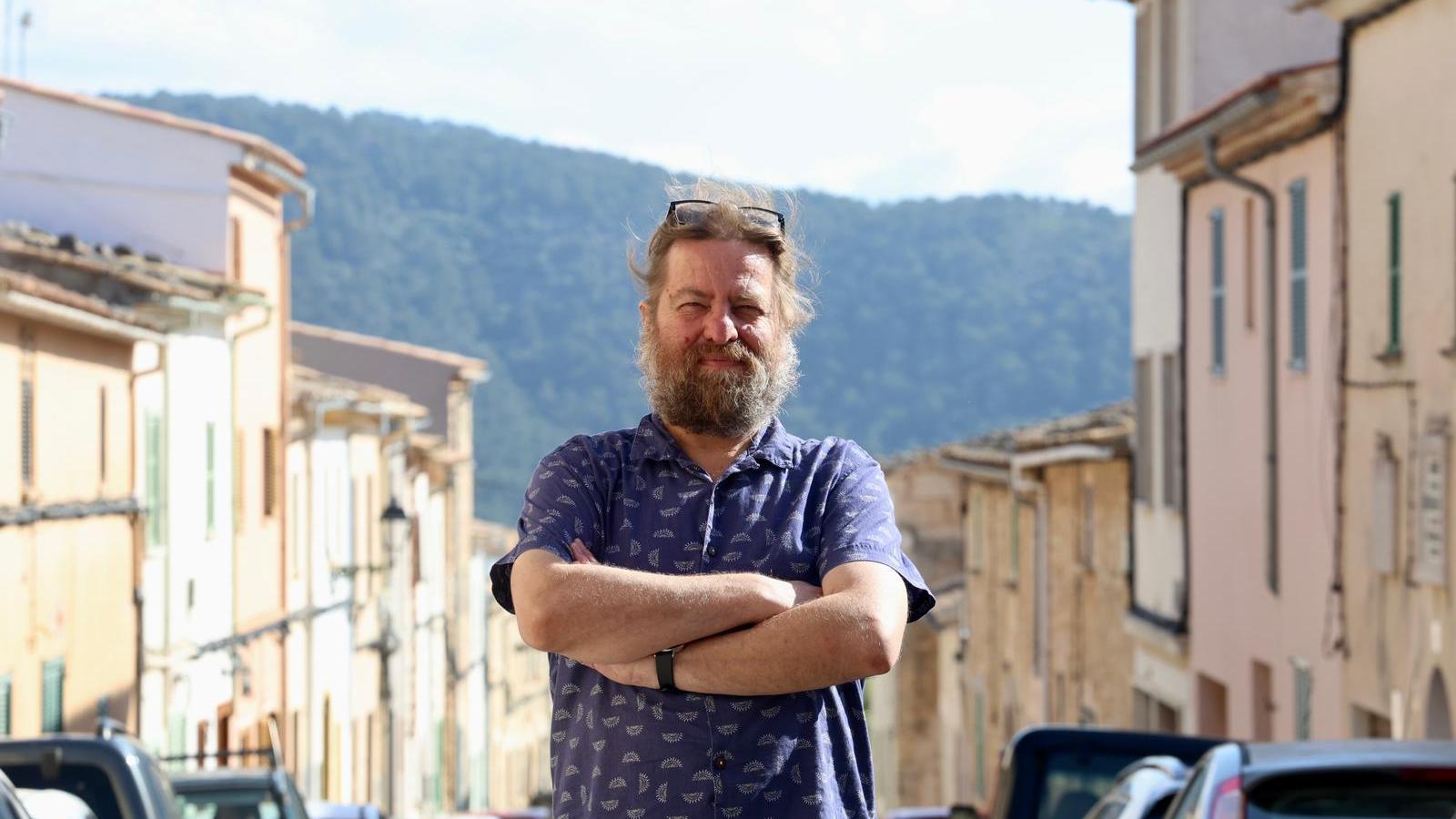
PalmaThe historian Albert Herranz will guide next May 8th the route First of May: culture and workers' movement, organized by STEI. The walk will begin at 6 p.m. in the Plaça d'Espanya in Palma (statue of King Jaume I) and will review some of the key spaces in the history of the workers' movement in the city. Herranz defends the need to recover this memory in a context marked by precariousness and social fragmentation.
Why do you think the First of May has lost its sociopolitical content and has become just a holiday? Does capitalism benefit from this?
— May Day has largely lost its combative meaning, but it remains a day on which the labor movement says: "We are here! We are a force to be reckoned with." On the other hand, just by being a holiday it is a success of the labor movement. It is a secular festivity from the people that commemorates the summary and unjust execution of five libertarian activists arrested following the events that occurred in Chicago, where the North American labor movement was claiming the eight-hour workday. No one disputes that it is a holiday, and the eight-hour workday, if not to improve it. So one should not be so pessimistic. Capitalism is not interested in any celebration other than mindless consumerism.
What is the risk of losing the historical memory of the labor movement?
— It is great in a fractured society like ours, where the generational transmission belts are broken, and without an existence of a class consciousness or of exploitation, it is easy to break the memory of what was done before, of the names and actions that have shaped, in some cases, an horizon if not positive, at least with possibilities for humanity in general.
Today, with the current job insecurity, would you say that the importance of May Day (and memory) is more relevant than ever?
— Yes, May Day is important as a unifying and reference event for a precarious and fragmented society like the current one.
How do you plan this guided tour with the STEI so that it is not only informative, but also critical and connected to the present?
— The idea of the visit is to explain how the workers' movement, in addition to labor demands and actions, always sought to have its own culture and references. I want to explain not only the repressive acts –prisons, for example–, and the demands –demonstrations–, but also how the workers' movement took care of its memory –commemoration of the Paris Commune, for example–, with an open and broad mentality towards the world. From a secular, plural, and optimistic cosmopolitanism.
Why is it important to “materialize” history by linking it to specific spaces in the city?
— Nowadays, Ciutat is more commercialized than ever, unknown to most inhabitants, hidden beneath franchises and businesses that expel the people of Palma and the rest of Majorca. Therefore, it is relevant to recognize and reclaim the city, to make it our own. And even more so from a perspective that is not neutral or 'pale', but rather demanding and full of transformative desire.
Without revealing the entire route, what are some key spaces for understanding the labor movement in Palma, such as Plaça d’Espanya and the Olivar Market?
— Palma is full of events and places with working-class significance. The distinct expressions: anarchist, communist, socialist, republican-federal, and Christian fill the streets and squares. The visit is only a minimal part of it. But we could say, for example, that the Plaça d'Espanya and the demolition of the walls announced a new world where a new class appeared, the working class, and the cooperative, mutualist, and union expressions, but also where the warehouse of Can Mir was, with bad memory for those imprisoned in 1936. And the Olivar market, where there was previously another prison that reminds us that certain social problems were solved with prison.
What idea or reflection would you like people to take away after doing this route?
— Feeling maximalist, I would like them to feel part of a culture and a tradition that still wants to transform the world. Feeling realistic, I would like them to identify with a movement and people who wanted to make a new world and, at times, succeeded.
