A study identifies for the first time 82 different bottlenose dolphins in the waters of Cabrera
A research of more than two years concludes that a part of the population is resident, confirms that Cabrera is one of the quietest marine environments in the Balearic Islands
-
CAT -
CAST -
DE
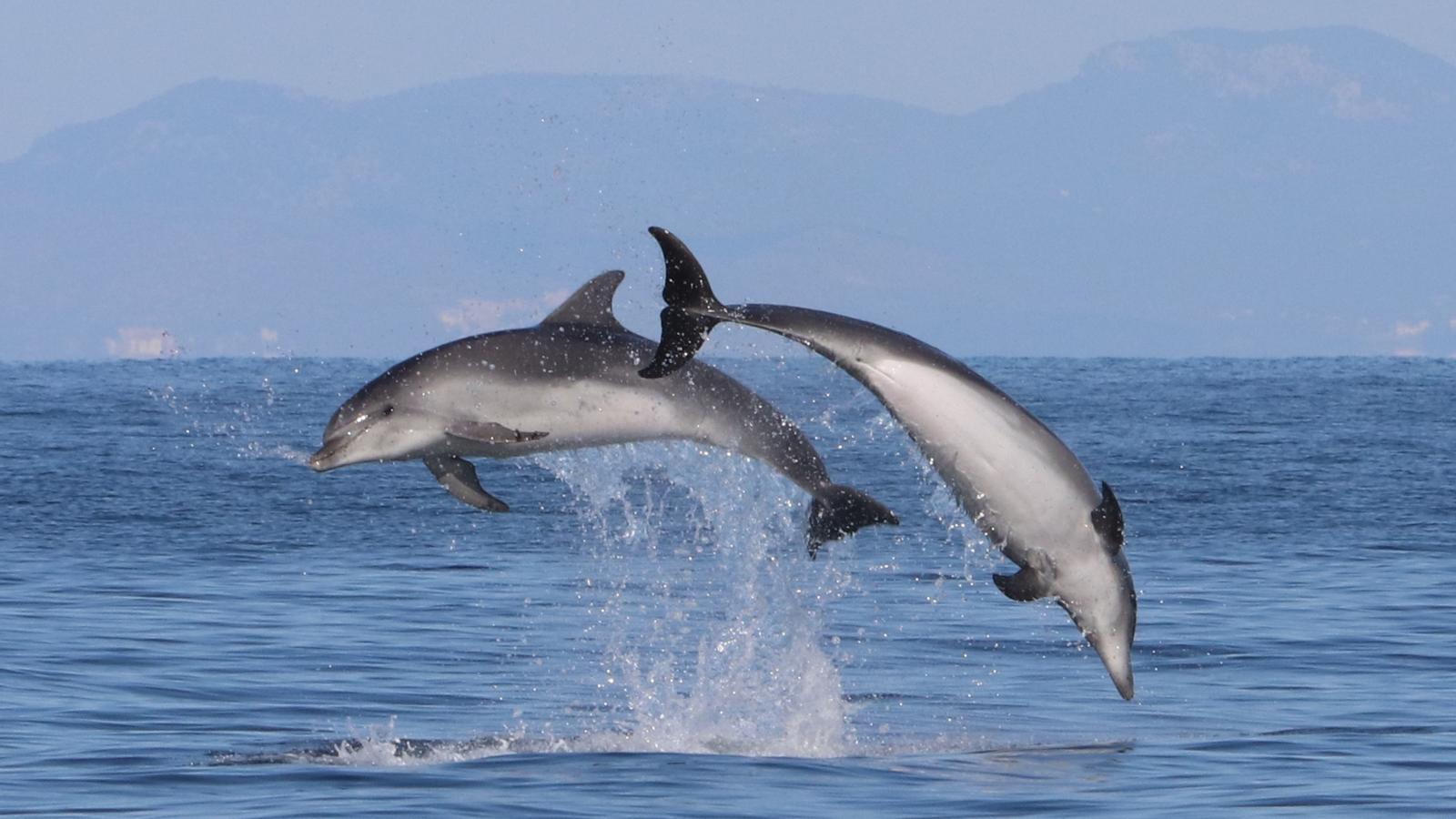
PalmaA pioneering study has systematically identified for the first time the population of bottlenose dolphins (Tursiops truncatus) that frequents the waters of Cabrera National Maritime-Terrestrial Park. The research, driven by the Turisops association, with the support of the Mallorca Preservation foundation and sponsorship from Craghoppers, has detected at least 82 different individuals over more than two years of acoustic monitoring.
The results of the Dofins de Cabrera project, presented this Tuesday at the Estudi General Lul·lià, also conclude that part of this population is resident in the park and that Cabrera's underwater soundscape continues to be dominated by natural sounds, with limited impact from noise caused by human activity. The study was developed between December 2023 and February 2026, in parallel with the European Aquiles project, funded by NextGenerationUE funds, with which it shared methodology and acoustic data.

Six hydrophones and more than 213,000 recordings
To carry out the research, the scientific team installed six hydrophones at different points of the Archipelago: the port of Cabrera, Na Redona, la Foradada, the island of Conills, l'Imperial and Na Picamosques, at depths between 32 and 80 meters. The devices recorded three minutes of sound every quarter of an hour for 24 hours a day, generating 213,836 audio files. The analysis, which combined specialized software and manual review, detected the presence of dolphins in approximately 1% of the recordings.
The 'signature whistles' allow each dolphin to be identified
One of the keys to the research has been the use of so-called 'signature whistles', unique sounds that each dolphin develops during its first year of life and which function as a kind of proper name. Using the international SIGID protocol, researchers identified 82 different whistles, which, therefore, correspond to a minimum of 82 individuals. Of those recorded, 58 were detected on more than one occasion, while 12 individuals appeared in all months of the year, indicating a stable presence of part of the population within the park.
Based on the data obtained, scientists estimate that on the continental shelf of Cabrera there is a simultaneous average of 17.8 dolphins with a range oscillating between 14 and 22 animals.
More presence in La Foradada
The analysis also reveals that La Foradada, to the north of the Archipelago, is the area with the highest concentration of acoustic detections, indicating that it is a particularly important space for the common bottlenose dolphin within the park.
Furthermore, the comparison of the whistle catalog with that previously compiled by the Tursiops association in Ibiza and Formentera has not found any coincidences between individuals. According to the researchers, this result reinforces the hypothesis that the dolphins of Mallorca and Menorca constitute a subpopulation distinct from that of the Pitiusas, probably because the deep marine channels between the two archipelagos act as a natural barrier.
The study has also analyzed underwater noise, one of the main threats to cetaceans in the Mediterranean. The results show that Cabrera's acoustic landscape remains stable throughout the year, with only a slight increase during the summer months, especially around the port of Cabrera, where there is more boat traffic. The research concludes that most of the recorded noise is of natural origin, generated mainly by seafloor invertebrates during the night. Only in very specific points, such as Na Picamosques, has a more notable influence of fishing activity been detected.
Compared to similar studies conducted in Ibiza and Formentera, underwater noise levels in Cabrera are between three and five decibels lower, representing more than double the difference in acoustic energy. Despite this, the researchers have not found a direct relationship between local noise levels and the presence of dolphins, suggesting that other factors, such as food availability and fishing activity, could better explain the distribution of the animals.
