The Balearic Islands need 17,000 more homes to cover the current population
According to the new Housing Observatory of the Balearic Islands, the advertised apartments enter the market with an average markup of 38.1% with respect to the real price of the transactions
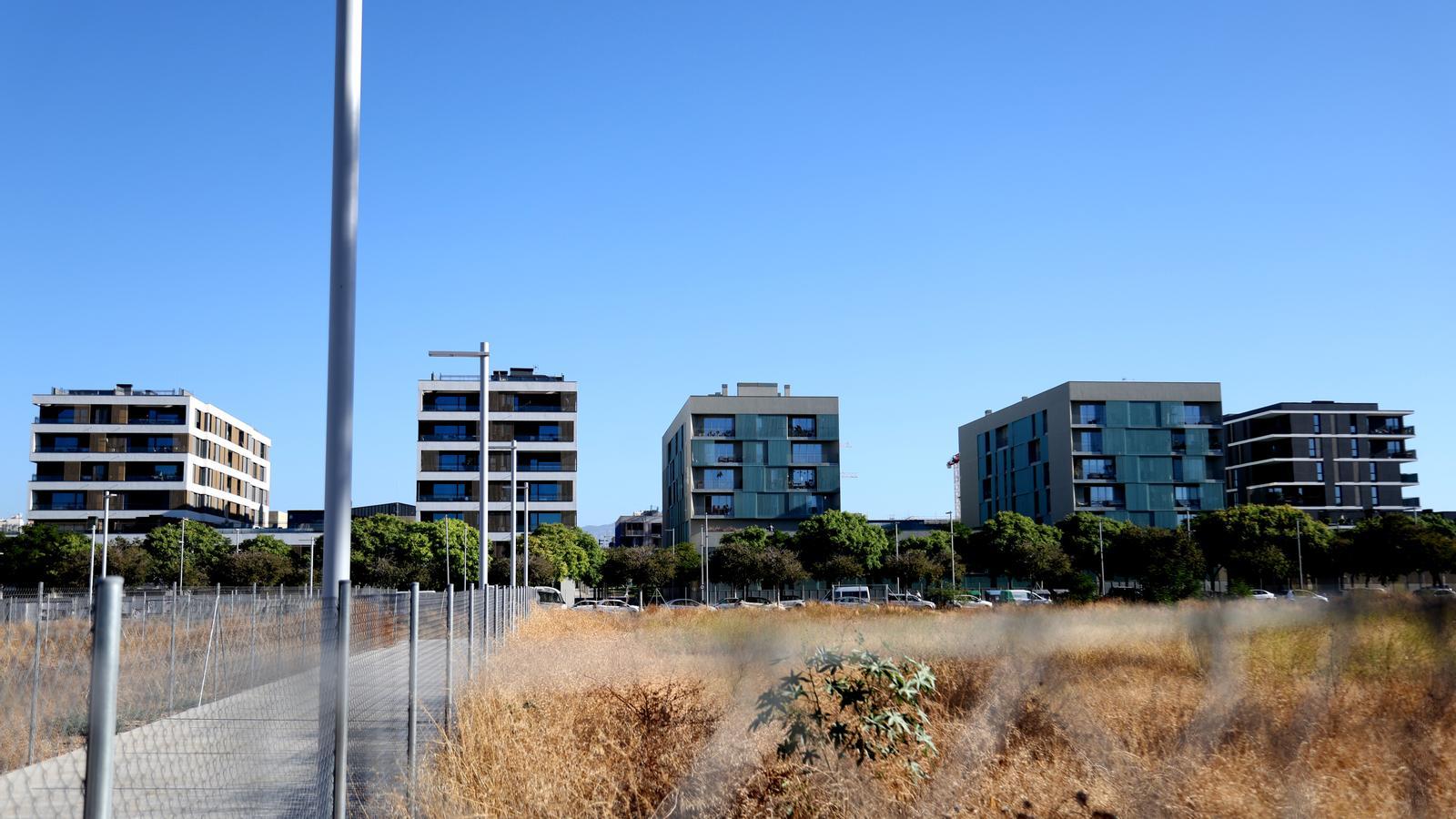
PalmaThe Balearic Islands would need about 17,000 more homes to cover the population growth of the last 25 years, according to data from the new Balearic Islands Housing Observatory, a government tool that compiles 23 indicators on the evolution of the real estate market. As detailed this Thursday during its presentation, between 2000 and 2025, the population of the Islands grew by 46.3%, while the residential stock did so by 31.5%, a difference of 14.8 percentage points.
Furthermore, they have remarked that this mismatch between population and housing is especially acute in the Pityusic Islands. According to the Observatory's data, the estimated deficit is 43.1% in Ibiza and 54.3% in Formentera, while in Mallorca it is 11.4% and in Menorca, 8.3%.

Sales listings inflate prices by 38.1%
The other major piece of data provided by the new observatory is the difference between the prices that appear on real estate portals and the amounts for which sales are ultimately closed. Thus, according to this data, homes advertised in the Balearic Islands enter the market with an average markup of 38.1% compared to the actual price of the transactions, in accordance with the comparison with data from the Tax Agency of the Balearic Islands (ATIB).
The difference reaches 42.3% in Palma and 49.3% in Formentera. In Ibiza, the average price premium for listings is 31.6%; in Maó, 35.5%, and in Ciutadella, 31.2%. If the comparison is made with data from the Association of Property Registrars, the price of advertised homes is more than 31% higher than the actual average price of sales.
A residential stock that is growing below the population
According to the data published this Thursday, in 2025 the Balearic Islands had 618,908 homes: 479,516 in Mallorca, 75,519 in Ibiza, 58,784 in Menorca and 5,089 in Formentera. Of this total, apartments represent 66% of the residential stock and have an average surface area of 128 square meters, while single-family homes reach 263 square meters on average.
In this context, in which the Housing Observatory of the Balearic Islands reports an accumulated housing deficit, last year the construction of new apartments grew. In 2025, 2,452 new homes were approved, 18.6% more than the previous year and the highest figure since the 2008 crisis.
Despite this increase, the Director General of Housing and Architecture, José Francisco Reynés, has remarked that it is still necessary to increase supply, especially through the construction of multi-family homes. The Director General has described the data as "good", but has also advocated for speeding up the processing of visas.
Foreigners pay 80% more for homes
The new indicator also highlights the difference between purchase prices according to the buyers' nationality. In 2025, national buyers paid an average of 304,120 euros for a home, while foreign buyers disbursed an average of 548,662 euros, 80% more. The incorporation of these transactions raises the overall average price of sales to 396,165 euros.
Regarding subsidized housing, almost half of the applicants registered with the Balearic Housing Institute (Ibavi) foresee the option to buy. 22.8% opt exclusively for purchasing a home and another 25.9% lean towards renting with an option to buy. 36.8% prefer exclusively renting.
The Government assures that it has 10,006 affordable homes for residents in planning within its shock plan, which includes subsidized housing and price-capped homes. To access them, at least five years of residency in the Islands are required, a period that in some municipalities rises to 18 years.
Tourist rentals represent 4.2% of the housing stock
The observatory also analyzes the evolution of tourist rentals. Currently, the Balearic Islands have 26,143 homes with a tourist license, which represent 4.2% of the residential stock. The Government's tool points to an especially intense growth of this type of housing between 2015 and 2022. Since that last year, however, the number of tourist homes with a license has been reduced by 349, or 1.3%.
The Government presents the new observatory as a tool for data collection and processing that should allow for monitoring the evolution of the housing market and supporting public policies regarding residential matters.
