I was a girl "with a little belly" and I didn't want to know it
A critique of aesthetic pressure on children: going for a walk or doing functional training with your mother and the question "Why do I need to exercise?" as a trigger for disorders in adolescence

-
CAT -
CAST -
DE
PalmaMarc comes to my 'functional' training class. At some point, 'functional' became a word to refer to a type of physical exercise and we all accepted it. It sounds strange to me. 'Functional' sounds to me like 'the minimum you can do to get by in life'. I'd like to know why it is, functional. Does it make you functional? I understand it does, that you get strong to be functional as a human being. Which is the reason I signed up for it. To have some strength, in the future, to be autonomous, control my sphincters and not defecate on myself after giving birth (if I ever do), for example, or to be able to carry milk cartons and not need the help of these children I will have given birth to. I don't know. I don't know why I think about it in terms of motherhood. The thing is, if I don't do anything about it, my musculature will start to detach more and more from my bones, until it becomes totally dysfunctional. Now I see it that way, in practical terms. But for a long time it wasn't like that: it was in aesthetic terms that I thought about it. And I feel sorry that Marc ends up experiencing the same thing.
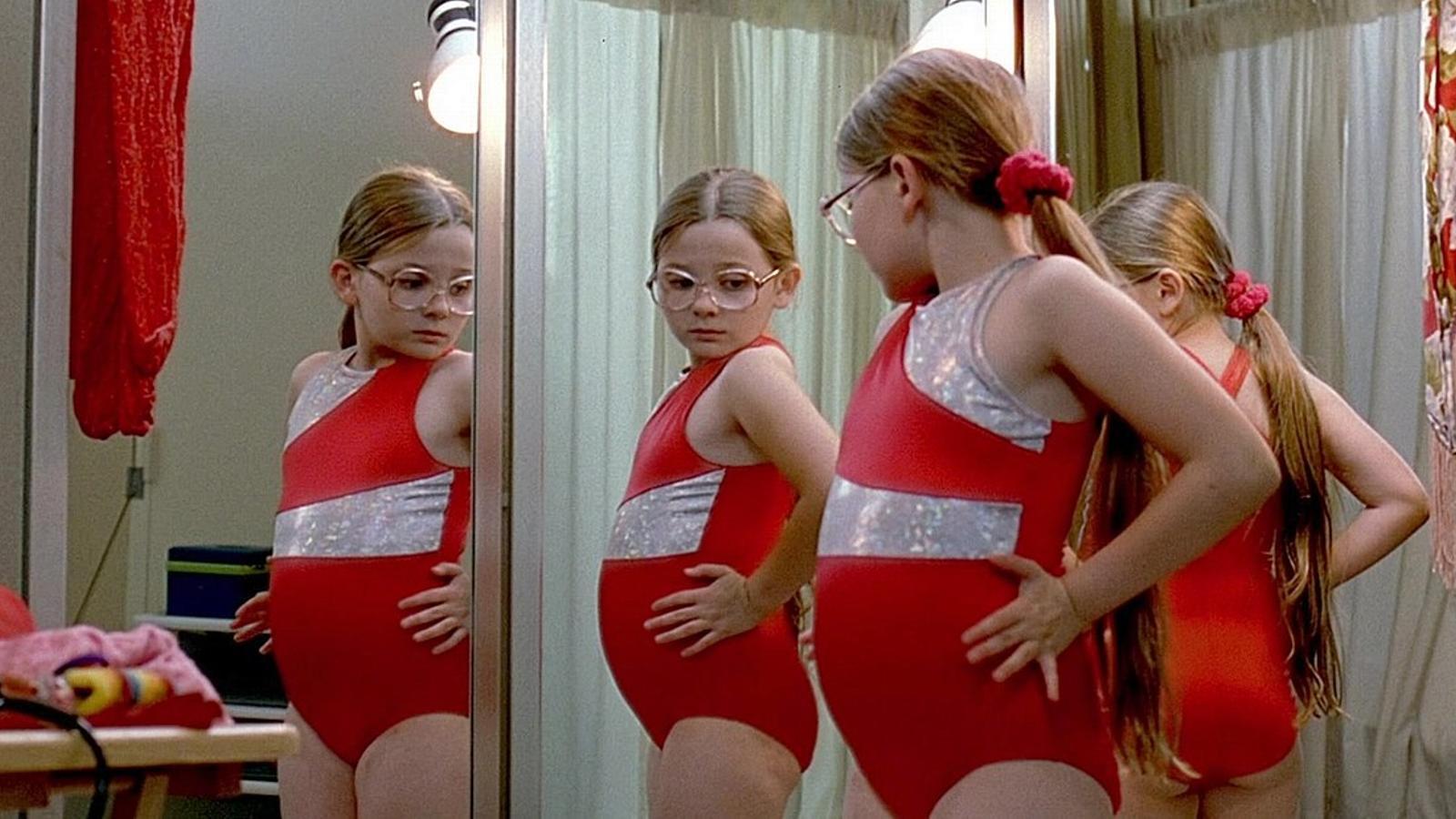
Marc is ten years old and does squats and sit-ups surrounded by women between 30 and 60 years old, on Wednesday afternoons. I look for him with my gaze every time we switch exercises, trying to decipher what he is thinking, if he feels strange among us, if he is aware of it. Marc, with his bee-like bottom and his still convex belly, from when he was a baby, reminds me of myself. Because those of us who were chubby-cheeked children have this connection, we look each other in the eye and understand each other. What unites us is our most humble moment: having looked like 70-year-old women when we hadn't even finished primary school. We detect each other and, in silence and communion, we keep this secret. We won't tell anyone, outside of here we will continue safe and sound.

This is what Marc looks like, a grandmother in a Pilates class, when the 'functional' instructor makes her squat and hold the fitness ball against the wall with her back. It's very funny and everyone thinks she's adorable. I do too, partly. And I say partly because since I came through the door, I haven't stopped wondering what a child is doing here. My first guess was that his mother, who also takes class with us, hasn't managed to get rid of him for the hour the training lasts and had to bring him with her. But as soon as I notice her insistence that Marc do the exercises correctly, I discard this hypothesis. And the theory that, in this way, they were killing two birds with one stone begins to gain strength. His interest in the child finishing the repetitions – and not just to keep him entertained – makes me think that this was the best solution for both of them to get in shape.
Marc, training with his mother, reminds me of myself, going for a walk with mine, in fifth or sixth grade, up and down the Maritime Promenade. I wonder if Marc also doesn't like sports. If, not even football interests him, even by imitation; if they have already had enough patience with him, as they had with me, to try to get him involved in some extracurricular activity. And I wonder what Marc likes to do; if he would prefer to be at home, painting, or in the library, reading a book about insects. What must Marc be thinking when they make him bounce the medicine ball on the floor, with force? I wonder if all this, at some point, will lead him to draw wrong conclusions. I wonder if his little head one day, on the way from school to 'functional' training, will stop to think why he has to go there, if he doesn't have a good time at all; if he will find the answer to why he needs to do sports. And, what worries me the most: if this answer will pass him by or if it will remain hidden, in some corner of his brain, to appear in full adolescence, without tools to tame it.

To me, that response remained latent, the reason why at one point it suited me to do sports. “This girl has a little belly” or something like that I heard the pediatrician say shortly before everything at home turned skimmed, whole and sugar-free, and they put me to walk. Then, the changes yielded results and I suppose I returned to the recommended weight. In exchange, I learned that A+B=C and, later, I tried to replicate the same formula, with worse results. Let's say that the dysmorphia of an adolescent body is a ticking time bomb when you've already been shown the shortcut to reduce your flesh. of an adolescent body is a ticking time bomb when you've already been shown the shortcut to reduce your flesh.
Over time, I've wondered about it. Why walk? Why not an activity with other girls? Why not a sport to compete in, to play, to have fun? And then, I remember that nothing pleased me enough to tell my parents “I want to go back”. Neither swimming lessons, nor riding lessons, nor skating lessons; not even dancing: I quit batuka, ballet and hip-hop. I suppose that's why I'm here, with Marc, doing 'functional' training on Wednesdays.
