Carme Colom: "The population of Inca has changed, but the feeling of identity is very strong"
Art historian
-
CAT -
CAST -
GER
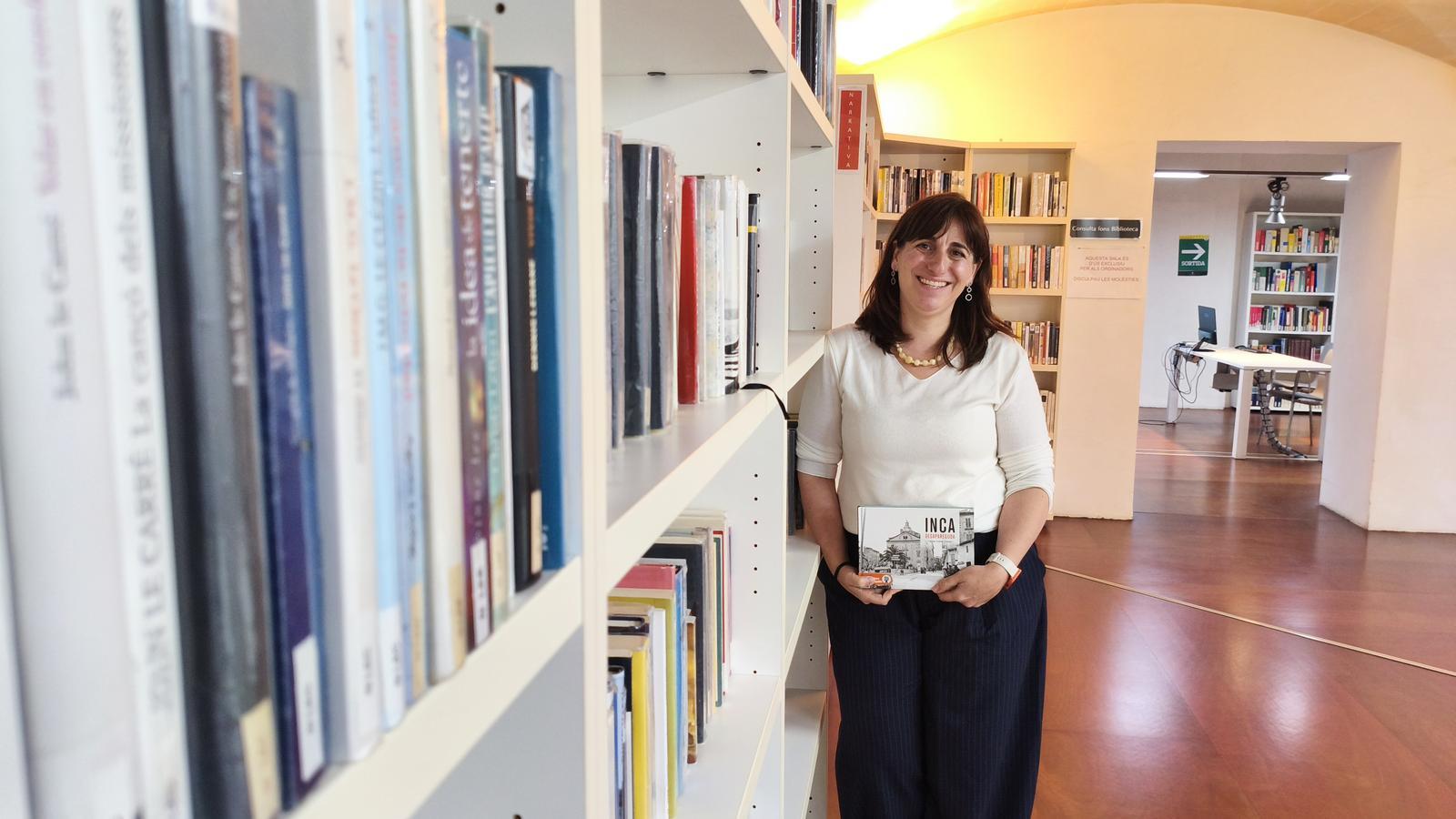
Inca“This book will be part of the memory for some and a discovery of the unlived reality for others”, affirms the priest and researcher Santiago Cortès in the book’s prologue. In Inca desapareguda (Efadós, 2026), the author, Carme Colom, recovers, from an extensive photographic collection and collective memory, the landscapes, trades, and transformations that have marked the passage of time in the capital of Raiguer.
How is this new project born with the Efadós publishing house?
— This project is, in reality, a continuation of work that had already been done about fifteen years ago. At that time, the publishing house launched L'Abans, a very ambitious collection of old photographs, with large-format volumes that gathered images from different towns and cities.
What was the process to get all the photographs?
— It was a very important job. In Inca, a very direct appeal was made, almost door-to-door, and thanks to word-of-mouth, a very large collection of images was gathered. It was a very familiar job. Many of those who helped me are no longer here, so this work is very valuable.
Why has this initiative been resumed just now?
— At that moment, the project was very demanding and the publishing house, which is from Barcelona, could not continue with the work here. But now technologies allow us to work more easily remotely and, moreover, they already have a very important photographic collection.
What are the differences between the first project and this one?
— The main difference is the format. The Abans was a very extensive work, I think it had 800 pages and weighed four and a half kilos. I remember the weight well because I had to walk around to collect photographs. Now, with a volume of about 180 pages, we have condensed the content, rethought the structure and given it a different feel.
Focusing on the history of Inca, what are the indications of the first settlers?
— We go back to prehistoric times with Talayotic sites such as Son Sastre, which dates from between 900 and 500 BC. Although it must have been an important place in Roman times due to its location, no structures from this period are preserved.
When does Inca begin to be Inca?
— It is during the Islamic period that the toponym ‘Inca’ appears, which, according to Guillem Alexandre Reus, would come from yūz Inkān, a term that defined the current region of Raiguer and which was Latinized in the Llibre dels fets. In Inca there would be a semi-urban area with good communications, arable land and a hydraulic system, of which remains such as the Font Vella and the qanats are preserved. From the conquest of Mallorca began the configuration of the town with the consolidation of communication routes, the organization of the urban center and the construction of the main buildings that would mark its appearance for centuries.
And when and how does Inca become a city?
— As a reward for social and economic advances, in 1900 Inca was named a city, which was celebrated with the lighting of municipal buildings and a band concert, but which did not generate enthusiasm among the people of Inca. We see great transformations with the construction of emblematic buildings, such as the bullring, the barracks, and the Quartera; the improvement of communication routes and the construction of new urban developments. From the mid-20th century, the construction of new buildings intensified, with a tendency to build large apartment blocks and infrastructures such as the Llevant School and the Industrial Apprenticeship School, and also expanding the old schools, such as Sant Francesc and La Salle. Throughout this process, the city maintained some emblematic buildings and sites, such as the Serral mills, and new ones were created that changed the city's profile, such as the Inca tower, which competed in height with the bell tower of Santa Maria la Major.
Is there a key moment in the transformation of the city when it can be said that ancient Inca disappears?
— More than a specific moment, it is a gradual process. Cities change slowly, therefore, they disappear slowly, because they have a need for growth. However, one of the great turning points is industrialization, especially with the appearance of factories.
Why do these factories play such a relevant role in the configuration of Inca?
— Because they completely transform the economy and the urban landscape. It goes from an artisanal system to industrial production. The shoe factories, the leather factories, all these materials, give off a strong and peculiar smell and, moreover, they need to have a water system nearby. Therefore, you place them on the outskirts. People's lives also change, as they abandon the countryside to work in industry. This generates a constant need for expansion: new neighborhoods with new housing, new infrastructures, and also new public spaces.
What has been lost in this transformation process?
— Above all, architectural and traditional heritage: houses linked to artisan trades, mills, historic buildings... In many cases, these elements were demolished to make way for new constructions. Today it probably would not have been allowed.
Has the way of protecting heritage changed so much?
— Very much so. The heritage concept is much more modern. Before, in the best of cases, some specific elements were preserved, such as coats of arms and architectural details, but there was no awareness of preservation as we have today.
Would you say that the transformation of the city has modified the identity of the inhabitant?
— The population has been changing, but the sense of identity is very strong. The people of Inca continue to have a very marked sense of belonging, even in cases of families who are not originally from Inca, but who have become rooted there over time. I see it, for example, with my Inca family who were outsiders: my grandfather came from Asturias and my aunt from Cordoba, but nowadays they are people of Inca and very much so.
