Karmento: "In two months I have slept in more than twenty beds"
Singing
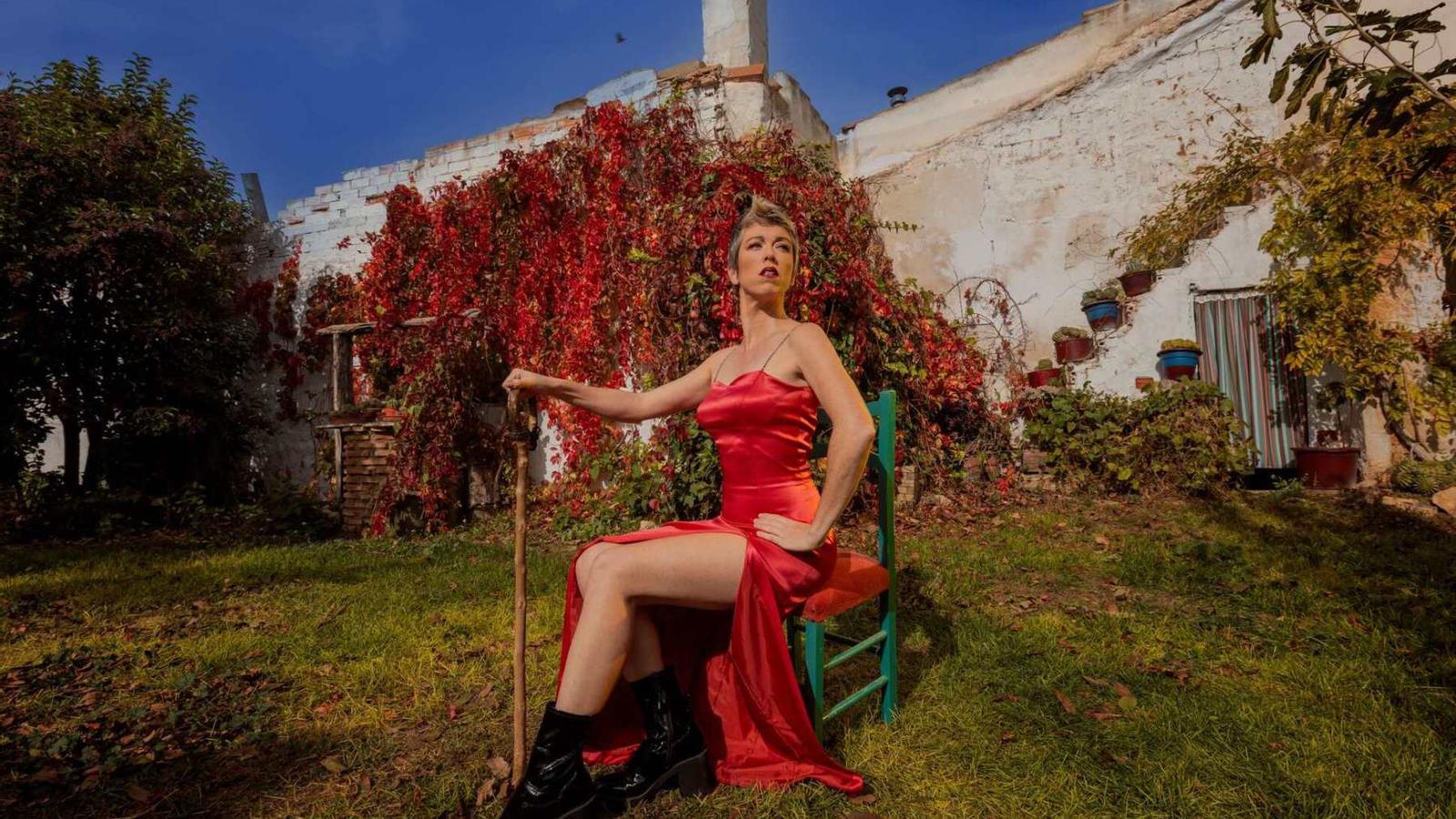

PalmaKarmento is the artistic name of Carmen Toledo Sánchez, a neofolklore singer-songwriter from Bogarra, a town in the Albacete part of the Sierra de Segura. She started making music when she was over thirty, in an "amateur" way, as she explains. That was over a decade ago: in 2015 she released the album Mudanzas; in 2020, Este devenir, considered one of the best Root Music albums of that year. In 2024 she publishes the album La Serrana, which wins the Music Academy award for Best Folk Album. It is an album, La Serrana, born from research and, subsequently, a dialogue with the place of belonging, memory, and relationships with the community. Karmento's La Mancha folklore will be heard in Montuïri this Saturday, August 29, as part of the La Lluna en Vers festival of the Fundació Mallorca Literària.
You are reaching the end of the tour for La Serrana, an album released in 2024. How are you experiencing this moment?
— Let things happen and surprise me. And coming to play in the Islands is always nice… And it's not easy to come and bring the band or large formats, as logistics are complicated… Last year I tried different formats to adapt to the different concert proposals and I ended up half crazy. So the decision was that we would plan the format with the band, because that's what I want to do: the full development of the show and the proposal. And even more so now that I'm in a closing moment. I've really enjoyed this project, on stage we are comfortable, everything is very controlled… There has been a process of making more business decisions: structuring the work, making it sustainable. Now I'm in a good moment in this regard.
Why La Serrana? Where does this character come from and what is behind the album?
— La Serrana is the alter ego that stems from the analysis and exploration of identity and belonging. It starts from a very physical place: the Sierra del Segura, in Albacete. La Serrana developed a little with the stories and memories, the conflicts, the folklore that surrounded the place where I come from, the landscape, upbringing, the relationship with the village community, the culture, the society that I had observed since I was little and in which I was immersed. Through creative work, I was able to see all this, separate it from the body, and ask myself how I could integrate it to generate an artistic proposal. What does all this mean? It came out like that. I didn't think much about it. With previous projects, I was looking for something new, but with La Serrana it was clearer to me that I wanted to go to the origin, that this part touched me. I explored more terms of sound and concept, more oriented towards this.
Karmento - La Serrana (Official Music Video)And the name also arrived in a somewhat unexpected way, didn't it?
— The idea came about with the artist Vicente Navarro. We were composing another song and I told him: "I have a song called La Serrana". And he told me it was a good title for the album. It's curious how this happens when you give something a name: ideas start to emerge. Suddenly, La Serrana became a category. When I was clear that I had to focus on that, everything went better: looking for inspiration, asking for stories… It's a concept album, a concept narrative.
What has the journey taken over these years meant?
— I'm glad to have explored this. The album's journey is being very generous. From 2024 until now, which is the end of the tour. I've had to confront many times everything I've explained and created. I'm not a light artist. My lyrics are deep, there's a lot of emotional intensity, I like to philosophize… Music is a source of personal growth. I've had to confront stories that talk about me, about my relationship with family, with the community, with upbringing… I've had very intense moments. During the tour, there are songs you don't feel like singing and you have to do it. I've also discovered things about myself that were blocked. Now I'm at a point where I have it very integrated. The therapeutic work is finished, the identity upheaval, too. But it's like everything: you think you've resolved it and another crisis arrives and some ghost reappears.
Has had this emotional intensity with you since you were little?
— I have always been like this. A supersensitive, intense girl. I like to get to the bottom of the deepest emotions and empathize with what happens to people. I have lived emotions with great intensity. I have worked hard to manage this rollercoaster-like way of being. My mother tells me that when I was little, I used to cry, and I didn't know why I was crying. I have always been a special child in this aspect: with an artist's spirit, in the way of seeing things... Everything affects you: the beautiful things, but also everything that is ugly, the pain of humanity.
And this sensitivity also has a lot to do with how you work with words?
— I like the word, I like poetry. Learning to say what we want to say, using the word to reach a specific place. There is a certain pleasure in knowing and feeling that we are one, that everything is connected and that people are made of the same matter and essence. With my music, I try to open channels of communication for this to happen. Stop fragmenting life as if we were enemies. Leave envy, greed… Realize that we are the same.
How has the way of composing changed?
— It has come out in many ways, depending on the songs. I started very amateur, I had no experience in music, but there was a kind of natural talent... I had never dedicated myself to this until I was thirty, when I started composing due to a series of circumstances. During these years I have learned many things. Before it was me with my little guitar and, suddenly, other forms of composition appear. Sometimes, at home, at any time, in any circumstance, a melody or a lyric appears directly, as if it were written in the air. Then you realize that you also have to work on it. Asking yourself what you want to talk about, how you want to do it, you play with words...
Is it like a game?
— Yes. I have a whiteboard in the dining room. And I write things on it. Then maybe I'm there, cooking, and I look at it, to see what it says. Always with the markers at hand in case I have to write something else…
And to what extent have you also learned to share this creative process with other people?
— I have learned to relax, to trust other people. I have a producer I adore, Joel [Condal], and we love working together. Now I'm at a point where, when I do collaborations, they are to get out of my comfort zone and learn to work with other people.
And how has it been adapting your life to this profession?
— When you realize it, it has already happened. There is a team behind, my people, family, friends… Luckily, life doesn't allow you to go back, because it has been very tiring. I believe that the artist's way of life is me. There are many things I do in a certain way: the schedules, the way you manage time, energy, stress… In two months I have slept in more than twenty beds. There is something very powerful in the external gaze, in movement, in nomadism. I was already like that, even though I dedicated myself to other things. I have always had a tendency to seek freedom as a principle. And, in reality, what fulfills me is that I like being an artist and it is my profession.
