Andreu Valor: "I try to be a visitor who takes care of and respects Mallorca"
Singer-songwriter

-
CAT -
CAST -
DE
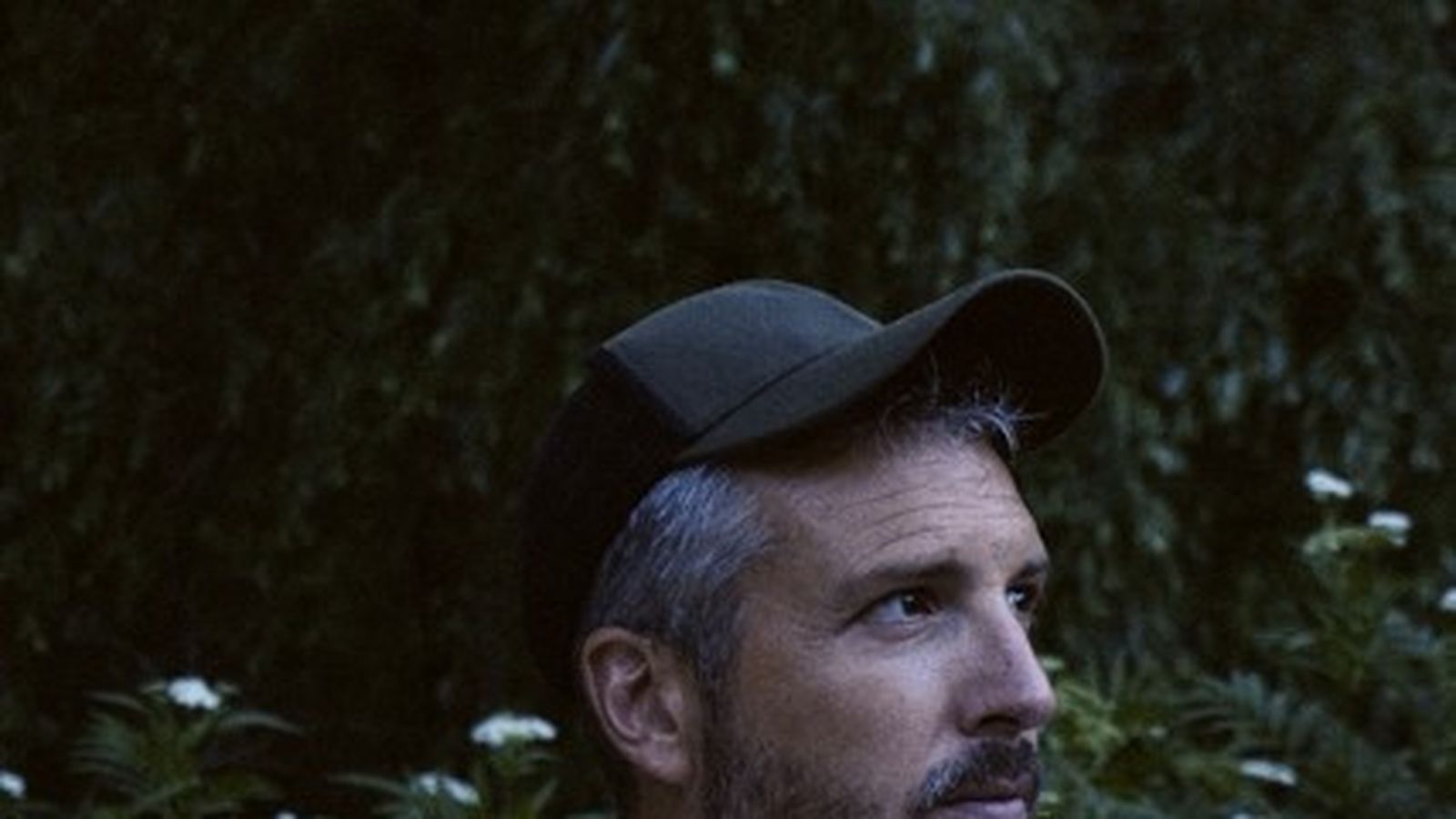
PalmaThe world we inhabit and what we can do to improve it, respect and rootedness for language and culture, honesty and sensitivity when writing, composing and singing, poetry and close references like Ovidi Montllor, and collective dignity and freedom are the main axes on which the musical project of Andreu Valor (Cocentaina, 1978) lives and grows. He is one of the best-known singer-songwriters on the recent Valencian scene, even though he says his is a "minority proposal." He has released 12 albums since 2007; the latest, Els camins que elegim, which he will present in Mallorca on Friday, July 3, as part of the La Lluna en Vers festival program. He will be accompanied by his travel companions, musicians and producers of recent years, Blai A. Vañó́ and Héctor Tirado.
In January, you released Els camins que elegim, your twelfth album. Now that you've had a few months of concerts, how do you see the reception of the project?
— When you delve into this field, you realize that you never stop sowing. Reaching a harvest, when you have a more minority proposal, demanding in content and not part of trends, is different. When you are demanding about the credibility of how you see life, the audience will be smaller and projects are always accompanied by the questioning of where they will lead you. We've been here for twenty years and we always have the feeling of not knowing if the project will flow or not. All this has been polished and, this spring, fifty dates have emerged. At first, we had ten.
Do you feel you've made a change compared to other albums?
— The previous one was a bit more solemn. This one is more electric, more folky, with more drums. We wanted to move towards a fresher sound without losing the essence or the message. It remains very linked to poetry, to the social gaze and to the sensitivity for the language and the territory. This does not change, but the nuance of the things we can discover in everyday life and then express in songs does change. This is the renewal.
It has a somewhat epic sound.
— We try to ensure everything has connection, epicness, and coherence. When I listen to a song and I don't find a certain coherence in it, it bothers me. There is something I like to claim: the person who sings is the same one who gets off the stage. That's why it's important to be coherent with every step we take, to convey a firm and sincere message to ourselves. We also want the sonority to match what we want to say.
Have you always been comfortable and had the freedom to create, even if it means having a more “minority” proposal, as you said at the beginning?
— I have never had the need to pretend, between quotes, nor to do something I didn't feel like doing. Nor have I felt pressured. No one has told me that I had to follow a certain line to get more out of a project. I have always understood that my proposal had to be real, what I needed and what attracted me. It is a minority proposal, but feasible. I do not conceive of this cultural project by pretending. I sing what I feel I have to sing.
The paths we choose is the title of the album and one of the songs, and it has philosophical, introspective connotations. This is true for almost all the songs. The idea was to make an album like this, introspective?
— Before giving the definitive click to a project, I like to question myself, based on what I see in the world we inhabit, not only who we are and where we come from – which is also good for becoming aware of how to love the territory and the language, aspects with which I am very sensitive – but also how we can build a better society than the one we know. The direction of the world worries me, and what we want to become. I don't like to lecture anyone. I prefer to put myself first in my reflections. The introspection I seek is very personal. I ask myself what I can improve and what I can contribute so that the environment that accompanies me is the best possible. All this is mixed with some references linked to social sensitivity, to the struggle for collective rights, to the defense of literature written in our language and to poetry.
Talking about poetry. In Mallorca you will give the concert at the Blai Bonet House Museum, in Santanyí.
— It is a privilege to act there. I believe in words, in dialogue and in respect. We must find a way to understand each other and seek a vital balance that allows us to do things with a good purpose, without seeking personal gain at the expense of the suffering of others. I am working, these days, with the poetry of Blai Bonet, to see what comes out of it. And I will get to know Santanyí, as I have come to Mallorca a lot, but I have never been to this town. I will do so with all the prudence in the world, because I know the situation on the island. I come to work and I want to be scrupulous with respect for the territory. With all the debate about saturation and the waste of resources, I think we should keep a low profile and act with deeds. I try to be a visitor who cares for and respects Mallorca, who enjoys the surroundings in a prudent and responsible way.
I understand that a privilege of this job, although it often comes at a personal cost, is to be able to discover the Catalan Countries.
— The tour allows us to live off a profession that we are passionate about. Furthermore, it is a territory where concerts are usually, at most, two hours from home. This allows me to maintain a very good family relationship. This profession has allowed us to discover and fall in love with our territory. And this fluidity has arrived at a stage of personal maturity in which I have very clear the things that I am passionate about: transmitting a sincere message and doing what I like. I have found a vital and professional balance that, sometimes, formations that fill large stages do not have.
On the album, you have set to music a poem by the Valencian Maria Beneyto, Vens, and you have also covered L’escola de Ribera, by Ovidi Montllor. Do you always find your inspirations close by?
— Normally, naturally, it is like that. The song My letters to Olivier is about Didín Puig i Grau, whose father was shot. She decided not to follow the path of hatred and transformed that experience in an admirable way. She went into exile in Paris with a suitcase and without knowing anyone and became a very important cultural activist, who organized concerts at the Olympia in Paris, like that of Maria del Mai Bonet.
