Marta Torrella (Tarta Relena): "We incorporate different languages; each one has its own worldview"
Musician
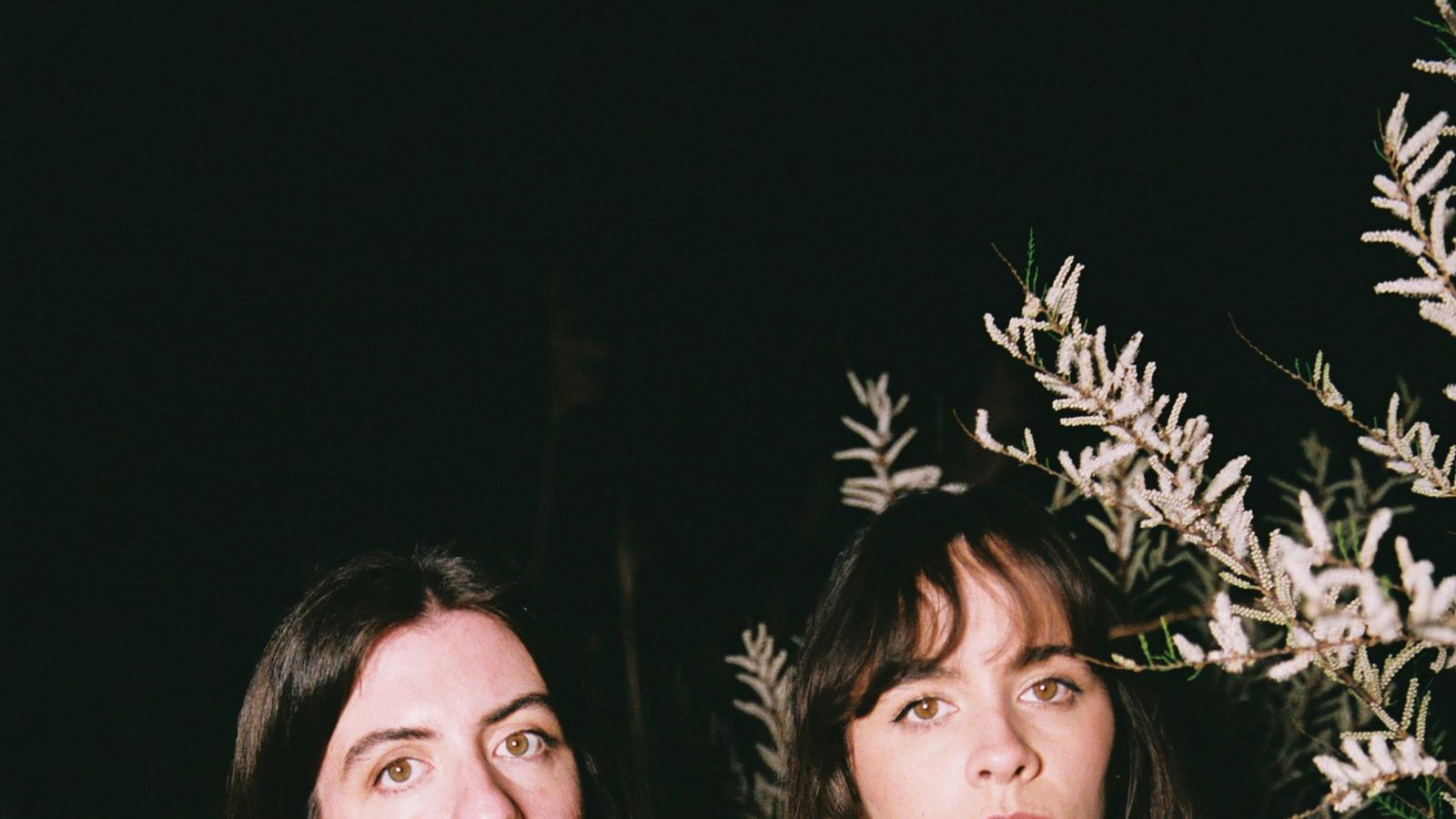

PalmaAfter exploring the traditional repertoire from a contemporary perspective in their early works, Tarta Relena delved into tragic thought, oracles, and humanity's relationship with the uncertainty of the future to write and perform És pregunta (2024), an album produced entirely by the duo formed by Helena Ros and Marta Torrella. With the maxim 'less is more' as their banner, Tarta Relena offers a set of songs that narrate impermanence and turn their live performance into a ritual. Voices are the main instrument, and the different languages they sing in bring different "worldviews" to the album. They will present it on July 31st in the garden of Casa Llorenç Villalonga in Binissalem as part of the La Lluna en Vers festival. We spoke with one of them, Marta Torrella.
How did the idea for És pregunta arise and what did you want to explore with this album?
— From before we started to sound, we were very clear that we wanted to make an album about tragic and oracular thought. We were interested in reflecting on how, as humanity, we face the uncertainty of the future and the constant need to want to know what will happen to us. Throughout history we have sought a thousand ways to predict what is to come, but, even when we have indications and prophecies, this almost never changes the outcome. The album tries to reflect different ways of facing one's own destiny and also the different voices that speak of this future.
How have you translated this conceptual universe into live?
— Live, we were interested in recreating a kind of ritual, almost magical. Our role is, in a way, to personify these characters who are facing a destiny they don't like or who announce what is about to happen without much change. We've been doing this concert for about a year and a half and have taken it to Europe, the United States, and Central America. During this time it has grown enormously. We've been finding new nuances, new ways of leading the audience from one voice to another, until we've turned the concert into a complete narrative.
What reading are you doing today of tragic thought?
— When you scratch a little, what you end up finding is a fairly general acceptance of impermanence and the fact that, in the end, everything ends. Narratively, we tend to live from drama, but we were interested in starting from Greek tragedy, where characters fight against their destiny without being able to escape it, because it is irrefutable, to focus above all on a gaze that does not judge what will happen and simply assumes that it is inevitable. There are many ways to talk about it and confront it, but all start from some superior voice that announces this destiny.
Why is language diversity so important in your music?
— On the one hand, there is a purely phonetic issue. We like to understand the voice as an instrument and each language offers us a different color and sonority. During the compositional process, it has happened to us that we had an idea and a lyric that did not quite work in a certain language. In Mille risposte, for example, the lyric was initially in Spanish, but there was something that did not quite find its place. When we tried it in Italian, suddenly the energy we were looking for appeared. But there is also a question of meaning. We are interested in incorporating different languages, because each has its own worldview. Whether you understand Catalan, Latin, or any other language or not, each activates a different imagery and set of meanings.
What readings, or what sources, have you consulted before making the record?
— Above all, there is an analysis of classical tragedy, especially of Sophocles. Nietzsche's reading has also interested us greatly, when he posits that this structure is foundational to European thought. From here we began to look for other oracular forms beyond classical Greece: the tarot, the sirens, the Sibyl, reading the sky... We wanted to explore all these ways that cultures have had of relating to the future.
This is the first album produced entirely by yourselves. What has changed?
— In previous works, we had worked with other producers. However, the philosophy remains the same: to try to use the minimum number of ingredients possible. Some songs are more baroque than others, but we always try to produce a piece and then start removing elements to see if it still works. We think a lot about the space where the music sounds. What else sounds there, besides the two voices? How can we generate a theatrical or scenic element in the listener's mind? We like that, starting from the sound, a mental movie begins.
How do you understand the relationship between the album and the live performance?
— We don't think it's necessary to reproduce the album as it is. Each space completely modifies the experience. We bring a lighting design that helps us recreate the spaces we imagine, but the stage, the acoustics, and the way the audience views the concert ultimately define the experience a lot. We also try to adapt to each place, even choosing one costume or another depending on the space where we perform.
Do you feel a bit channeled, in the sense that many oracular figures were?
— Yes, but I think everyone is a little bit. There are things we know without really knowing where they come from, as if they were already inside our cells. When we make music, we have the feeling that everything has already been said and that the job of artists is to reframe and reformulate things that already exist. Sometimes you have the feeling that someone is passing you the word. You don't always know exactly what you're doing, but intuition leads you there. In this sense, yes, there is something of this role of a channel.
