A 'Werther' for history
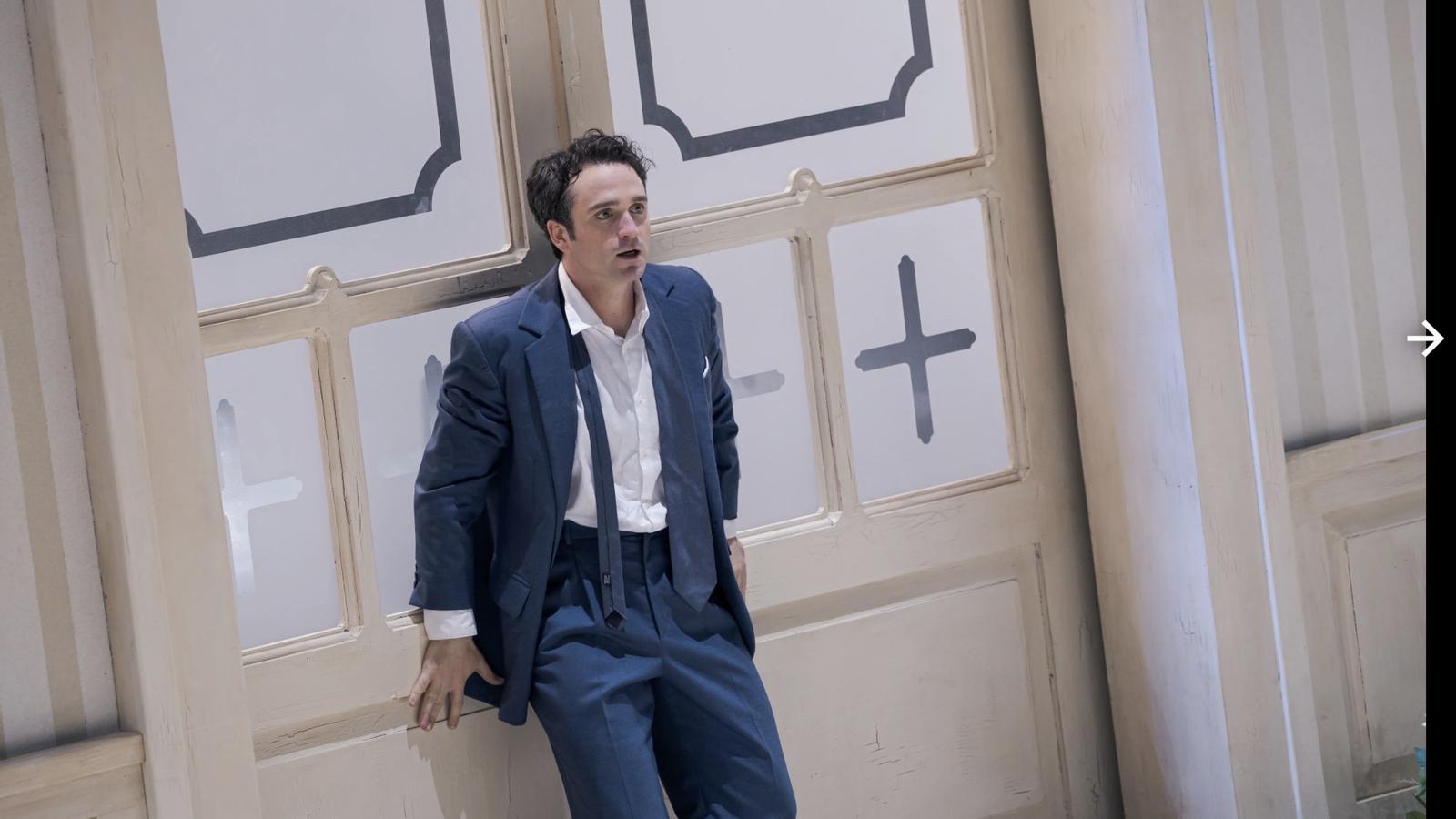
Xabier Anduaga sang, for the first time in his debut of the tragic character par excellence, the very famous and legendary 'Pourquoi me réveiller'

-
CAT -
CAST -
GER
PalmThere are moments in opera that, always and without exception, are absolutely memorable. They are those when the singer has just performed the most famous aria of the composition, the audience's applause has a special, very eloquent, even demanding tone. And, if they almost always lose intensity, in these cases the decibels increase exponentially. The protagonist first remains silent, respectful and grateful, without any movement, not even the slightest that could interrupt the party that the spectators from up there have started and have spread to the rest. He looks at the conductor. He, attentive, waits for the protagonist to close his eyes affirmatively, corroborating what more or less everyone already had clear. And so the apotheosis, the encore, begins again. For the Majorcans who were there, it had added value, the first one Xabier Anduaga did, with Una furtiva lagrima, was in the Principal Theater of Palma. On Sunday, at the third performance of his first Werther, the Liceu erupted and turned the evening into a memorable one, one of those that are not forgotten. Xabier Anduaga encored, for the first time in his debut of the tragic character par excellence, the very famous and legendary Pourquoi me réveiller. A circumstance that could have turned the rest of the performance into pure anecdote.
It would be very unfair. This production, with Anduaga and the two female partners Cristina Stanek and Sofia Esparza, was sealed with the imprint of the greats and not only because of the bis that is on its way to becoming a custom for the rest of the performances, but because Cristina Stanek was a Charlotte of immense level, both dramatic and vocal, with an impeccable Werther!, Werther! Qui m’aurait dit, a sentence of it all. Likewise, Sofia Esparza played a Sophie with much more specific weight in the narrative than most of those who have designed not a few artistic directors. It goes without saying that the characters of Schmidt and Batle, with their unnecessary Vivat Bacchus!, one could consider sparing them. The orchestra, conducted by Henrik Nánási, at the service of the singers, although without losing personality or prominence. Christoph Loy was better in the direction of actors than in the conception of the set design, which was there because it had to be, but without much argumentative relevance. The best that can be said is that it gave total and absolute freedom of movement to the protagonists of a Werther for the history.
