Daniil, Daniel and Mahler
An introspective Trifonov showed a major, careful sensitivity, where each touch, each phrase, each silence, opened a whole range of emotions and numerous readings
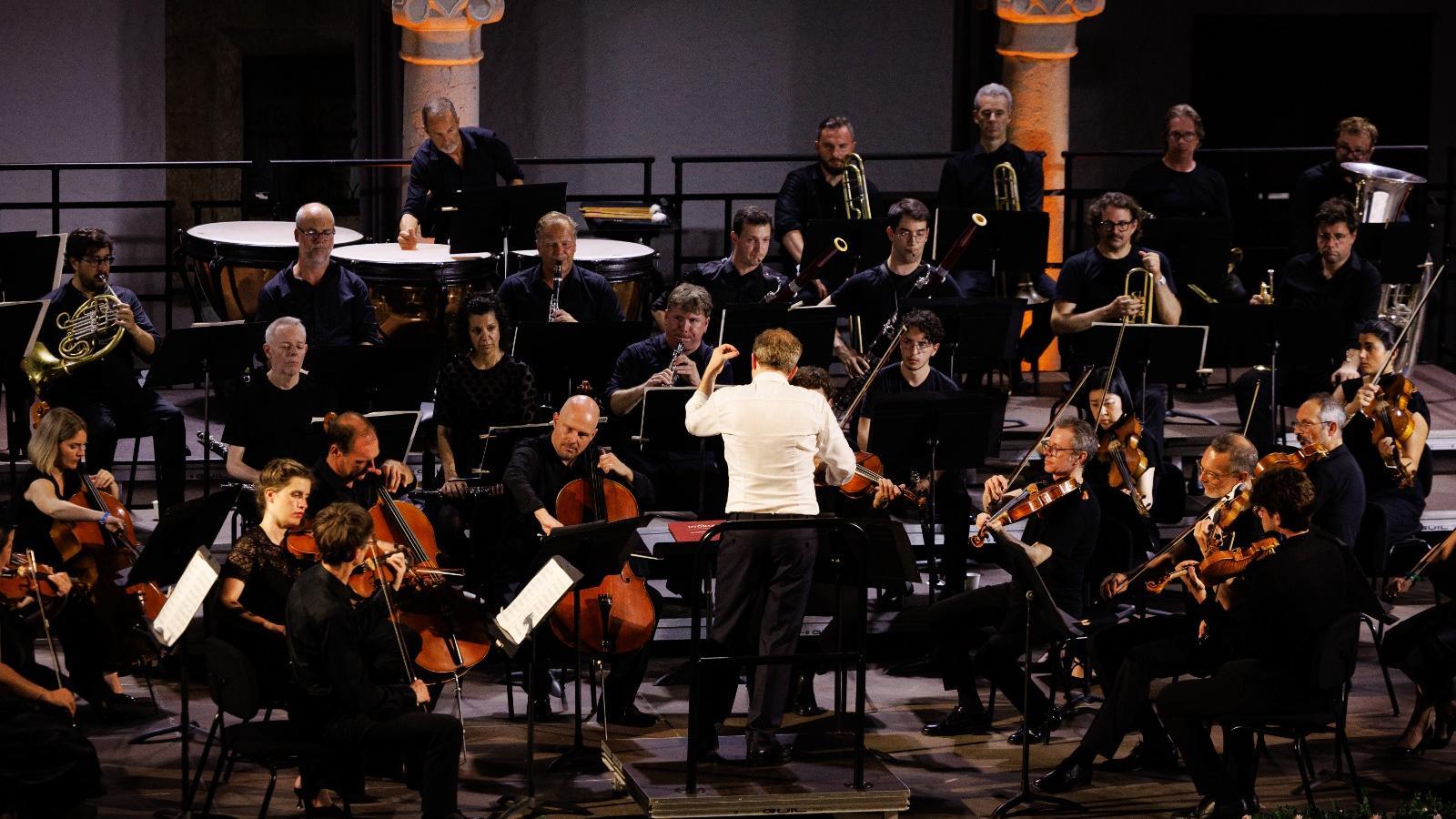

PalmaKick-off to the 65th edition of the Pollença Festival with the Sant Domingo Cloister packed to the rafters and a few extra chairs. Those responsible for this situation came with names and surnames of proven prestige, Daniel Harding conducting the Mahler Chamber Orchestra and Daniil Trifonov on piano. But for contrasts, those they offered us in the first piece of the program, the "Piano Concerto No. 1 in D minor, Op. 15. A monumental and careful musical combat between the soloist and the ensemble of major subtlety and a modest reading, as if wanting to transmit with absolute fidelity all that was going through the composer's mind and heart. It was not spectacular, for the simple reason that it was not the author's purpose or intention – he took five years to finish it – but there was the contained tension to convey a whole series of subtle sensations that Trifonov's piano distilled with such a deep and gigantic Majestic. A first movementthat begins the orchestra with ninety energetic bars, until the solemn entrance of the soloist. Permanent, unfading communion, between the protagonists of a concert more symphonic than anything else, but which in some way draws from the sources of chamber music and with a duration that exceeds that of theEmperor of Beethoven. The collaboration between Trifonov and the Hardings was exemplary, reaching its peak in the exciting and moving Adagio which was so well received by the intended recipient, Clara Schumann. An introspective Trifonov displayed great, meticulous sensitivity, where each touch, each phrase, each silence, opened up a whole spectrum of emotions and numerous interpretations. Nor did the third movement, Allegro non troppo, increased the dose of vehemence, and the Rondo sounded with a more subdued tone than usual. It is a choice that somehow gave even more solidity to the whole. Strange the encore, mournful, gloomy, it can be a bit too much for a summer night. A tu cantem, by Pàvel Txesnokov.
Antonín Dvořák and his Symphony No. 8 in G major op. 88 occupied the second part of the opening concert where Daniel Harding's elegance and depth made his orchestra bring out a whole assortment of delicate combinations between the different instruments. Transparent, crystalline, clean. This is how the interpretation of such a bucolic composition sounded. Bucolic but at the same time without losing that meditative and transcendent background, which coexist with absolute naturalness. As a declaration of principles, a whole demonstration that the name of the ensemble, although yesterday there were nearly fifty masters, is not accidental, but the result of an express conception, of a solid character, which makes it sound different, neat. Excellent.
