Education promotes a table for teaching well-being that excludes teachers
While the unions denounce the exclusion of the collective, the Ministry assures that it is a group of experts and that all measures will be validated in the educational tables
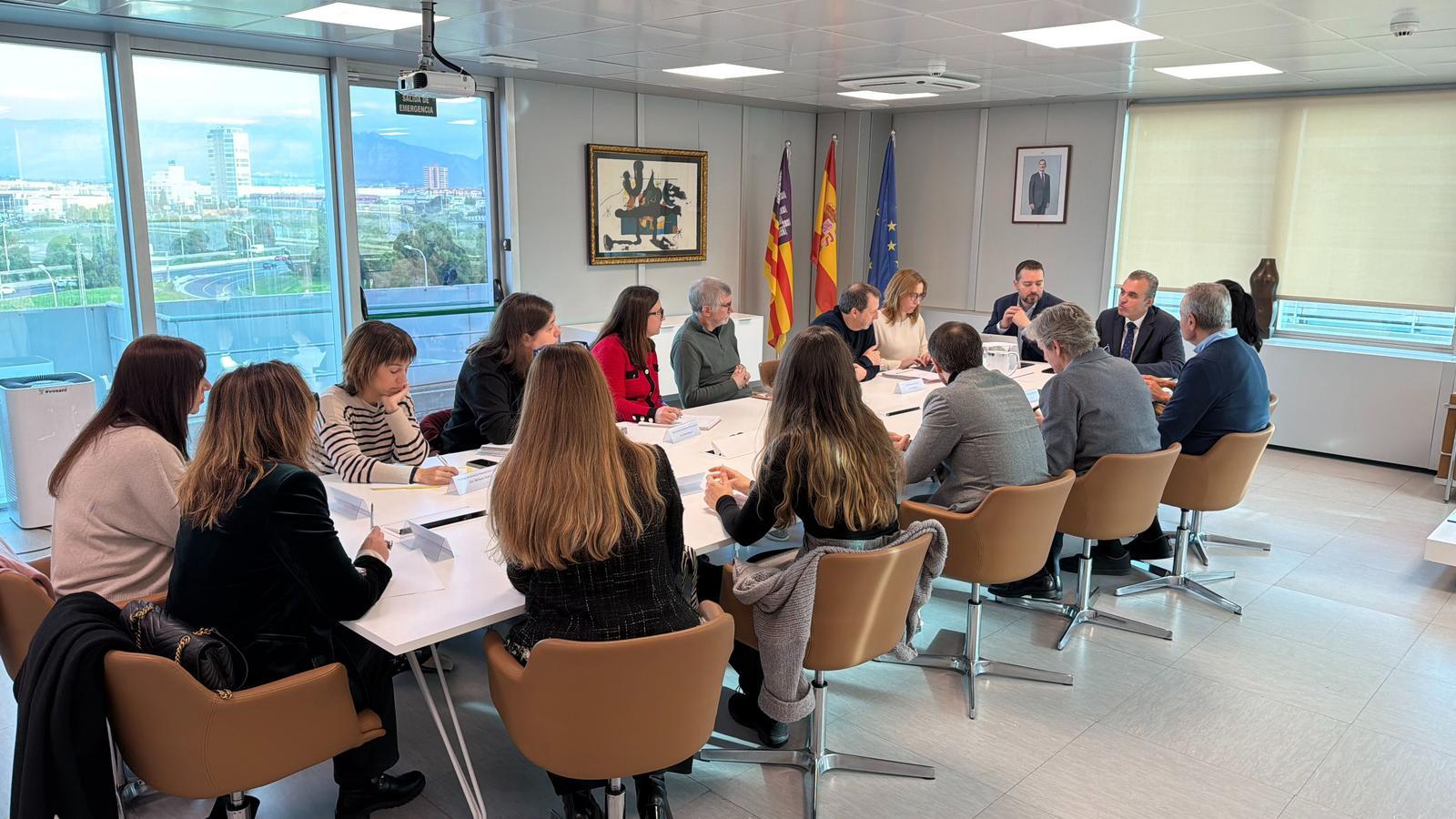

PalmaThe Department of Education and Universities has launched the Docent 360 working group with the aim of improving the emotional well-being of teachers. Despite being an initiative that seeks to reduce work-related stress, improve motivation, and generate a healthier environment, no teacher with daily classroom practice has direct representation, leaving out of the debate the professionals who suffer from the problems that are intended to be addressed.
The group is chaired by the Secretary General of the Department and includes the General Directorates of Teaching Staff and Diversity Care, representatives from Convivèxit, the legal department, teaching staff, as well as educational inspection and occupational risk prevention services. External experts also participate, such as the former dean of the Faculty of Education, Miquel Oliver, the Official College of Psychology of the Balearic Islands (COPIB), and the Institute of Mediation. The committee aims to analyze the emotional situation of teachers, identify stress factors, and propose improvements to working conditions, bureaucratic workload, and relationships within schools.

The composition of the group has provoked immediate criticism from unions. SIAU denounces: “From SIAU we express our rejection and indignation at one of the latest examples of cynicism by the Ministry of Education: the creation of a committee to “promote the improvement of the emotional well-being of teachers” where, paradoxically, there is no direct representation of the teaching collective, but there is of people who have exercised institutional violence against teachers.” The union adds that this absence “is not a mere oversight, but a further symptom of a way of doing things that systematically excludes the true protagonists of the educational system” and that talking about well-being without listening to teachers is “an exercise in institutional cynicism”.
STEI has also expressed its disagreement: “Profound disagreement with the composition of this working group, which does not include the legitimate representatives of the workers. In a sectoral meeting, we already showed our disagreement, also taking into account that STEI disseminated the UIB survey.” The unions agree that any measure on teacher well-being requires the direct participation of professionals, especially given the tense context that many schools are experiencing.
Aggressions on the rise
The data shows that teachers are facing a worrying reality. Between May 15, 2025, and January 13, 2026, 39 professionals reported aggressions through the official NADIB protocol; of these, 13 were physical and 26 verbal, committed by both students and adults linked to the centers. According to unions and recent surveys, more than 75% of teachers perceive a climate of constant conflict in the classrooms, with episodes that directly affect their emotional health and, in many cases, require psychological support. This situation highlights that talking about teacher well-being without listening to professionals means disconnecting from the daily reality of the educational system.
From the Ministry, however, they defend the composition of the table: “The table that was created was only for experts. Likewise, any conclusion reached will go through the different educational tables, like everything else, they are not excluded.” Nevertheless, unions and teachers warn that, without direct participation, the measures may be far removed from the real needs of the centers and the teaching staff.
In short, although Docent 360 has a clear objective, its effectiveness and credibility are questioned as long as teachers continue to lack their own voice in decisions. For the unions, the first step to improve the emotional well-being of the teaching staff would be to sit down at the table with the teachers and listen to their daily experiences, before launching any theoretical or symbolic support structure.
