"A teacher grabbed a student and threw him out the window"
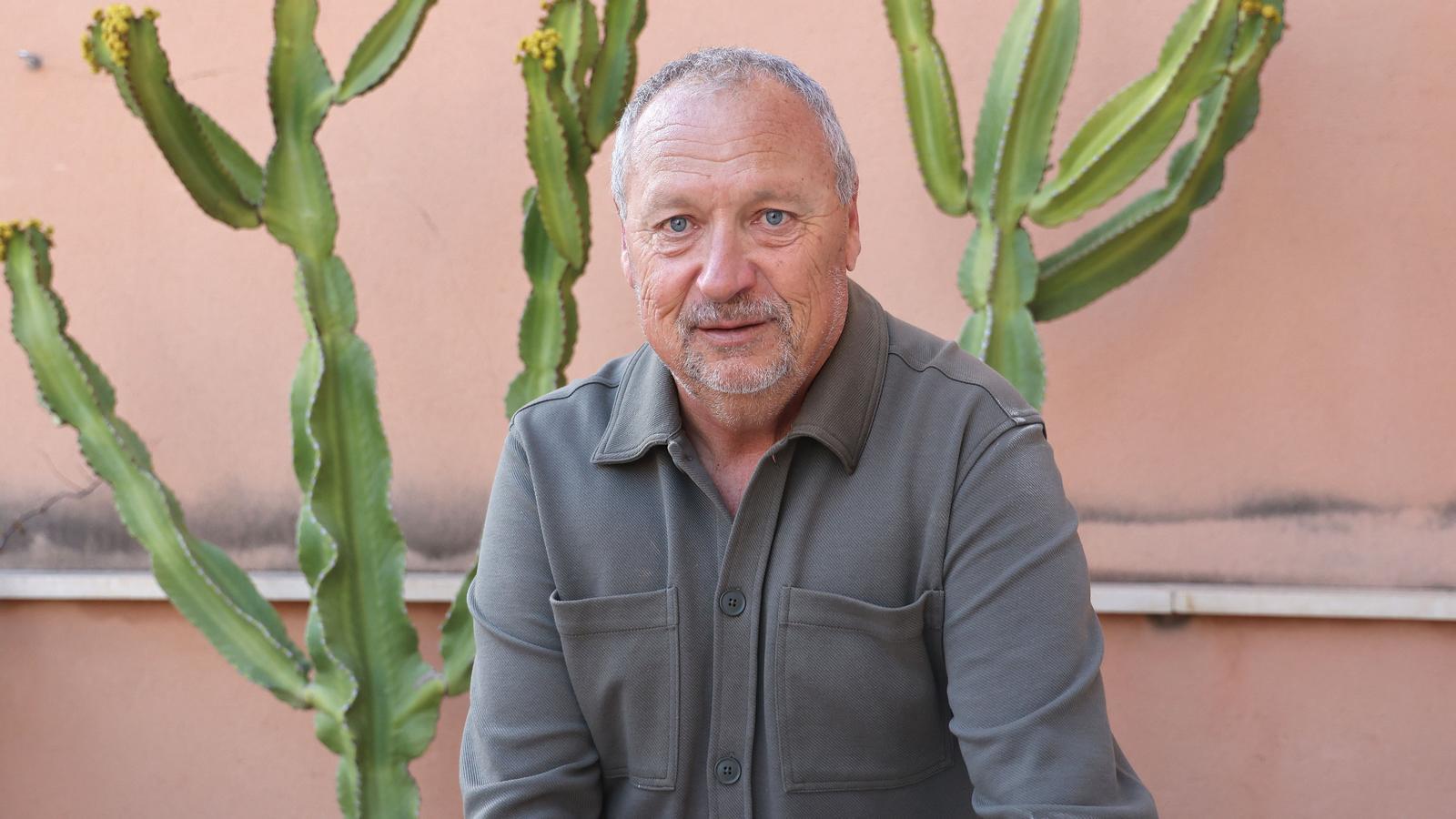
Antoni Vidal (1963) went to class at the nuns of El Vivero, in Palma, and also to Avante school

-
CAT -
CAST -
GER
PalmIf something stuck with me from my school days is that there were very violent teachers. I remember one who beat a child until he was destroyed. Another day, he threw one out the window. Today, it would be unthinkable. Back then, nothing happened. There were also humiliations. A classmate with a facial deformity, who spoke with difficulty, was ridiculed by the principal in front of the entire class. He asked him if he had finished selling coupons. No one laughed. The silence was more eloquent than any laughter.
My schooling began very early, at just two years old, with the nuns at El Vivero, in Palma. I have few clear memories, but a distinct feeling: inside there was discipline and also humiliation. If a child misbehaved, they were given a black band so everyone could see. It was a public punishment, a mark. Years later, walking past the convent, I still saw the shield of José Antonio above the door. As if time had not entirely passed.
In our home, life also took a turn early on. At six years old, I lost my father, although his illness had already conditioned us before. That's why I had my communion at five years old, early, to coincide with my brother. At that age, I already knew the catechism by heart. It was almost everything I had learned in those early years.

Then I went to the Avante school, where I stayed until the eighth grade of EGB. There I lived a contradictory period. On the one hand, I have good memories: I played basketball, we had a competitive team, and they even took us to Mataró. Those moments, with my classmates, were a breath of fresh air. I also remember the day Franco died: they gave us three days off, and we experienced it almost like a party, without fully understanding what it meant.
But school was also a tough place. Before '75, we used to form up and sing 'Cara al sol'. Afterwards, that started to disappear, but Francoism remained present in many things. Classes were in Spanish, although we spoke Catalan in the playground. And violence was normal. If they had to slap you, they slapped you.
I experienced it firsthand: one day, in class, I was sitting with a classmate and we were making comments looking at a girl's legs. The teacher caught us. He made me stand up, turned my face, and started slapping me one after another. He left my face swollen, red. Afterwards, kneeling as punishment. Nobody questioned it.
New look
Even so, amidst that atmosphere, there was also light. When I was about ten years old, a teacher arrived who profoundly impacted me. He opened my eyes. In my house, the regime was defended, but he showed me another way of seeing the world. Years later, he even came to our house to convince my family that I could continue studying. They accepted it... halfway. They told me yes, but that I had to work at the same time. At 15 years old, I was already working.
The hardest memory I have is from a trip to La Victòria. There were four of us students and a trusted teacher. We slept in a tent, squeezed together. In the middle of the night I woke up. I felt his warm hand on me and his breath very close. My body reacted on its own: I jumped over my classmates and moved away. I didn't say anything. With the years I have understood: he was a sexual predator. And, even so, he continued teaching for a long time.
'My school years' is a series by ARA Balears that reconstructs what education in Mallorca was like decade by decade through first-person testimonies.
