"I got a 0 on a subject I knew": a teacher with 28 years of experience declares war on opposition exams
The case, still pending judicial action, reactivates the debate on transparency and the correction criteria of the courts
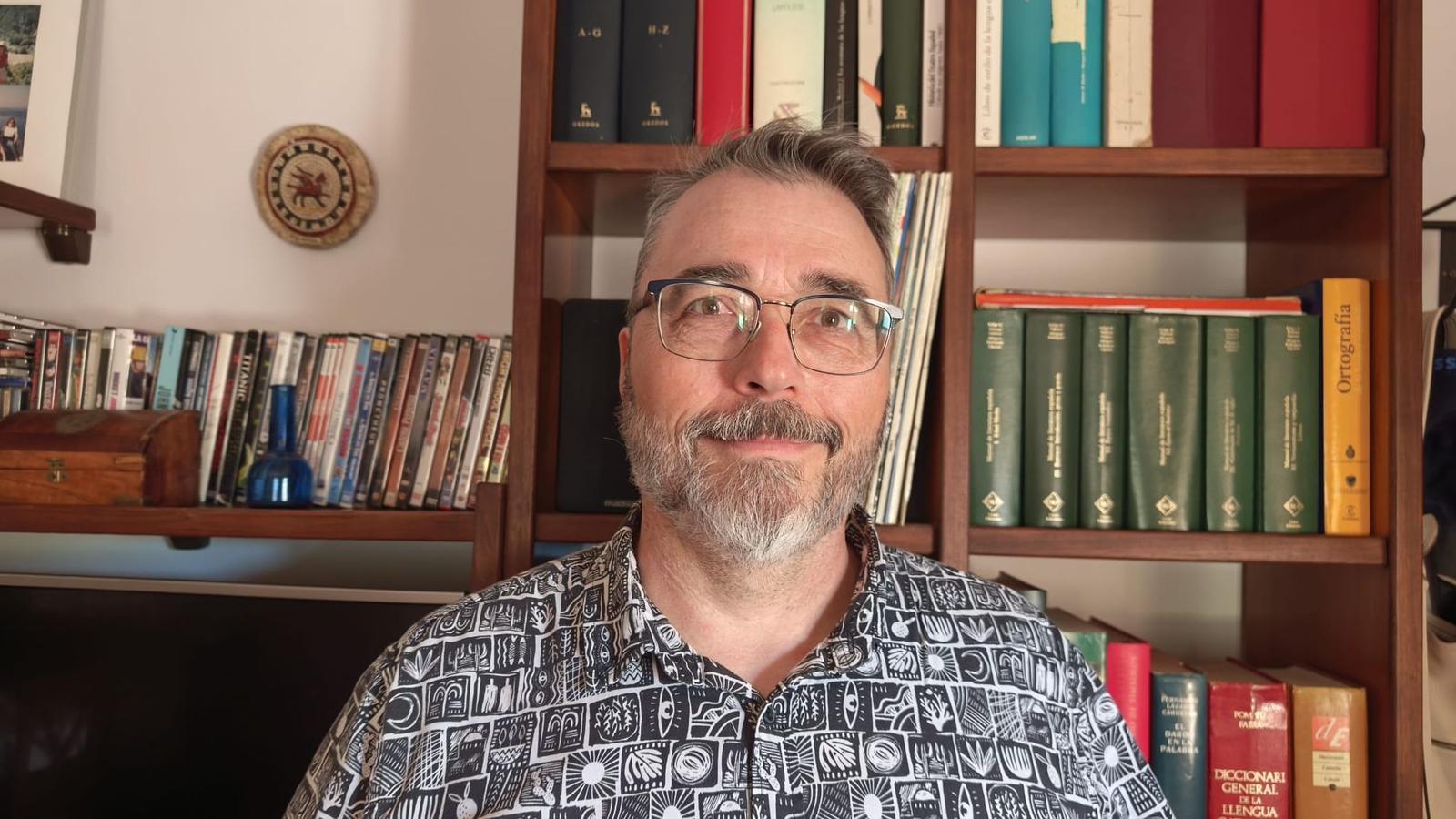

PalmaThe Professor of Spanish Language and Literature Francisco Guardiola, with 28 years of experience in private education, has been in an open conflict with the Administration for more than a year after obtaining a 0 in one of the tests of the 2025 teaching competitive examinations in the Balearic Islands. The teacher maintains that the qualification does not reflect the real content of his exam and that the correction process was based on subjective and not very transparent criteria. The case has gone through an initial claim to the court, an administrative appeal and is now awaiting to know if the judicial route will be taken.
“I got a 0 on a topic I knew,” he summarizes. As he explains, he took the test with the syllabus prepared and with the feeling, upon finishing, that he had correctly answered what was asked of him. The surprise came with the grades: a 0 in one part of the exam and a 1.2 in the text commentary. “I took the competitive examinations with the syllabus prepared. A topic on syntax that I had worked on came up and I left convinced that I had done well,” he recounts. After seeing the grade, he assures that he reviewed the exercise with his wife, also a teacher, and concluded that the result did not fit with the content developed and filed a complaint.

The professor assures that one of the main problems of the opposition system is the lack of transparency in the correction and, especially, that the rubrics with which the tests are evaluated are not provided. “I have never seen the evaluation rubric,” he laments, and argues that this absence prevents candidates from objectively understanding why certain grades are awarded, a fact that allows for arbitrary evaluations.
According to the opposition tribunal's response to the claim filed by the teacher, the test presented several deficiencies in its execution. In the exercise of developing the topic, the tribunal considers that the applicant did not address all the required sections and included content that did not fit what was requested, among other observations. In addition, spelling errors and expressions considered inappropriate were detected, as well as the presence of comments described as "subjective, untimely, and in the first person." According to the tribunal's documentation, this set of elements would justify the final grade. For his part, Guardiola rejects these conclusions and maintains that his exercise fully met the requirements established in the test.
One of the central points of the conflict is the treatment of spelling mistakes. The teacher distinguishes between mistakes and misprints, the latter derived from the lack of time during the exam. "I made a distinction between mistakes and misprints, the latter produced by the lack of time," he explains. He also assures that he has provided prestigious academic support to defend this differentiation.
Guardiola says he provided an academic study to defend his criterion. In the appeal lodged with the Department of Education after the tribunal's response, he cites the views of linguist José Luis Moure, collected by Andrea Estrada in a study on the correction and normalization of academic texts published in 2012 in the journal Normas. According to the teacher, this work shows that certain spelling variations can be subject to different interpretations in the academic field. The article is indexed in DIALNET, the main bibliographic portal specializing in Hispanic studies at the University of La Rioja.
The response to the appeal arrived a few months ago and upheld the tribunal's decision. The case could now go to court, but it is still uncertain. Guardiola explains that the process is conditioned by the economic risk that litigation could entail, with possible costs of around 3,000 euros in case of defeat, which is the most likely scenario, according to the union that represented him, "because judges do not interfere with the content of a subject they do not know". The affected party claims to have tried to obtain an external expert report from the Department of Hispanic Philology at the UIB, to whom he asked to correct his exam. But it has not been possible due to a lack of 'availability'. However, he believes that what is really happening is that the department "prefers not to get involved in messes".
Debacle, year after year
Beyond his case, the teacher expands the criticism to the general functioning of the opposition system, which he considers marked by a lack of transparency in the correction criteria and by results that, according to him, generate insecurity among applicants. In this context, the case is framed within the broader debate on the results of the 2026 teaching oppositions in the Balearic Islands, where the data reflect strong differences between specialties and islands. In the 2026 oppositions for Castilian Language at the Mallorca tribunal, 31 applicants were registered, with 14 zeros in the first test and only 7 passes in the opposition phase.
In Secondary Physical Education in Mallorca, for 9 places called in the open turn, 44 applicants presented themselves, but only 2 have passed the first test, 4.5%, and of those who failed, 10 scored less than 0.5 in the theoretical sub-test. In Castilian Language, also in Mallorca, 34 applicants were competing for 11 places and only 4 have advanced to the next phase, 11.8%. In Catalan Language, the situation is similar: 33 applicants for 18 places and only 4 passed the first test, 12.1%.
This scenario contrasts with other islands or specialties, where the relationship between positions and candidates is very different and success rates are higher. In Mathematics in Mallorca, for example, there were 15 registered for 29 positions, and 9 applicants have passed the competitive examination phase, 60% of those who took it. In Ibiza, in this same specialty, 3 applicants competed for 11 positions and 1 has passed the process. In Menorca, a single applicant was aiming for 2 positions and has passed the first test, while in Formentera there have been no successful candidates.
In Ibiza, for Catalan Language, 2 applicants have presented themselves for 10 places, with 1 approved candidate who has already reached the final phase of the process. For Spanish Language, 3 out of 11 applicants from Ibiza have passed the opposition phase. In the case of Physical Education in Ibiza, 6 places have received 16 applicants, with 5 approved in the opposition phase and 4 scores above 6.5, which contrasts with the much lower results in Mallorca.
However, a question hangs over the educational debate: should the current opposition system be rethought and the door opened to a more guaranteeing model that allows for a true evaluation of the teaching skills and competencies of the applicants?
