Manacor criticizes a change in the way of choosing school that nobody had asked for
City Council, management teams and educational community criticize the implementation of a model that will disrupt the balanced school enrollment system of the municipality
ManacorThe City Council and the management teams of the public and state-subsidized schools in Manacor were put out of play when the Ministry of Education informed them that the municipality, until now divided into four school zoning areas (Manacor, Portocristo, Son Macià, and l’Illot), would become a single zone, as is the case in the rest of Mallorca's municipalities except for four: Calvià, Andratx, Selva, and Santa Margalida.
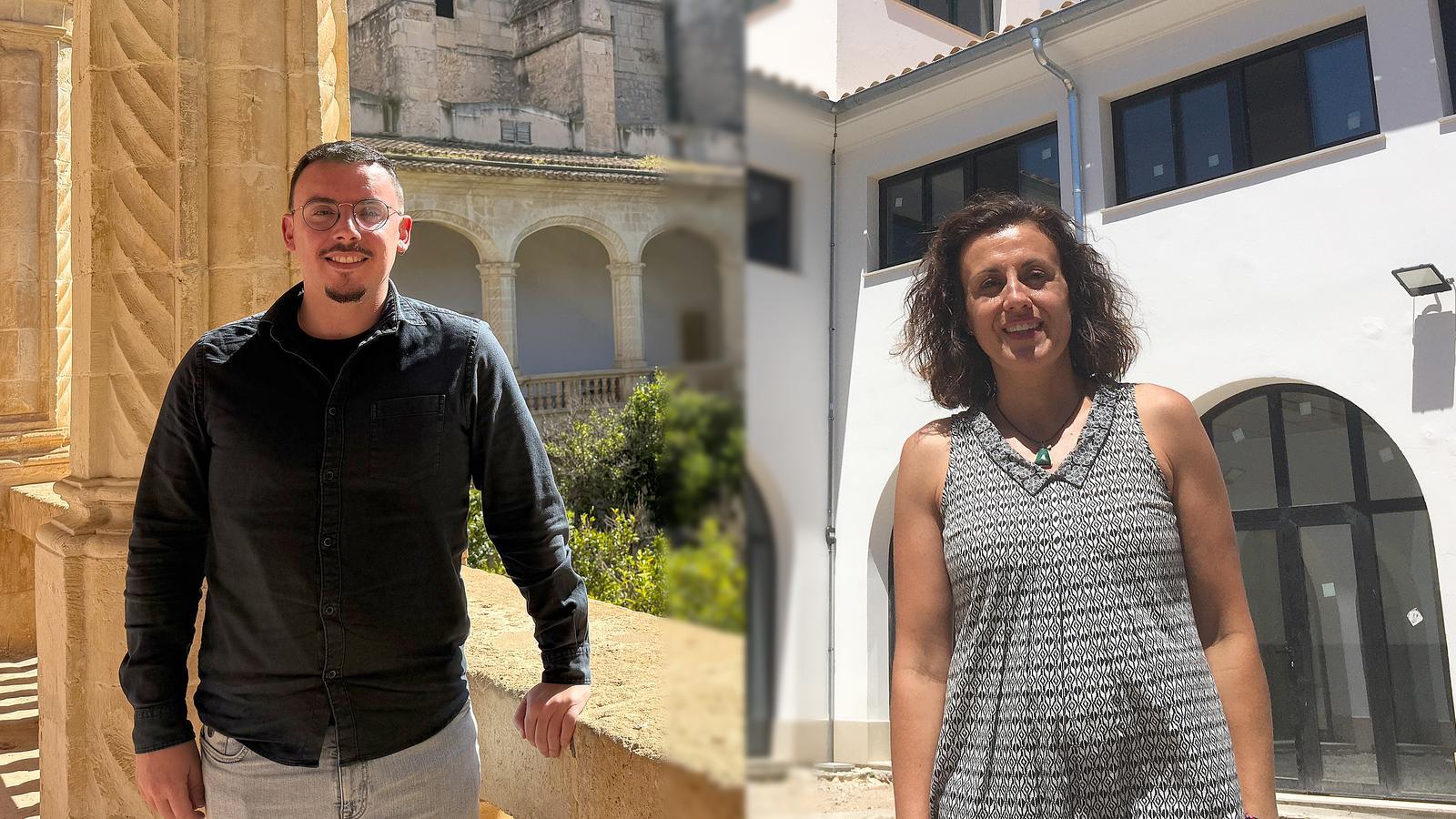
“The problem is that someone from the Ministry has started doing the math from an office in Palma, without taking into account the reality of our municipality”, explains the local Education councilor, Ferran Montero (MÉS-Esquerra).A reality that has been in force and successful since 2015, when the Manacor educational community decided to create clear criteria in order to equitably distribute students to avoid social and economic imbalances concentrated in certain centers.

The Ministry has said that it will not back down and will implement the single school enrollment zone from next year; which, basically, means that a family from Portocristo, for example, will be able to enroll their children in a school in Manacor city or the village of Son Macià, without residency criteria or whether parents work nearby having any influence.
“There has been no prior dialogue with the educational community or the City Council”, complains Montero, “not even the management teams knew about the intentions to change the zoning system, which allowed students to attend school in their own village. In this case, with the single zone, what we are doing is extending all distances, which, in Manacor, are not short. We are sad that the children of El Illot and Portocristo cannot be guaranteed to go to school where they live”.
The director of the Sa Torre Infant and Primary School, Maria Esperança Nicolau, maintains that “the fact of becoming a single zone will clearly break the balance that we have achieved today”, and criticizes that “not prioritizing proximity and balanced distribution will prevent the different centers throughout the municipality from ensuring that each classroom has the same sociogram and that 'ghetto' schools can be formed again, as happened in Sa Torre at the time, with the serious consequences that this entailed and which we already know”.
“Thus, the experience will have been in vain and we will make the same mistakes again. The interests are different. The solution implies that the Conselleria listens to us, listens to the schools and the Town Hall”, he adds. “Since they did not count on us at the time, now, let them backtrack and respect the exceptionality of the Manacor case in the same way that they have respected it in other municipalities that will be able to continue schooling by zones”.
Councilor Montero insists on focusing on all those families “who, for work, family reconciliation or transportation reasons, will not be able to afford to take their children to a school that is not in their town”. “What the Conselleria has done is take figures, without knowing exactly what the reality of our municipality is, a very extensive municipality, with diverse population centers. As if it were Inca, for example, which only has one center”. “Therefore, we have to guarantee that children can go to school in their own center or the closest one to where they live”.
Common front
Manacor has opened an institutional, educational and even legal front against the implementation of the single school zoning promoted by the Govern. The rejection is broad and transversal: the plenary session of the Ajuntament, the management teams of the schools and a large part of the educational community agree in warning about the risks of a measure that, as they denounce, can break a consolidated model based on equity, proximity and social cohesion.
The municipal plenary session of last March approved a motion presented by the groups MÉS-Esquerra, PSIB-PSOE and AIPC-SyS, which frontally rejected the new single zoning. The proposal insists on the need to maintain the current system, in force since 2015 and recognized as a good educational practice in the Balearic Islands.
The current system has facilitated a balanced distribution of students, avoiding the concentration of vulnerable profiles in certain schools and promoting more diverse schools. “Furthermore, it has reinforced the link between school and territory, especially in a municipality with a complex geographical reality and nuclei with their own identity,” explains the City Council.
“When they told us, everything was already done,” recalls Cati Cabrer, director of the Sa Graduada Children's Education school. “The equitable distribution from 2015 until now has gone well and has helped to better distribute the needs of the public and subsidized schools in the municipality. That's why this change is so strange.” Meanwhile, she maintains that “in a year's time, perhaps it still won't be seen, but this model will end up having a negative impact.” “I also don't understand how the Ministry of Education already knows if there are surplus places before the May enrollment process…”.
According to the data handled by the Government, there are currently 26 vacant places in 4th year of Early Childhood Education. “There are vacant places in all schools except CEIP Simó Ballester. There are enough places and enough supply for parents to have freedom when choosing a school and, according to the data and according to the technicians of the Ministry, it has been considered appropriate to make Manacor a single zone,” explain sources from Palma.
“They will tell us: ‘Do you see that everyone has ended up entering where they wanted?’. Sometimes, a school becomes fashionable… now perhaps parents from Portocristo who don’t even work in Manacor will also be able to choose a Manacorí school if they want to… it doesn’t make much sense. Now, a school’s methodology, the services it offers, its complementary activities and its prices will make a difference”, Cabrer continues.
Among the main risks pointed out by the City Council and the Manacor educational community is the increase in school segregation, "as certain families could concentrate in specific centers. An increase in travel is also foreseen, with greater dependence on private vehicles, more traffic, and more difficulties for families." Added to this is the uncertainty about school transport and the possible lack of coordination with municipal services that also operate by zones, such as Social Services and educational support programs.
Lack of dialogue and measures
One of the points that has generated the most consensus in the critique is the way the measure has been promoted. In fact, educational centers received the information once the decision had already been made. This situation became evident in a meeting that recently took place in Manacor with the management teams of the Early Childhood and Primary Education centers, in which a “profound and shared” concern was evidenced, which later the mayor Miquel Oliver and a municipal representation expressed in Ciutat to the minister Antoni Vera, with little success.
Faced with this scenario, theCity Council has decided to go beyond political positioning and undertake legal actions. Last week's extraordinary plenary session approved formulating a prior requirement to the Ministry so that the new zoning is not applied and the current system is maintained. This step, based on contentious administrative legislation, is the first before a possible appeal if the request is not successful, before May, when the enrollment process opens.
