One out of four students in the Balearic Islands has thought about dropping out of their studies
A CEIB survey attributes this risk mainly to boredom, lack of meaning in learning, and the connection with teachers

-
CAT -
CAST -
GER
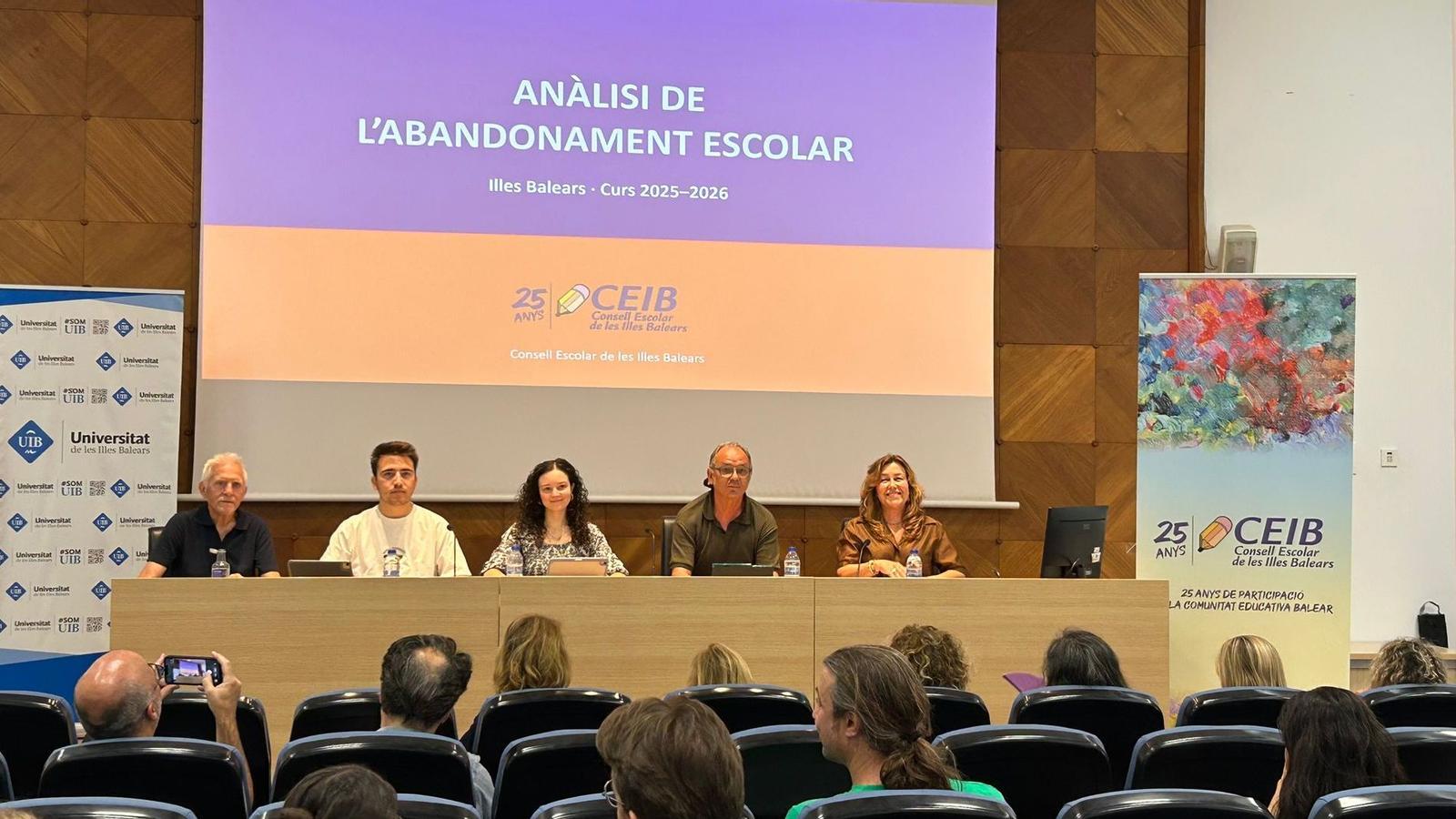
PalmaOne in every four students in the Balearic Islands states that they have thought about dropping out of their studies at some point. This is one of the most striking figures from the survey conducted by the School Council of the Balearic Islands (CEIB), which collected responses from 10,750 ESO and FP students with the aim of listening to the students' voices and understanding the factors that influence their educational path.

The study, presented this Friday, reveals that behind the risk of school dropout there are very diverse factors that go beyond academic performance. Boredom, a lack of meaning in the content, the relationship with teachers, a sense of belonging to the school, and personal and family circumstances appear as some of the elements that carry the most weight in the decision to continue or not to continue studies.
Despite this data, the CEIB also highlights a positive trend in early school leaving in the Islands. If in 2024 the rate was 20.1%, in 2025 it has been reduced to 15.2%, almost five points less. Nevertheless, the Balearic Islands continue to be above European objectives and the Spanish average. The decrease can be linked to the fact that many young people find academic and professional outlets in vocational training (FP).
The change to ESO, a determining moment
The report points out that the transition from Primary to ESO is one of the most delicate moments in the educational journey. More than half of the students (54%) face this change with a mixture of excitement and nerves, but 40.3% do so with concern and nervousness and 5.9% with fear or anxiety. Students explain that the change is not just academic. It also involves new rules, greater demands, changes in relationships with teachers and, often, a new group of classmates, factors that can mark the adaptation during the first years of secondary school.
The survey reflects that 87.7% of students state they felt welcomed when they arrived at the educational center. Nevertheless, 12.3% consider that they did not receive an adequate welcome. Regarding well-being, almost nine out of ten students assure they feel safe at the center, while 62% state they feel happy there and 54% comfortable. On the other hand, one in five admits to feeling stressed.
The study also detects that, although the social dimension generates positive emotions, many students associate classes with boredom and a lack of stimuli, a perception particularly widespread among students in Basic Vocational Training.
Boredom
One of the most relevant conclusions is the distance that many students perceive between what they learn and their daily lives. Almost four out of ten consider that the content does not have a clear connection with reality, while 62% admit that they only understand the teachers' explanations "sometimes". In this context, six out of ten students prefer mixed methodologies that combine traditional explanations with more participatory activities, a formula that coincides with the recommendations of educational research.
The report emphasizes that the bond with teachers is one of the most determining elements of the educational experience. 51.2% consider that the quality of the relationship depends heavily on each teacher, while 56% believe that teachers support and trust their students.
However, 14.4% state that they rarely feel valued by their teachers, a situation that the CEIB links to a lower confidence in their own abilities. Furthermore, almost 16% of students state that they face academic difficulties without receiving any type of support, a reality that, according to the report, is not due to a lack of effort but to the insufficiency of resources available in schools.
The family continues to be the main advisor
The study also highlights shortcomings in academic guidance. About half of the students consider that they do not receive enough information about options after secondary school, and almost two out of three demand more guidance. However, only 8% identify the center's counselors as their main source of advice. On the other hand, 84% point to family as the actor that most influences their academic decisions, a fact that, according to the CEIB, can accentuate inequalities between students with different family backgrounds.
During the presentation of the results, the student representative at CEIB, Xisco Bibiloni, warned that the education system must better adapt to the needs of young people. "Students are not the problem, but a system that often does not adapt to emotions, ways of learning, and the need for recognition," he summarized.
Among the proposals included in the report are strengthening welcoming protocols, expanding academic guidance, training teachers in active methodologies and socio-emotional skills, increasing support resources for schools, and promoting a specific plan to prevent dropout.
