The language schools (EOI) of the Balearic Islands lose almost half of the students in twelve years
Digital alternatives, absenteeism and the difficulties of balancing studies and work explain part of the decline, while Education maintains that enrollment is rising "gradually"
-
CAT -
CAST -
DE
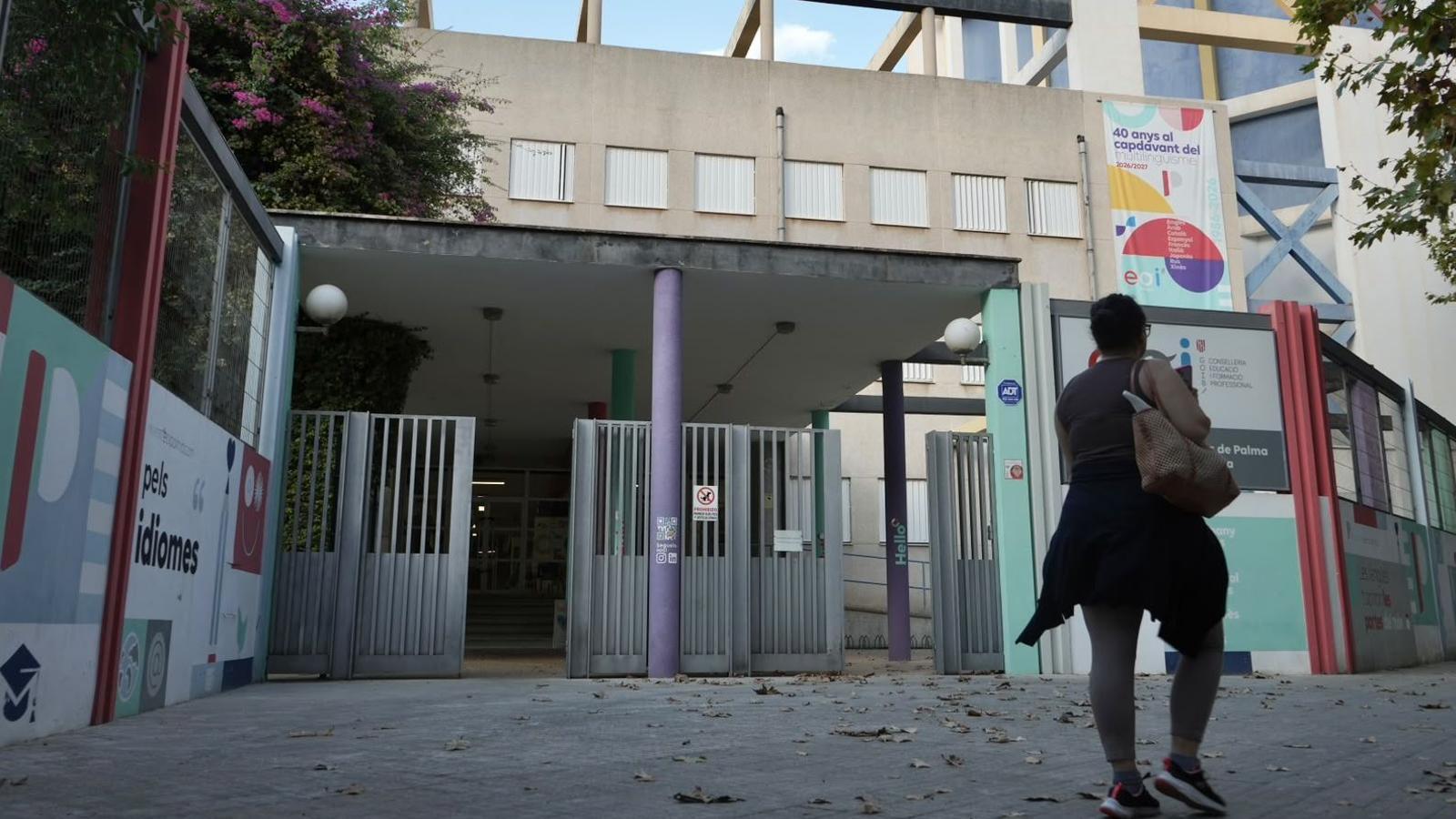
PalmaIn the 2014-2015 academic year, the Official Language Schools (EOI) of the Balearic Islands reached their maximum number of enrollments, with 19,388 students. Twelve courses later, the figure has been reduced by almost half: in 2025-2026, 10,031 were registered. That is 9,357 fewer enrollments, a drop of 48.3% that raises an uncomfortable question: what has changed for learning languages in these centers to have ceased to have the appeal it once had? The decline is not explained by a single reason. The emergence of applications and artificial intelligence, the preference for shorter and more flexible training, and the difficulties in maintaining the commitment to demanding studies have transformed the way of learning languages. At the same time, the EOIs face the challenge of making students' needs compatible with official training that requires time and dedication. All this in a context where young people have lost a certain interest in official language qualifications, according to the expert sources consulted.

For Maria del Mar Vanrell, a philologist and professor at the UIB, the pandemic accelerated a shift in expectations. "Since the pandemic, people want short, focused training that can be adapted to online formats, without necessarily having to go to a physical location," she explains. Furthermore, there are now platforms that allow learning the basics of many languages with more informal and attractive formats than those of traditional education.
The way time is distributed has also changed. "The time we used to dedicate to training, we now want to dedicate to other things. We want quality of life, to socialize, to play sports," Vanrell points out. If previously young people, and not so young ones, considered that studying a language was an investment perceived as necessary to improve job opportunities, now this expectation does not always weigh as much. "Official language levels and degrees have lost value," the expert summarizes. Besides, there are those who prefer to access qualifications endorsed on an international scale. The certificates issued by the EOI have official validity throughout the Spanish territory and can be recognized in selection processes, according to the terms of each call. On the other hand, for example, Cambridge degrees enjoy international recognition and can also be admitted in civil service exams and other selection processes, provided they meet the established requirements.
The effect of the TIL
The decline is better understood when compared with the peak demand period. A former EOI teacher recalls that there was "a great boom" during the TIL era, when many people wanted to learn English to cope with the trilingual education promoted by the Bauzá Government. There were also expectations linked to tourism: in the case of Russian, for example, there were students who signed up thinking that visitors with money would arrive, but this forecast did not turn out as they expected. Motivations, however, have not disappeared: they have diversified. Vanrell distinguishes between learning a language because it is a requirement and doing so because it counts as a merit. When it ceases to be a mandatory condition and starts to earn points, she says, enrollment can drop. On the other hand, there continue to be people who study languages to go on an Erasmus stay or out of personal interest. Tastes also shape the offer. "Now, for example, learning Korean has become fashionable," notes the UIB professor. In these cases, students can turn to other resources to learn the language that interests them.
Technology is another factor of competition. Automatic translators allow for communication without necessarily mastering a language, while artificial intelligence offers the possibility to practice conversations. Several consulted alumni consider these tools to be an effective alternative to face-to-face classes. Furthermore, they criticize that, according to their experience, at the EOI there was little correction and little monitoring of learning. In the same vein, they remark that sometimes the level required in class does not correspond to what is later demanded in final exams, a fact that leads them to discomfort and, especially, to failure. Other students value the educational quality received positively and highlight the degree of demand.
The criticism is not widely shared. The former professor consulted maintains that methodologies depend on the teacher and that many teachers use the communicative method. She also recalls that, when she worked at the EOI, the faculty would meet every two weeks to review failures and absenteeism, and that they would send emails to students who stopped attending class.
Studying languages requires time
Beyond methodologies, work-life balance is a recurring difficulty. Official courses require continuity, and classes can take up four hours a week, to which study time must be added. For a high school student, a person who works, or someone doing seasonal work, maintaining this pace for months is not always possible. "If you work, you are very motivated, but you don't really need it, you quit," summarizes the Japanese teacher at the EOI in Palma, Libertad. Absenteeism and dropping out are problems that also affect her department. To try to respond to different profiles, centers have incorporated blended formats in some courses and specific training to prepare for exams.
Japanese, in fact, shows that demand is not the same for all languages. According to Libertad, in five years they have tripled the number of students and currently have 140. When this language started to be taught, there was one and a half teachers; now there are three full-time teachers. It is an example that coexists with the general decline and points to the importance of students' interests and the adaptation of the offer.
Academic demand can also be a barrier. The former professor argues that high levels should be difficult because this guarantees quality, but warns that there are students who cannot commit the time they require. Furthermore, blended courses do not always imply less work: part of the activities are moved home and can increase the workload for both the faculty and the student.
An uneven decline
Data from the last academic year shows that the trend is not homogeneous. Between 2024-2025 and 2025-2026, enrollments grew by 5.9% in Mallorca and 11.1% in Menorca. In contrast, they fell by 44.3% in Ibiza and 47.9% in Formentera, which caused the Balearic total to drop by 3.5%, down to 10,031 enrollments. In the set of thirteen academic years studied (since 2013-2014), Mallorca has gone from 14,365 enrollments to 8,206, a decrease of 42.9%. In Menorca, the drop is 42.7%; in Ibiza, 51.8%, and in Formentera, 35.7%.
The Ministry of Education and Universities argues that, in recent years, the trend has reversed and the number of students is gradually increasing. It also asks to take into account the 890 students who take specific non-regulated courses, such as business English and French and Russian literature, which were not offered a decade ago. This year, moreover, Korean has been offered to check if there is enough demand to create a department. According to the Ministry, the work of the Official Language Schools (EOI) goes beyond certifying levels of English or Catalan and includes programs with high schools, adult education centers, and vocational training.
The challenge is that this expansion and the new formats respond to the needs of those who want to learn a language today. Digital tools can offer flexibility, but they do not necessarily replace all the benefits of classes. Libertad defends the value of human contact, while Vanrell points out that centers must also compete with options that require less time and adapt better to each person's interests. The EOI have not stopped having students, nor has all their offer lost demand. But the distance from the peak of a decade ago shows that the model no longer connects in the same way with a part of the population. The question is how to adapt to these new habits without losing what differentiates an official school from an app or a private center: a structured training itinerary and an academic certification.
